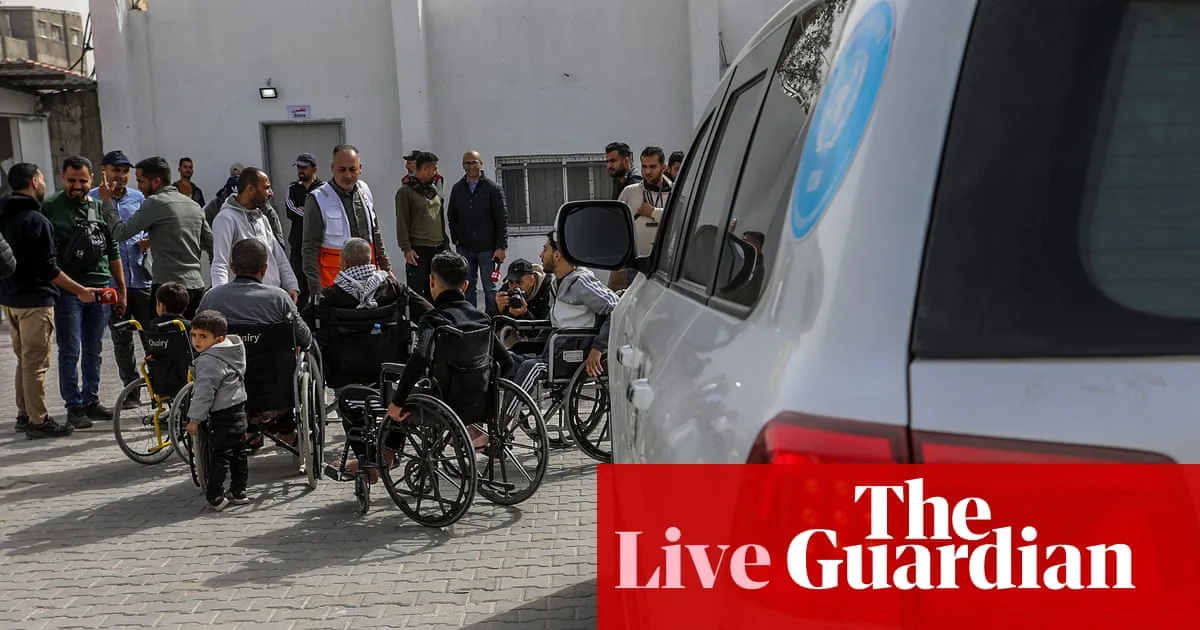
Rafah Crossing Reopens for Gaza Aid and Medical Evacuations Amid Ceasefire
Rafah Crossing Reopens for Gaza Aid and Medical Evacuations

Preparations to reopen Gaza's main border crossing into Rafah commenced on Sunday, though officials remained uncertain if any Palestinians would pass through before the day's end. The Rafah border crossing with Egypt, which before the war served as the sole direct exit point for most Palestinians in Gaza and a crucial aid entry, has been largely shut since May 2024.

Humanitarian Coordination and Security Measures

Cogat, the Israeli military unit overseeing humanitarian coordination, announced that the crossing will reopen in both directions for people on foot only, with operations coordinated alongside Egypt and the European Union. In a statement on Sunday, Cogat emphasised that all involved parties are conducting preliminary preparations to enhance readiness for full operation, with actual passage of residents to begin upon completion of these measures.

A source close to the EU mission confirmed these details, and a Palestinian official indicated that the crossing is expected to open for passengers on Monday. The Egyptian foreign ministry has not yet responded to requests for comment.

Medical Evacuations and Patient Lists

Israel has stipulated that the crossing will open under stringent security checks, permitting only Palestinians wishing to leave the war-ravaged territory and those who fled during the initial months of the conflict to return. Many of those anticipated to depart are sick and wounded individuals requiring urgent medical care abroad. The Palestinian health ministry estimates that approximately 20,000 patients are currently waiting to leave Gaza.

An Israeli defence official noted that the crossing can accommodate between 150 and 200 people in total across both directions. More people are expected to leave than return, as patients often travel with escorts. Lists of individuals authorised to pass through have been submitted by Egypt and approved by Israel.

Ceasefire Context and Political Implications

Reopening the Rafah border crossing was a key requirement of the first phase of former US president Donald Trump's plan to end the conflict. However, the ceasefire, which took effect in October after two years of fighting, has faced repeated disruptions due to rounds of violence.

Since the ceasefire began, local health officials report that Israeli attacks in Gaza have killed over 500 Palestinians, while Israeli authorities state that Palestinian militants have killed four Israeli troops. On Saturday, Israel launched some of its most intense airstrikes since the ceasefire, resulting in at least 30 fatalities, which it described as a response to a Hamas violation of the truce on Friday.

Future Plans and Ongoing Tensions

Subsequent phases of Trump's Gaza plan involve handing governance to Palestinian technocrats, requiring Hamas to disarm, and withdrawing Israeli troops while an international force maintains peace and oversees reconstruction. Hamas has thus far rejected disarmament, and Israel has repeatedly indicated that if the Islamist militant group does not disarm peacefully, it will resort to force.

This development highlights the fragile balance between humanitarian efforts and geopolitical strife in the region, as the reopening of the Rafah crossing offers a glimmer of hope for medical evacuations amid ongoing ceasefire challenges.