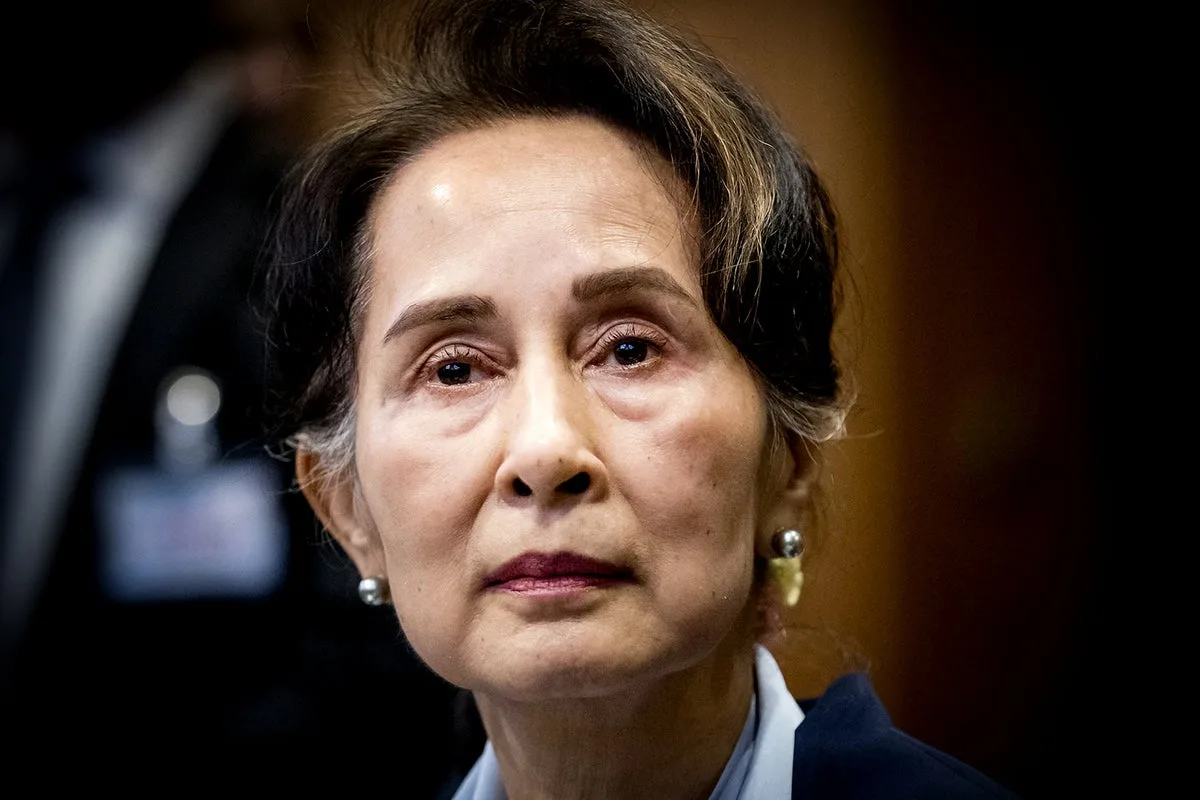
Myanmar has reduced the prison sentence of former leader Aung San Suu Kyi by four and a half years as part of a traditional New Year's amnesty, according to her lawyer. The 80-year-old Nobel laureate was serving a 27-year term for a series of politically motivated charges following the 2021 military coup that ousted her government.
The amnesty, announced by President Min Aung Hlaing on state television, ordered the release of approximately 4,500 prisoners, including former President Win Myint, a close ally of Suu Kyi. It also commuted death sentences to life imprisonment and reduced other terms by one-sixth, according to MRTV.
Despite the sentence reduction, Suu Kyi remains in prison without access to family or legal counsel, and her whereabouts are unknown. Her son, Kim Aris, has repeatedly expressed concern over her health and called for proof of life after more than five years of detention.
Suu Kyi led Myanmar as state counsellor from 2016 to 2021, raising hopes for democratic reform. However, her international reputation was damaged after she defended the military against allegations of ethnic cleansing of the Rohingya Muslim minority. The 2021 coup plunged the country into a civil war that has killed nearly 8,000 civilians.
Western governments and human rights groups have urged the unconditional release of all political prisoners. The Assistance Association for Political Prisoners reports that over 30,000 people have been detained for political reasons since the coup.