Middle East Conflict Threatens Saudi Arabia's Vision 2030 Economic Ambitions
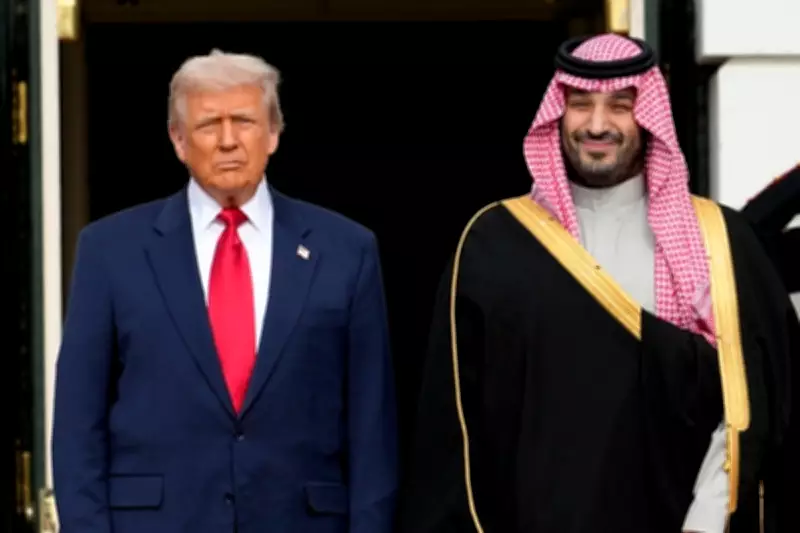
Saudi Crown Prince Mohammed bin Salman's ambitious plan to transform the kingdom into a regional business hub rivaling Dubai faces significant uncertainty as escalating Middle East conflict damages perceptions of Gulf stability. The crown prince, who became Saudi Arabia's de facto ruler a decade ago, promised to usher in a new era of innovation, prosperity and modernity through his Vision 2030 project.
Security Crisis Shatters Gulf Stability Illusion
With just four years remaining before his self-imposed deadline, recent security developments have plunged these ambitious plans into doubt. Earlier this week, Saudi air defences intercepted multiple Iranian drones and cruise missiles, while a strike on the Ras Tanura oil refinery temporarily halted operations. These incidents have dramatically shattered the long-standing perception of the Gulf region as a safe haven for business and investment.
The security crisis extends beyond Saudi borders, affecting other Middle Eastern nations previously considered safe havens. The United Arab Emirates, which Numbeo ranked as the world's safest country for the second consecutive year in 2026, has also experienced Iranian retaliatory strikes following US and Israeli military actions that resulted in the death of Iranian Supreme Leader Ayatollah Ali Khamenei.

Dania Thafer, executive director of the Gulf International Forum, explained the fundamental challenge: "Mohammed bin Salman's transformation agenda is not predicated on absolute security – it rests on the credibility of long-term predictability. Vision 2030 assumes that global investors, multinational firms, and expatriate talent will see Saudi Arabia as a stable environment for capital, innovation, and lifestyle."
Talent Attraction Challenges Intensify
A prolonged regional conflict would severely complicate Saudi Arabia's transformation narrative and undermine the safe business hub model that Dubai successfully cultivated and which the kingdom now seeks to emulate. This comes at a particularly challenging time for Saudi Arabia's economic ambitions, following recent setbacks to the crown prince's flagship Neom megaproject.
The Neom development, described as the most ambitious city vision in human history, has faced significant delays and ballooning costs, with reports earlier this year indicating the project would be scaled back. This £363 billion initiative was meant to include a mountain ski resort, multiple coastal resorts, an industrial zone along the Red Sea coast, and The Line – a 170-kilometer linear megacity.
Dr Neil Quilliam from Chatham House highlighted the broader implications: "The issue for Saudi Arabia beyond the immediate crisis is the impact it will have on the country's ability to attract and retain expatriate senior executives, persuade international businesses to establish their regional headquarters in Riyadh, and continue to implement Vision 2030."
Saudi Arabia's Comparative Advantages
Despite these challenges, experts suggest Saudi Arabia may weather the storm better than its Gulf neighbor. Ms Thafer noted: "Reputationally speaking, Saudi Arabia has less to lose as it was not its main brand to the same degree as it was for Dubai. Historically, Saudi Arabia has been attacked far more frequently and at a greater scale than the UAE."
The kingdom's vast geographic size and dispersed population centers make individual attacks less concentrated and therefore less immediately disruptive to daily life compared to the more compact UAE. Dr Quilliam emphasized this geographical advantage: "The country is the size of Western Europe and has so far been less affected than the UAE. It has not experienced the same concentration of missile strikes."
Domestic flights have continued throughout the conflict within Saudi Arabia, and many expatriates leaving the UAE have been doing so overland into the kingdom. Dr Quilliam expressed confidence that Saudi Arabia's economy would eventually recover, though likely at a slower pace: "While the targeting of Saudi Arabia in the current conflict will undermine short-term investor and expatriate confidence, it will bounce back – probably slowly, given the scale of its national transformation project."

Regional Dynamics and Future Prospects
Dr Omar Al-Ghazzi, associate professor at the London School of Economics and Political Science, suggested Iran's attacks could potentially backfire by triggering broader discussions about Gulf security. The previously competitive relationship between Saudi Arabia and the UAE may evolve as both nations share a mutual interest in preventing further Iranian attacks.
"On the economic level, Iranian attacks have been damaging, particularly for the UAE, as Dubai is the most globalized and economically successful city in the region," Dr Al-Ghazzi explained. "Dubai has long been the symbol of Gulf prosperity. In general, Saudi Arabia has been less targeted. For instance, Saudi air travel is less affected."
The long-term economic impact and regional relations will depend significantly on how the conflict unfolds and its duration. Dr Al-Ghazzi noted: "Iran knows that its attacks are damaging, and they are hoping that would propel Gulf countries to pressure the US to stop. It is a gamble as it also may backfire, bringing Arab Gulf countries closer to each other and to the US."
As the Middle East conflict continues to unfold, Saudi Arabia's Vision 2030 faces its most significant test yet, with regional stability becoming an increasingly critical factor in determining whether the kingdom can successfully transform itself into the business hub Mohammed bin Salman envisioned.