Middle East Conflict Threatens Saudi Arabia's Vision 2030 Economic Ambitions
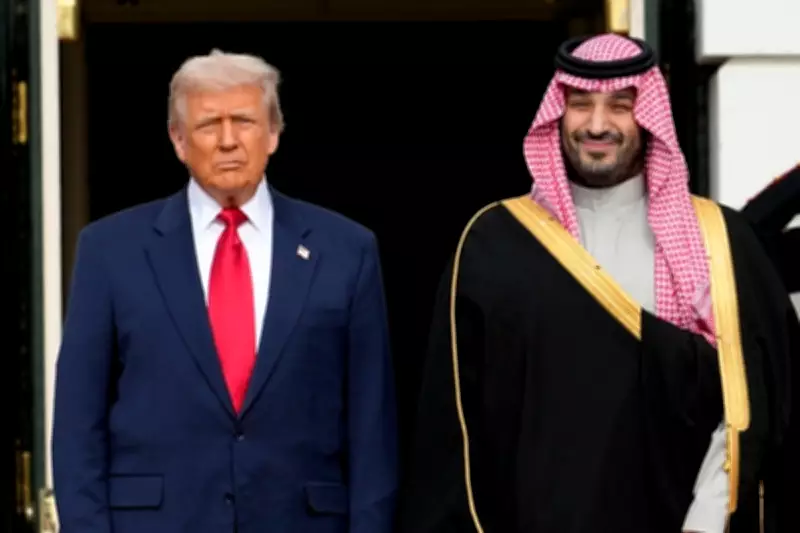
Saudi Crown Prince Mohammed Bin Salman's ambitious plan to transform the kingdom into a regional business hub rivaling Dubai faces significant jeopardy due to escalating Middle East conflict, according to regional experts. The Vision 2030 project, launched when the crown prince became de facto ruler a decade ago, promised innovation, prosperity and modernity but now confronts security challenges that could undermine investor confidence.
Security Crisis Damages Gulf's Safe Haven Reputation
Recent Iranian drone and missile attacks targeting Saudi Arabia and the United Arab Emirates have shattered perceptions of Gulf stability. While Saudi air defenses intercepted several Iranian drones and cruise missiles, a strike on the Ras Tanura oil refinery temporarily halted operations, highlighting regional vulnerabilities. The UAE, previously ranked as the world's safest country by Numbeo for two consecutive years, now faces images of tourists and residents sheltering from missile fire in Dubai.
Dania Thafer, executive director of Gulf International Forum, emphasized that "the normalization of volatility" presents serious risks for Saudi Arabia's economic expansion plans. "Vision 2030 assumes that global investors, multinational firms, and expatriate talent will see Saudi Arabia as a stable environment for capital, innovation, and lifestyle," she explained. "That assumption becomes harder to sustain if the Gulf is no longer viewed as the oasis of Middle East stability but as an active frontline."

Talent Attraction and Megaproject Challenges
A crucial component of Prince Mohammed's transformation agenda involves attracting Western talent and multinational corporations to Saudi Arabia. However, experts warn that prolonged regional instability could severely hamper these efforts. The ambitious Neom megaproject, featuring a £363 billion investment in mountain ski resorts, coastal developments and the 170-kilometer Line megacity, has already faced significant delays and scaling back before the current security crisis.
Dr Neil Quilliam from Chatham House highlighted the broader implications: "The issue for Saudi Arabia beyond the immediate crisis is the impact it will have on the country's ability to attract and retain expatriate senior executives, persuade international businesses to establish their regional headquarters in Riyadh and continue to implement Vision 2030."
Saudi Arabia's Comparative Advantages and Recovery Prospects
Despite the challenges, experts note that Saudi Arabia may possess certain advantages over the UAE in weathering the crisis. Thafer observed that "reputationally speaking, Saudi Arabia has less to lose as it was not its main brand to the same degree as it was for Dubai." Historically, Saudi Arabia has experienced more frequent attacks from Iranian-backed groups, but its vast geographic size and dispersed population centers make individual attacks less disruptive to daily life.
Dr Quilliam pointed to Saudi Arabia's scale as a key advantage: "The country is the size of Western Europe and has so far been less affected than the UAE. It has not experienced the same concentration of missile strikes. Furthermore, domestic flights have continued throughout the conflict, and most expatriates leaving the UAE are doing so overland into the kingdom."
He expressed confidence that Saudi Arabia's economy would eventually "bounce back" from the conflict, though likely slowly, supported by high oil and gas prices that could fund recovery efforts.
Regional Dynamics and Long-Term Implications
Dr Omar al-Ghazzi, associate professor at The London School of Economics and Political Science, suggested that Iran's attacks might ultimately "backfire" by fostering greater security cooperation among Gulf nations. "Iran knows that its attacks are damaging, and they are hoping that would propel Gulf countries to pressure the US to stop," he noted. "It is a gamble as it also may backfire, bringing Arab Gulf countries closer to each other and to the US."

The current conflict has highlighted the competitive yet interdependent relationship between Saudi Arabia and the UAE. While Dubai has long symbolized Gulf prosperity and globalization, both nations now share a mutual interest in preventing further Iranian attacks. How the war unfolds and its duration will significantly influence regional relations and economic recovery trajectories for both Gulf powers.