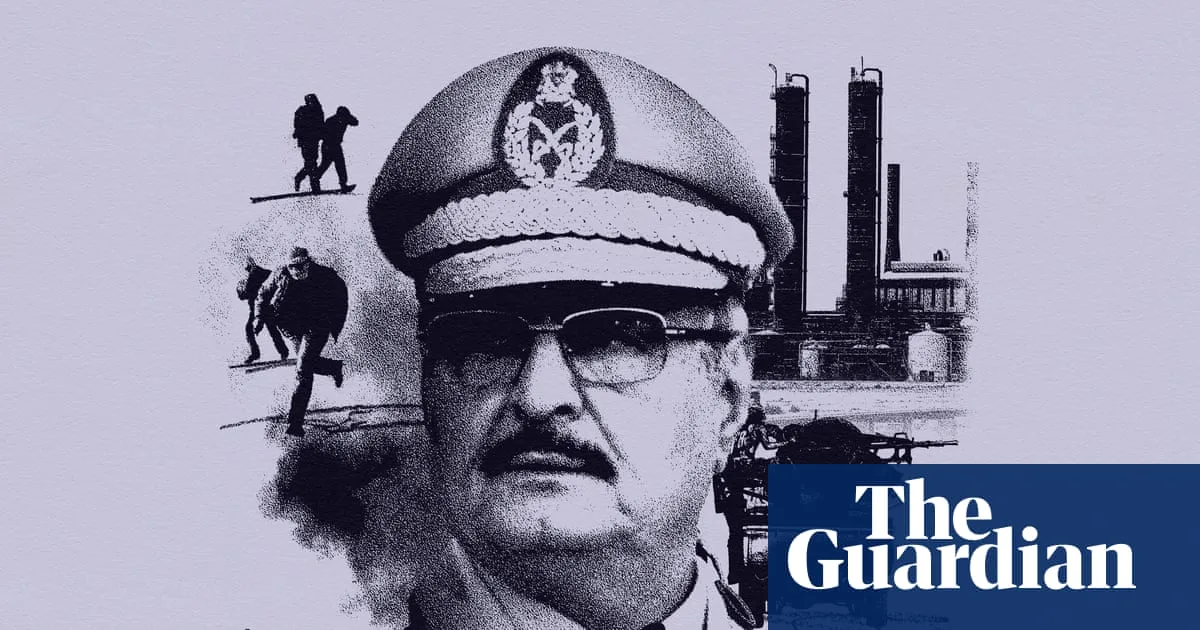
In July 2025, four senior European officials landed in eastern Libya for urgent talks. Italy's interior minister, Greece's migration chief, Malta's home minister and the EU's migration commissioner sought to address a surge in migrant arrivals. They were denied entry after refusing to meet publicly with ministers from the eastern administration, a condition set by Khalifa Haftar, the country's de facto ruler.
Haftar, 82, holds the title of general commander of the Libyan National Army, but his power extends far beyond. He controls oilfields, export terminals, coastline units policing migration routes, and bases hosting foreign militaries involved in Sudan's civil war. For Europe, Haftar holds sway over migration, energy security and regional stability.
Libya has been fractured since Muammar Gaddafi's overthrow in 2011. Two rival governments exist: the UN-recognised Government of National Unity in Tripoli and an eastern administration in Benghazi. Neither controls the country's oil, military bases or migration routes. Haftar does, operating through a system where both governments are officially responsible but powerless.
Foreign powers, including Russia, Turkey, Egypt and the UAE, arm rival factions. From southern bases, Russia and the UAE funnel weapons into Sudan's war, driving refugees north. Libya's 1,100-mile coastline remains the main departure point for migrants heading to Europe, a crisis that Europe's officials sought to address in vain.
The European delegation's humiliation exposed Libya's central fiction: to reach the country's most powerful man, one must pretend he is not. Haftar's accumulation of oil, territory and foreign backers over a decade has made him the true authority, while both governments exist in a state of diplomatic limbo.