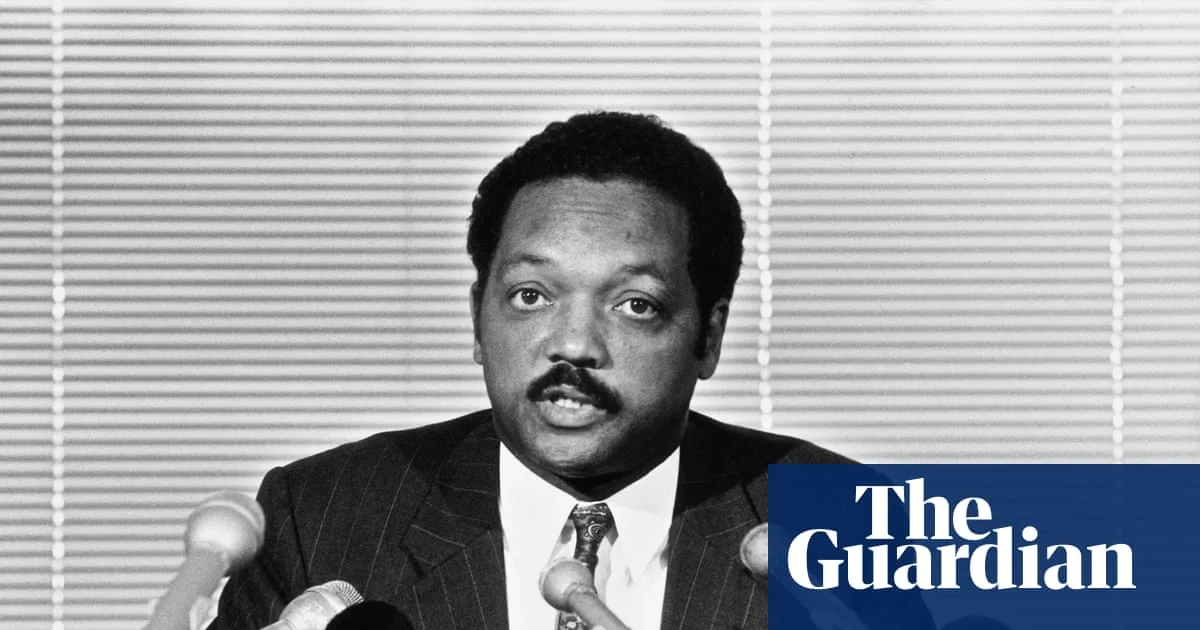
Jesse Jackson's Enduring Voice in American Civil Rights
When Jesse Jackson passed away, America did not merely lose an individual; it lost a vital bridge linking different epochs of its history. This was poignantly evident in 2015, when I interviewed him upon his arrival in Charleston, South Carolina, shortly after the tragic massacre at Mother Emanuel AME Church. Nine African American worshippers had been brutally gunned down during a Bible study session, leaving the city engulfed in raw grief and the air thick with historical weight.
A Softer Voice, a Sharper Message
Jackson moved slowly that day, appearing older than the fiery, arena-commanding figure from the 1980s that many remembered. His voice, once a thunderous force in convention halls, had softened, yet his message remained undiminished—if anything, it had grown more focused. He spoke not only of mourning but of building coalitions, addressing not just racism but collective responsibility. He framed the Charleston horror not as an isolated act of hatred but as part of America's enduring struggle between exclusion and inclusion, consistently aiming to widen the circle of empathy and action.
This approach defined his political philosophy throughout his life. Born in the impoverished areas of South Carolina and profoundly shaped by the assassination of Martin Luther King Jr., Jackson's journey spanned from the civil rights movement's most violent moments to the historic night when Barack Obama was elected president. Few individuals have connected so many chapters of modern America, making his death at age 84 prompt a critical question: who will now carry forward his vision of coalition-building?
From Protests to Presidential Campaigns
Jackson stepped into the void left by King's assassination not as a mere replica but as a more overtly political successor. He recognized that sermons alone could not secure jobs, contracts, or votes, so he combined marching and negotiation, boycotts and boardroom confrontations. For decades, he stood as one of the most dynamic and controversial forces in American politics, with admirers praising his moral urgency and critics questioning his ambition. Regardless of perspective, his impact on shifting societal ground is undeniable.
His presidential campaigns in 1984 and 1988, while unsuccessful in securing the Democratic nomination, achieved something arguably more significant: they demonstrated that a Black candidate could construct a viable, multiracial national coalition. At one point in 1988, he even led in delegates, thereby widening the path that Barack Obama would later traverse. This electoral legacy, however, was just one facet of his broader contribution.
The Connective Tissue of American Society
In Charleston in 2015, it became clear that Jackson's greatest achievement was not electoral but connective. He rejected narrow nationalism, insisting that the dispossessed—whether Black, white, Latino, urban, or rural—shared a common cause. By 2018, he warned that reactionary forces had been emboldened and "re-energised by the Trump demagoguery," highlighting his understanding that progress in America often invites backlash.
Age and illness had begun to temper his once-booming voice, yet he maintained a steadfast refusal to succumb to despair. He spoke as someone who had witnessed cycles of violence, grief, backlash, and resurgence, advocating persistence as the only viable response. Today, America faces heightened polarization, with the cross-racial harmony Jackson championed splintering into culture wars and tribal politics. The Democratic Party, while housing many of his ideological heirs, struggles to sustain the broad alliance he envisioned.
A Legacy of Fragile Coalitions and Unyielding Hope
Right-wing populism has since channeled economic grievances into identity conflicts, often narrowing the circle that Jackson sought to expand. Since the deaths of King and the rise of Obama, no single civil rights figure has commanded both arenas and party conventions with the same authority. Jackson, despite his flaws and controversies—such as occasional overreach and self-promotion—embodied the connective tissue between street protests and institutional politics, comfortable in both realms.
He registered voters, extracted corporate concessions, and forced America to confront inequality long before it became a mainstream topic. When Obama achieved victory in 2008, Jackson's tear-streaked face symbolized a barrier finally breached, yet history has shown that progress can recoil. A Black presidency did not end racial divisions, economic inequality persists, and multiracial coalitions remain fragile.
With Jackson's passing, America has lost not just a voice but a stubborn belief that poor people of diverse backgrounds could be persuaded to see themselves in one another. In Charleston, his voice may have been quieter, the fire softened, but his conviction endured: do not surrender, keep hope alive. Now that voice is silent, the nation he strived to unite must decide if it retains the will to answer his call.