Israeli Airstrikes Kill 27 in Gaza, Including Children, Amid Truce Tensions
Israeli Airstrikes Kill 27 in Gaza, Including Children

Palestinian health officials have confirmed that Israeli airstrikes in Gaza on Saturday resulted in the deaths of 27 individuals, a tragic toll that includes three young children. The attacks, described as the most intense in weeks, struck multiple locations across the territory, exacerbating tensions just before a planned reopening of the Rafah border crossing.

Intensified Strikes Target Militant Sites and Civilian Areas

The Israeli military stated that the airstrikes were aimed at commanders and facilities belonging to the Palestinian militant groups Hamas and Islamic Jihad. These actions were framed as a direct response to a breach of a US-brokered ceasefire, which was originally agreed upon in October after two years of devastating conflict in Gaza. However, Hamas, which controls nearly half of the Gaza Strip, countered by accusing Israel of violating the truce, though it did not confirm whether any of its members or assets were hit in the assaults.

Specific Targets and Casualty Details

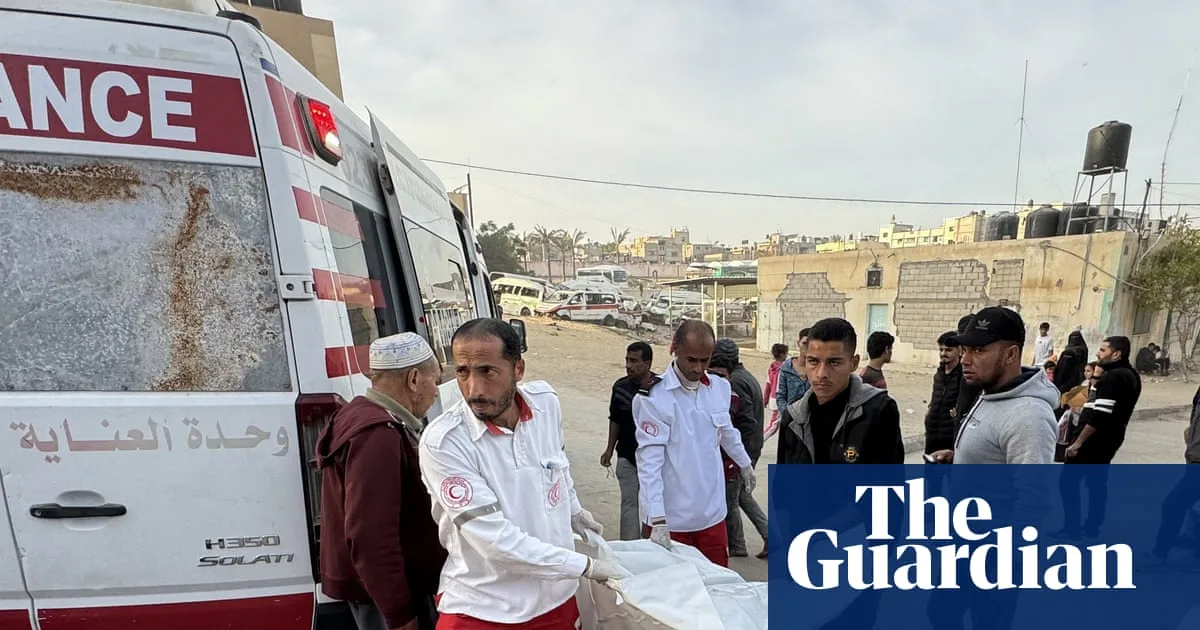
According to reports from medics and local officials, the airstrikes targeted several key sites. The Sheikh Radwan police station west of Gaza City was struck, resulting in the deaths of ten officers and detainees. Rescue teams were actively searching for more casualties at this location, which is administered by Hamas. Additionally, at least two residential houses in Gaza City and a tent encampment housing displaced Palestinians in Khan Younis, further south, were hit, contributing to the civilian death toll.

Video footage from Gaza City depicted scenes of widespread destruction, with charred walls and debris littering both the interior and streets of a multi-storey building. Samer al-Atbash, an uncle of the three deceased children, expressed profound grief, questioning the justification for such losses: "We found my three little nieces in the street. They say 'ceasefire' and all. What did those children do? What did we do?"

Ceasefire Violations and Broader Conflict Context

The Israeli military elaborated that, beyond targeting Hamas commanders, the strikes also hit weapon caches and manufacturing sites. This escalation was triggered by an incident on Friday, where Israeli troops identified eight gunmen emerging from a tunnel in Rafah, an area in southern Gaza where forces are deployed under the truce agreement. Three of these gunmen were killed, and a fourth, described as a Hamas commander in the area, was apprehended. Hamas did not comment on this specific incident, but it is noted that dozens of its fighters have remained trapped in tunnels under Rafah since the ceasefire, with some killed in subsequent clashes.

Ongoing Truce Instability and Diplomatic Efforts

The ceasefire has been repeatedly undermined by violence, with Gaza health officials reporting over 500 fatalities, predominantly civilians, from Israeli fire, while Israeli authorities state that Palestinian militants have killed four Israeli soldiers. Both sides continue to exchange accusations over truce violations, even as Washington presses them to advance to the next phases of the ceasefire deal, which aims to permanently end the conflict.

The next phase of the US-backed Gaza plan involves complex issues, including the disarmament of Hamas—a demand the group has consistently rejected—further Israeli withdrawal from Gaza, and the deployment of an international peacekeeping force. Reuters reported that Hamas is seeking to integrate its 10,000 police officers into the proposed new US-backed Palestinian administration for Gaza, a move likely to face strong opposition from Israel.

Implications for Regional Stability and Humanitarian Concerns

The attacks occurred just a day before the Rafah border crossing, connecting the Gaza Strip with Egypt, is set to reopen under a US-backed plan aimed at ending the war that has devastated much of the territory. This conflict originated after gunmen led by Hamas attacked southern Israel on 7 October 2023, and Israeli officials have warned that hostilities could resume if Hamas does not disarm. The timing of these airstrikes highlights the fragile nature of the ceasefire and the ongoing humanitarian crisis in Gaza, where civilian infrastructure and lives continue to be at risk.

As both sides navigate these tensions, the international community watches closely, with efforts focused on de-escalation and achieving a lasting peace. The high casualty count from Saturday's airstrikes underscores the urgent need for renewed diplomatic engagement and adherence to ceasefire terms to prevent further loss of life and suffering in the region.