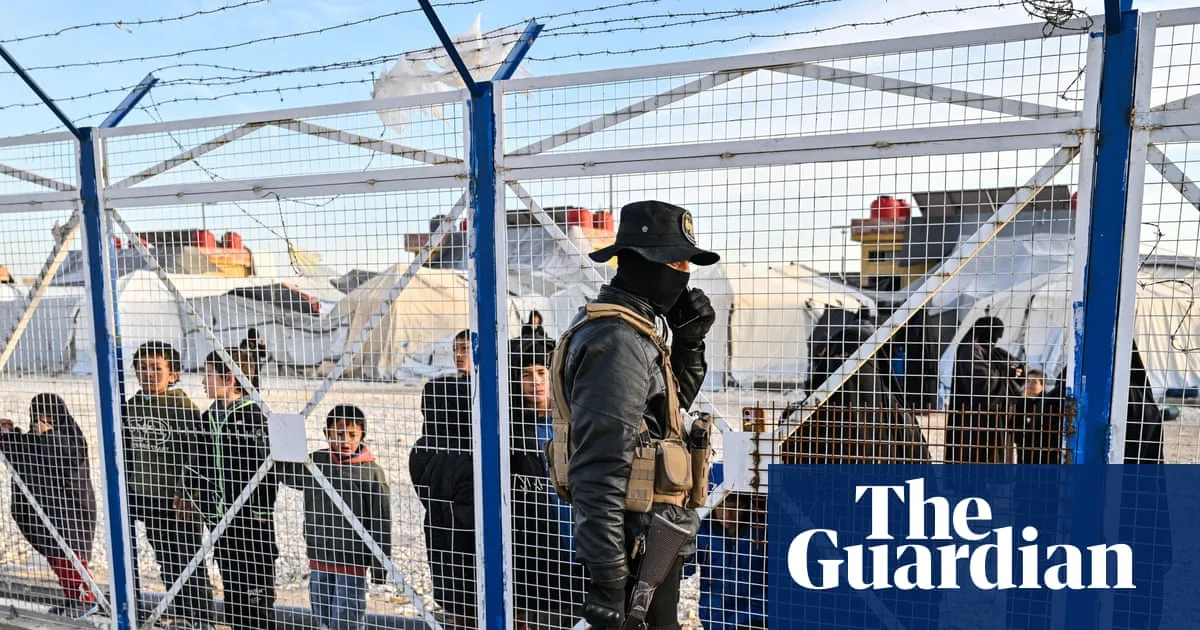
Syrian security forces have been attempting to assert control over the al-Hawl camp in northeast Syria since it was abandoned by the Kurdish-led Syrian Democratic Forces (SDF) in late January. This development has triggered significant security and humanitarian concerns as families linked to suspected Islamic State (IS) fighters have fled the facility.
Mass Exodus from the Foreigners' Annex
The foreigners' annex of al-Hawl camp, which previously held approximately 6,000 women and children from 42 different countries, is now reported to be mostly empty. These individuals were among the most radical former members of the extremist group, arbitrarily detained without trial or charges. The annex was separate from the section housing about 20,000 Syrians and Iraqis.
Humanitarian groups stated on Friday that the foreigners' annex had been almost entirely emptied, with most families departing for Idlib. Jihan Hanan, who directed the camp until its takeover by Damascus last month, confirmed that foreign women had escaped gradually since the SDF abandoned the facility to advancing Syrian government forces on January 20.
Chaotic and Unorganised Departures
"All of the foreign women have escaped in this period," Hanan explained. "Every day, cars would come and take them at night to Idlib. It wasn't done in an organised way." The escape of IS-linked individuals from al-Hawl and other detention facilities has long been a concern for the international community, with warnings that a mass exodus could facilitate IS reconstitution across Syria and Iraq.
During two visits to the camp in the week after its handover to Syrian government forces, observers witnessed cut fences and frequent escape attempts. Fighters of central Asian descent were seen taking women from the foreigners' annex into cars with unknown destinations, while others argued with guards at the outer walls.
Unclear Circumstances and Vulnerabilities
It remains unclear how exactly the families left al-Hawl—whether they were released or escaped. One camp resident of central Asian descent told reporters she escaped by "crawling through the fence" and is now in Idlib. An NGO worker noted awareness of at least one case where a woman crossed into Turkey, suggesting others might have done the same, but cautioned that lack of oversight makes tracking impossible.
Beatrice Eriksson, a spokesperson for the rights organisation Repatriate the Children, highlighted the dangers: "The past two weeks, children and mothers have been moved or released in a highly chaotic context, without clarity on who is responsible or what protection measures are in place." She warned that this disorganised release leaves women and children vulnerable to trafficking or recruitment by violent extremist groups.
International Response and Repatriation Challenges
Al-Hawl has long been a thorny issue for regional states and the international community, with fears that escapes could lead to an IS resurgence. Despite concerns, many states have refused to repatriate their nationals, despite pleas from Kurdish forces and humanitarian groups citing substandard and unlawful detention conditions.
Eriksson urged states to intervene: "Ending arbitrary detention is necessary, but the immediate priority must be to identify and protect these children and families, and to move them through safe, dignified processes involving international cooperation—not to leave them to navigate a conflict zone on their own."
Security Implications and Ongoing Threats
The Syrian government has been approached for comment, previously blaming escapes on the SDF for abandoning the facility without coordination. Meanwhile, the US military has transferred about 3,000 IS detainees to prisons in Iraq over the past month, with plans to move 4,000 more, potentially facilitating the exit of US forces from Syria.
Outside the camp's gates, security officers from the interior ministry guarded entrances, with incidents of escapes prompting chaotic responses. Some women told humanitarian workers they believed they would be repatriated, requiring home government consent.
Hanan shared a video of a camp resident threatening her life, highlighting the dangers faced by humanitarian workers: "I know this man. I tried to get him released, but security agencies said he was a risk. Now that he's out, I and all the humanitarian workers are in danger." This underscores the broader security crisis unfolding as suspected IS families disperse across conflict zones.