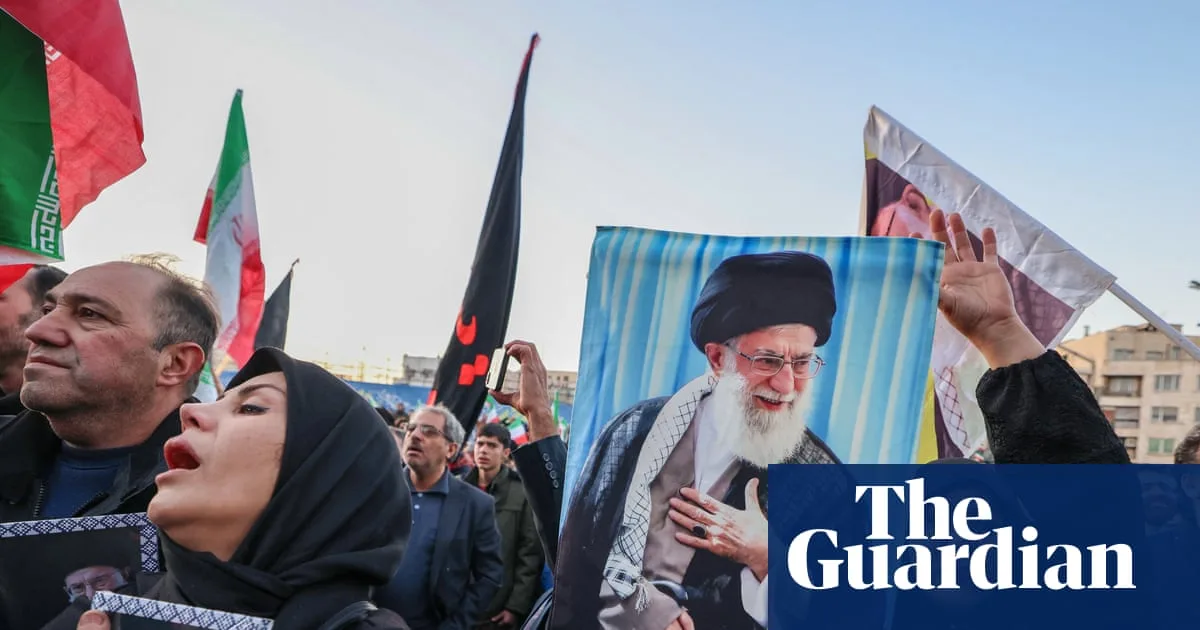
Iran witnessed starkly contrasting reactions to the death of Supreme Leader Ayatollah Ali Khamenei, with public mourning in some areas and jubilant celebrations in others. The response reflects deep divisions in a country still reeling from a violent crackdown on anti-government protests in January.
In Tehran, thousands gathered in squares to mourn, chanting slogans and holding placards. However, social media videos showed others dancing, honking car horns, and setting off fireworks. Families on balconies joined the celebrations, with one Tehran resident, Nazanin, 24, saying, 'The street was full! I had tears rolling down my eyes.' She referenced Nika Shakarami, Sarina Esmailzadeh, and Mahsa Amini, women killed in 2022 who became symbols of the Woman, Life, Freedom protests.
The US-based group HRANA reported over 7,000 confirmed deaths in the crackdown, with 11,000 more under investigation. Mina, 20, a university student in Tehran, recalled being among protesters fired upon in January: 'I saw people falling in front of us. The only thing in my head was to hope those responsible would face a worse fate. Today, that wish was fulfilled.'
A doctor in Rasht, still traumatised from treating protesters with gunshot wounds, said he quietly celebrated. 'I smoked a cigarette for the first time last night. It was the best Saturday night ever,' he said, adding, 'We as a nation have been waiting for this news for decades.' In Arak, residents offered tea in squares, while in Mashhad, students rode motorbikes jubilantly through the city.
Yet many Iranians remain fearful. Mourners in Tehran chanted 'death to America' and 'death to Israel', waving flags and holding photos of Khamenei. Hossein Dadbakhsh, 21, in Mashhad, said, 'I am ready to sacrifice my life for Islam and for my imam Khamenei.' Atousa Mirzade, a schoolteacher in Shiraz, expressed concern about what comes next: 'We saw what happened in Iraq: chaos and bloodshed. I would prefer the Islamic republic to that situation.'
For others, hope prevails. Mahsa Piraei, whose mother Minoo Majidi was killed during the protests, said, 'Today is a beautiful day. Of course, we all know that there are still many challenges ahead, but this is a new beginning.'