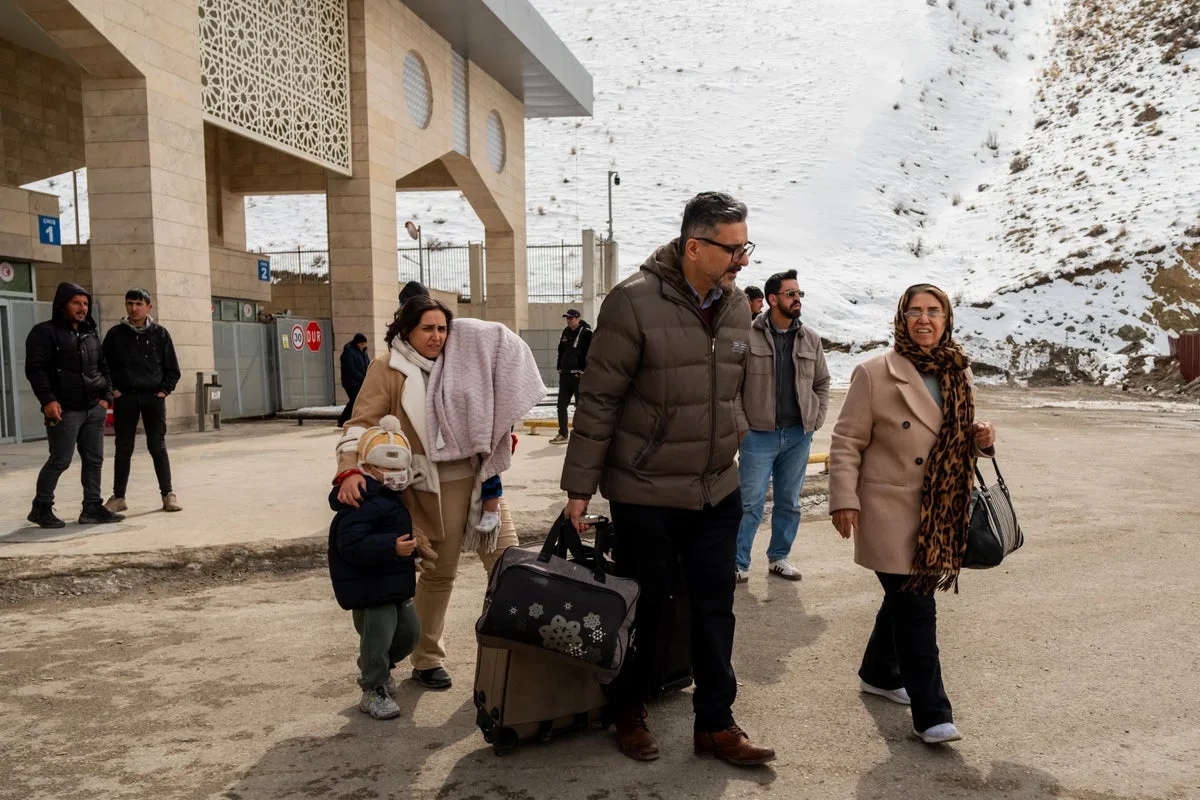
Iranians Face Critical Decisions on Fleeing Amid Escalating Conflict
Iranians Grapple with Fleeing as War Intensifies

Iranians Confront Life-Altering Choices Amid Ongoing Conflict

As hostilities between Israel, the United States, and Iran continue to escalate, millions of Iranian citizens are facing agonizing decisions about whether to abandon their homeland in search of safety. The United Nations refugee agency estimates that approximately 3.2 million people have been displaced within Iran since the conflict began, creating one of the most significant humanitarian challenges in the region.

Personal Stories of Flight and Fortitude

Merve Pourkaz, a 32-year-old hairdresser from Golestan in eastern Iran, represents one side of this difficult equation. After bombs detonated near her residence, she embarked on a grueling 1,500-kilometer journey to reach the Turkish border crossing near Van. "If they let me, I will stay in Van until the war ends," Pourkaz told The Associated Press while awaiting permission to cross. "If the war doesn't end, maybe I'll go back and die."

In stark contrast, 45-year-old Leila Rabetnezhadfard made the opposite decision. While preparing for her wedding to a German professor in Istanbul, she postponed the ceremony and returned to her family in Shiraz, southern Iran. "How can I feel safe in Istanbul when my family is living in Iran during the war?" she explained, citing practical constraints including limited housing space, her brother's medical needs, and high living costs abroad.

Limited Exodus Despite Widespread Displacement

Despite the massive internal displacement, relatively few Iranians have chosen to leave the country entirely. United Nations data indicates only about 1,300 individuals have fled to Turkey daily since the conflict's onset, with some days witnessing more returnees than departures. Salvador Gutierrez, chief of the International Organization for Migration's mission in Iran, attributes this phenomenon to multiple factors.

"Movement out of Iran appears limited mainly because people are prioritizing staying with their families, as well as the safety of their families and property, and due to security conditions and logistical constraints," Gutierrez stated. Many Iranians are sheltering in place, particularly after warnings from U.S. President Donald Trump about the dangers of movement during bombardment.

Regional Preparations for Potential Crisis

Neighboring countries and European nations are growing increasingly concerned about a potential migration crisis should the conflict prolong. Turkey, which shares a 2,200-kilometer border with Iran through challenging alpine terrain, has implemented significant border hardening measures including 380 kilometers of concrete walls, 203 optical towers, and 43 observation posts.

Turkish Interior Minister Mustafa Ciftci has outlined contingency plans involving "buffer zones" along the border, tent cities, and temporary housing facilities within Turkey. However, aid worker Sara Karakoyun notes that many Iranians may avoid formal refugee status applications due to lengthy processing times and uncertain outcomes.

European Concerns and Historical Precedents

The European Union is particularly wary given its experience during the Syrian refugee crisis a decade ago. The 2016 migration deal between Brussels and Ankara, which provided Turkey with up to 6 billion euros in exchange for managing refugee flows, is up for renewal this year amidst changing political landscapes.

Riccardo Gasco, an analyst at the IstanPol Institute, suggests Turkey will likely deploy troops to secure its borders while seeking European Union funding to manage any influx. Meanwhile, Ninette Kelley, chair of the World Refugee & Migration Council, warns of compounding humanitarian challenges across the Middle East.

"We've got a situation in the Middle East that could have grave humanitarian consequences right at a time where humanitarian funding has been completely slashed," Kelley emphasized, referencing funding cuts to agencies like USAID.

Infrastructure Vulnerabilities and Future Scenarios

Experts warn that destruction of critical infrastructure could trigger mass exodus scenarios. Alex Vatanka, a fellow at the Middle East Institute, highlighted the particular vulnerability of Tehran's 10 million residents. "If Tehran doesn't have water, they're going to go somewhere," Vatanka noted, pointing to Iran's borders with seven neighboring nations.

Iran already hosts approximately 2.5 million forcibly displaced people, primarily from Afghanistan and Iraq, making any additional refugee crisis particularly challenging for regional stability. As the conflict continues with no clear resolution in sight, Iranian citizens remain caught between the dangers of staying and the uncertainties of flight.