Iran-US Indirect Nuclear Talks Resume in Geneva Following Brief Pause
Iranian state television confirmed on Thursday that indirect nuclear negotiations with the United States would recommence later in the day after a temporary break. The reason for this interruption remains unspecified, but the talks, mediated by Oman, had been ongoing for several hours in Geneva.
High-Stakes Diplomacy Amid Escalating Military Posturing
These discussions represent a critical diplomatic effort as the United States has deployed a significant fleet of aircraft and warships to the Middle East to exert pressure on Tehran. President Donald Trump is seeking an agreement to restrict Iran's nuclear program, capitalising on internal instability within Iran following widespread protests last month. Iran, however, insists on continuing uranium enrichment, despite its nuclear infrastructure suffering severe damage from a U.S.-ordered attack in June on three key sites during last year's 12-day conflict.
Iran has issued stark warnings that any American military action would result in all U.S. bases in the Middle East being considered legitimate targets, endangering tens of thousands of American personnel. Additionally, threats against Israel raise the spectre of a broader regional war. Iranian Foreign Minister Abbas Araghchi emphasised the catastrophic potential, stating, "There would be no victory for anybody — it would be a devastating war," in an interview with India Today prior to his departure for Geneva.

Omani Mediation and Diplomatic Channels
This round of talks marks the third meeting since the June war, with Araghchi again communicating through Steve Witkoff, a billionaire real estate developer and special Middle East envoy for President Trump. Previous negotiations between the two collapsed following Israel's military actions against Iran in June. Oman continues its longstanding role as an intermediary, with Foreign Minister Badr al-Busaidi meeting Araghchi upon his arrival in Geneva to review proposals based on earlier agreed principles.
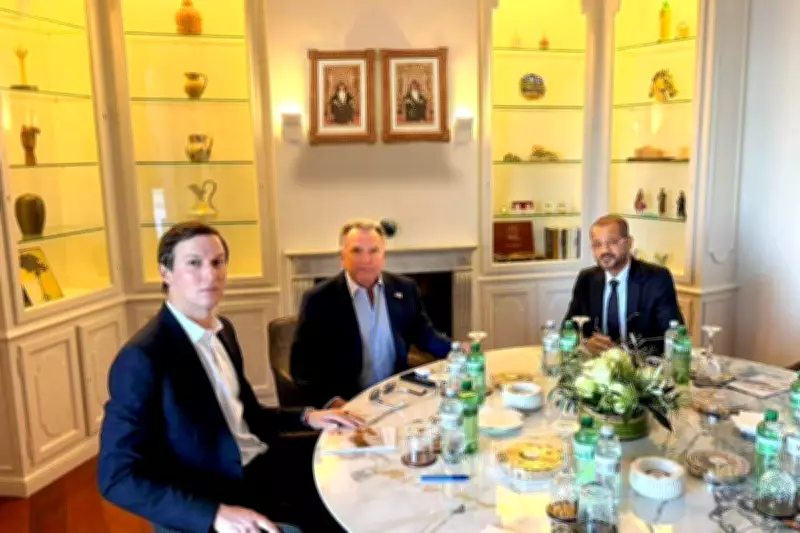
The Omani News Agency reported that al-Busaidi would convey Iran's offer to American officials on Thursday. An Associated Press journalist observed al-Busaidi expressing optimism with a thumbs-up gesture after meeting with the International Atomic Energy Agency director-general. Later, convoys believed to carry American and Iranian diplomats arrived at the Omani diplomatic residence on Lake Geneva, with images released showing Witkoff and Jared Kushner, Trump's son-in-law, meeting al-Busaidi to signal the talks' commencement.
Divergent Agendas and Nuclear Concerns
President Trump's objectives in these negotiations include halting Iran's uranium enrichment entirely, addressing its ballistic missile program, and curtailing support for regional militant groups. Iran maintains that discussions should be confined solely to nuclear issues. U.S. Secretary of State Marco Rubio noted Iran's persistent efforts to rebuild elements of its nuclear program, despite currently not enriching uranium.
Iran claims it has not enriched uranium since June but has blocked IAEA inspectors from the bombed sites. Satellite imagery analysed by The Associated Press indicates activity at two of these locations, suggesting assessment and potential recovery efforts. While U.S. intelligence agencies assess that Iran has not restarted a nuclear weapons program, they acknowledge activities that could facilitate future development. Iranian officials have previously threatened to pursue nuclear weapons, though they insist their program is peaceful.
U.S. Vice President JD Vance reiterated the firm stance, stating, "The principle's very simple: Iran cannot have a nuclear weapon," while emphasising Trump's preference for diplomatic solutions but acknowledging other options.
Regional Implications and Military Preparedness
The failure of these talks could precipitate military action, though the timing and objectives remain uncertain. Limited strikes aimed at coercing concessions may prove ineffective, while regime change could entangle the U.S. in a prolonged conflict. Regional retaliation risks include attacks on Persian Gulf allies or Israel, with oil prices already rising to around $70 per barrel for Brent crude due to these fears.

Iran previously disrupted traffic in the Strait of Hormuz during earlier talks, a vital passage for global oil trade. Recent satellite photos analysed by the AP show American vessels typically stationed in Bahrain, home to the U.S. Navy's 5th Fleet, deployed at sea, a precautionary measure reminiscent of pre-June attack dispersals. The 5th Fleet deferred comments to U.S. Central Command, which declined to elaborate.
As indirect negotiations resume under Omani mediation, the delicate balance between diplomacy and military brinkmanship continues to shape the prospects for regional stability and nuclear non-proliferation.