Iran-Turkey Border Crossing Offers Limited Escape Amid Regional Conflict
Amid escalating hostilities in the Middle East, the land border crossing near Van province in eastern Turkey has emerged as one of the few viable routes for Iranians seeking to exit their country. This development follows the closure of Iranian airspace after coordinated military strikes by the United States and Israel targeted Tehran over a week ago, plunging the region into a state of war.
Travelers with Pre-Existing Connections Dominate Border Traffic
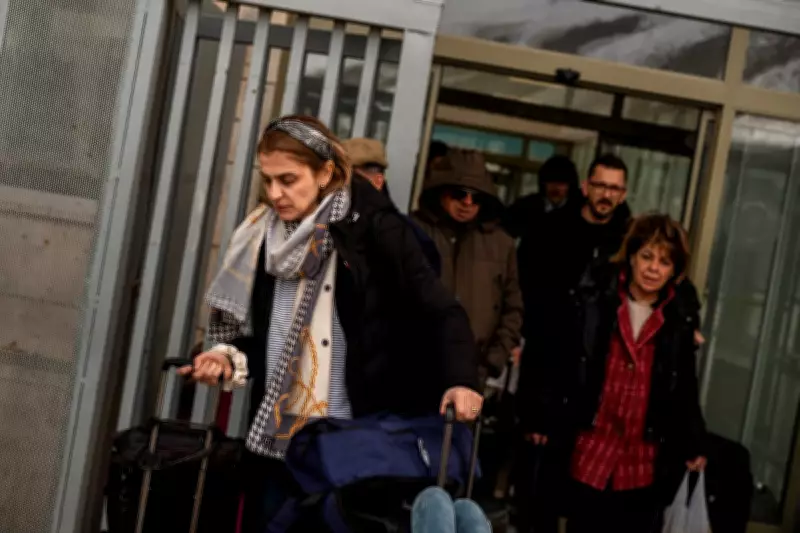
Recent observations at the Kapikoy border gate reveal that the majority of individuals crossing into Turkey are not fleeing permanently. Instead, most possess established connections to Turkey through employment, familial ties, or friendships. Many have simply accelerated previously scheduled visits due to the outbreak of conflict. A smaller subset includes those holding residency or citizenship in third countries, utilizing Turkey as a transit point to reach their final destinations.
Only a minimal number of Iranians interviewed at the crossing expressed intentions to remain in Turkey indefinitely to escape the war. This contrasts sharply with expectations of a mass exodus, highlighting the complex personal and economic factors influencing migration decisions during crises.

Personal Stories Reflect Reluctance to Abandon Lives in Iran
Reza Gol, a 38-year-old plastic surgeon traveling from Urmia to Istanbul, exemplifies this trend. His journey is primarily professional, as he attends to patients in a city where he once resided. Gol remarked, "It's not clear whether we will leave Iran for good, but I can clear my head a little bit in the meantime." He noted the relative calm at the border, adding, "You can see it's not that crowded. Everyone is staying in their houses. For now, people are not leaving everything they have behind and running away."
Similarly, Pooneh Asghari and her husband, dual Iranian-Canadian citizens, are reluctantly preparing to depart for Canada despite lacking a permanent home there and both being employed in Iran. Asghari expressed hope for a brief trip, stating, "We've been living in Iran for over the last five years. All our life is there."
Fariba, who requested anonymity for security reasons, is heading to Izmir with her son to wait out the conflict. She pointed to economic hardship as a key deterrent for many, explaining, "People are very poor now. So they are staying at home, and they are scared." This sentiment underscores why a significant refugee influx has not materialized.
Border Dynamics and Logistical Challenges
While Iranians typically enter Turkey visa-free, recent adjustments have been implemented. Turkey's trade minister announced a mutual suspension of day-trip crossings, and Iranian officials have restricted passage for some nationals, according to travelers and local media reports. However, since Thursday morning, both Iranians and third-country nationals have been crossing the Kapikoy gates normally.
Turkish Interior Minister Mustafa Çiftçi reported that 2,032 travelers entered Turkey from Iran on Wednesday, with 1,966 departing to Iran. Most proceeded to Van airport to continue their journeys. On Friday night, approximately 20 passengers, predominantly Iranians, awaited flights at the airport.
Mehregan, a 26-year-old student in China, faced disruptions after driving over 15 hours from Ahvaz to cross into Turkey. She opted to sleep at Van airport to catch a flight to Istanbul en route to China, but snowstorms canceled her Saturday departure, forcing her to seek accommodation. "If I can't get on a flight tomorrow from here I will miss my flight to China," she worried, highlighting the financial risk of nonrefundable tickets.

Economic Impact on Van and Regional Concerns
Van, located 1.5 hours from the border, traditionally thrives during Iran's Nowruz holidays in mid-March, attracting visitors for work, travel, and trade. Resat Yeşilağaç, owner of two hotels in Van, noted the subdued atmosphere, saying, "It gets really lively here over Nowruz. A lot of our friends come and spend their holidays here with us. Now it's mostly quiet, apart from people who come because of the war. Most of them are dual nationals and they stop in Van for a day or so before flying out."
Migration remains a sensitive issue in Turkey, which previously hosted nearly 4 million Syrian refugees. In response to potential unrest, Turkey has fortified its 560-kilometer border with Iran, constructing 380 kilometers of concrete walls, 203 optical towers, and 43 elevator-equipped towers. Interior Minister Mustafa Ciftci confirmed contingency plans involving tent camps and buffer zones, though no significant influx has occurred yet.
Harrison Mirtar, a 53-year-old Iranian-Canadian, crossed at Kapikoy after visiting his parents in Tehran. While critical of foreign intervention, he expressed limited concern for his parents' safety, noting their experience during the Iran-Iraq war. "They are in their homeland," he said. "Life is going on, but with some bombs."