Iran's Latest Protests Shift Focus from Women's Rights to Monarchist Sentiment
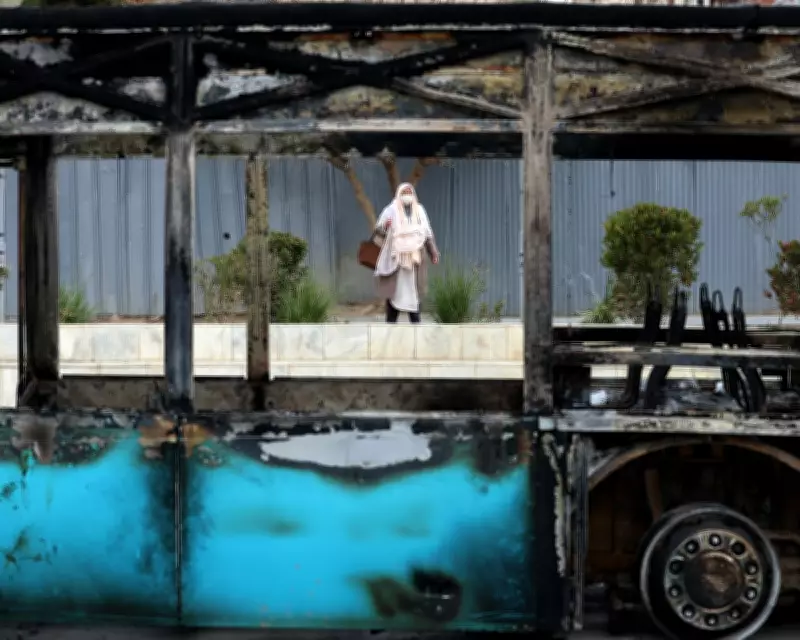
In the streets of Karaj, a city just thirty miles west of Tehran, nightly protests recently echoed with familiar chants of "death to the dictator" and "death to Khamenei", targeting Iran's most powerful cleric and political figure, Ayatollah Ali Khamenei. However, when female participants attempted to introduce the once-popular rallying cry of "woman, life, freedom"—a slogan that galvanised the nation during the 2022 demonstrations following Mahsa Amini's death—it found strikingly few supporters. This marked a pivotal moment, signalling a profound transformation in the nature of Iran's civil unrest.
A Distinct Departure from Progressive Roots
Parisa, an Iranian film-maker based in France who was visiting relatives as the recent demonstrations erupted, observed this shift firsthand. "That was the moment I realised, 'OK, this is slightly different than what happened in 2022,'" she noted, using a pseudonym to protect family members still in Iran. The 2022 protests, sparked by Amini's death in custody for allegedly flouting Islamic dress codes, were broadly middle-class and progressive, credited with forcing de facto concessions from authorities, including relaxed enforcement of mandatory hijab rules.
In stark contrast, Parisa described the latest unrest as "very masculinist at heart", underpinned by a broader social rebellion against escalating poverty and economic despair. This change in tone and focus reflects a deepening frustration with the theocratic regime's policies and a search for new leadership amid widespread discontent.

The Rise of Reza Pahlavi as a Focal Point
A primary beneficiary of this evolving protest dynamic appears to be Reza Pahlavi, the 65-year-old son of Iran's former pro-western monarch, Mohammad Reza Pahlavi. Many Iranians in their teens and twenties, part of Generation Z, are coalescing around him in desperation to oust the current regime. Parisa recounted hearing chants such as "javid shah" (long live the Shah), "this is our last fight", and "Pahlavi is going to come back" during the demonstrations, which she noted were "quite well supported".
This monarchist sentiment is particularly notable among younger Iranians who have no personal memory of the 1979 Islamic Revolution that toppled the Shah, who was criticised for human rights abuses. Instead, their support may stem from a sense of hopelessness and a perceived lack of viable alternatives. Parisa explained that her cousin and his girlfriend, both in their mid-twenties and formerly leftist, have become "completely pro-Pahlavi", viewing him as the only figure capable of uniting people and leading a transition.
Brutal Crackdown and Existential Threats
The recent wave of protests began in late December in provincial towns and cities, fuelled by anger over economic hardships triggered by a sharp decline in the value of Iran's currency, the rial. The unrest quickly spread to Tehran and other major centres before being suppressed by a ruthless security response. Analysts estimate that at least 30,000 people have been killed by security forces, with victims often displayed in public en masse inside body bags for identification by relatives.
This brutal repression has not extinguished the dissent; instead, it has fuelled simmering rage that poses an existential threat to the sustainability of the Islamic regime. The scale of the protests and the government's murderous response highlight a deepening crisis of legitimacy for the theocratic state.
Pahlavi's Ambiguous Role and Historical Echoes
Reza Pahlavi, who has lived in exile in the United States since before the revolution, recently held a news conference in Washington where he predicted the collapse of the Islamic regime and proclaimed himself "uniquely positioned" to lead a transition government. However, he remained ambiguous about his aspirations, stating that a draft constitution would be put to a referendum to determine Iran's future form of government—whether a republic or a monarchy.

His modest self-portrayal as a transitional figure, while pointedly refusing to rule out a monarchy, draws historical parallels to Ayatollah Ruhollah Khomeini, who before returning from exile in 1979 promised to retire from politics but instead established a repressive theocracy. Pahlavi's credibility has faced scrutiny, particularly after he urged protesters to take to the streets only for them to face violent crackdowns, and he later justified this by saying, "this is a war, and war has casualties" in an interview with CBS News.
Opportunism and a Vacuum of Leadership
Further criticism has arisen from Pahlavi's decision to delete previous social media posts supporting the "woman, life, freedom" movement during the latest unrest. Some observers have denounced this as cynical opportunism, suggesting he is tailoring his message to appeal to the more socially conservative and less female-friendly tone of the new demonstrations.
Pahlavi's emergence as a potential leader is also facilitated by the absence of prominent domestic opposition figures. Nobel Peace Prize laureate Narges Mohammadi and reformist politician Mostafa Tajzadeh are imprisoned, while Mir Hossein Mousavi and Mehdi Karroubi have been under house arrest for fifteen years since disputing the 2009 presidential election results.
As Iran's protest landscape evolves, the shift from progressive, women-led movements to a more masculinist, economically driven unrest with monarchist undertones underscores the complex and desperate search for change among Iran's disillusioned populace. The future remains uncertain, but the cries for a new direction grow louder with each passing night of dissent.