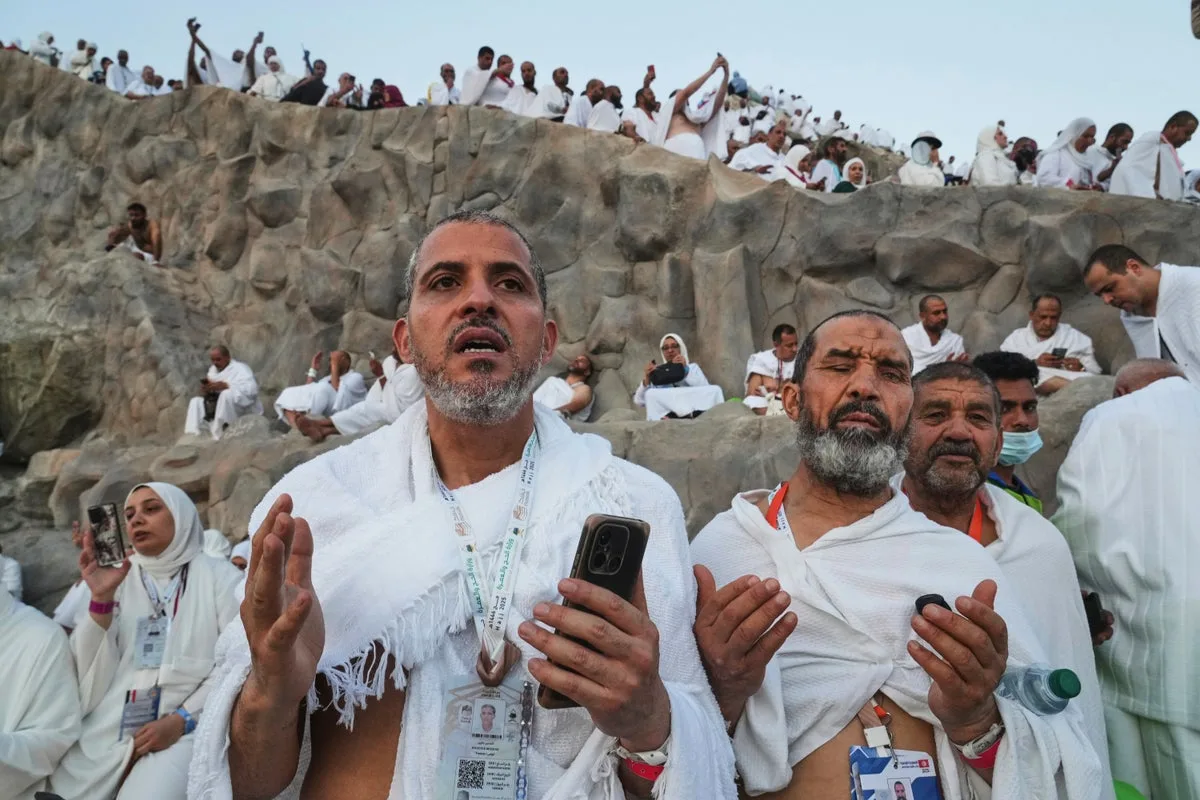
Once a year, millions of Muslim pilgrims converge in Saudi Arabia to perform the Hajj, a religious obligation and deeply spiritual experience. This year, the pilgrimage begins on Monday against the backdrop of a tenuous ceasefire in the Iran war and related tensions in the Middle East. Earlier in the year, travel chaos from the war stranded some Muslims performing Umrah, the lesser pilgrimage.
The Hajj is required once in a lifetime of every Muslim who can afford it and is physically able. It is one of the Five Pillars of Islam, occurring during the lunar month of Dhul-Hijja. In 2024, extreme heat led to over 1,300 deaths, mostly unauthorised pilgrims walking long distances under the sun.
For pilgrims, the Hajj offers a chance to seek God's forgiveness and grow closer to God. It unites Muslims of diverse backgrounds, fostering unity and humility. Many bring prayer requests from family and friends, and some spend years saving money and waiting for permits.
Preparations include packing essentials and attending lectures. Pilgrims enter a state of ihram, wearing simple garments to discard worldly status. A spiritual highlight is standing on the plain of Arafat, where pilgrims plead for forgiveness. Other rituals include circling the Kaaba seven times and retracing Hagar's search for water.
Eid al-Adha, the 'Feast of Sacrifice,' begins on the 10th day of Dhul-Hijja. It commemorates Ibrahim's willingness to sacrifice his son. Muslims slaughter sheep or cattle and distribute meat to the poor.