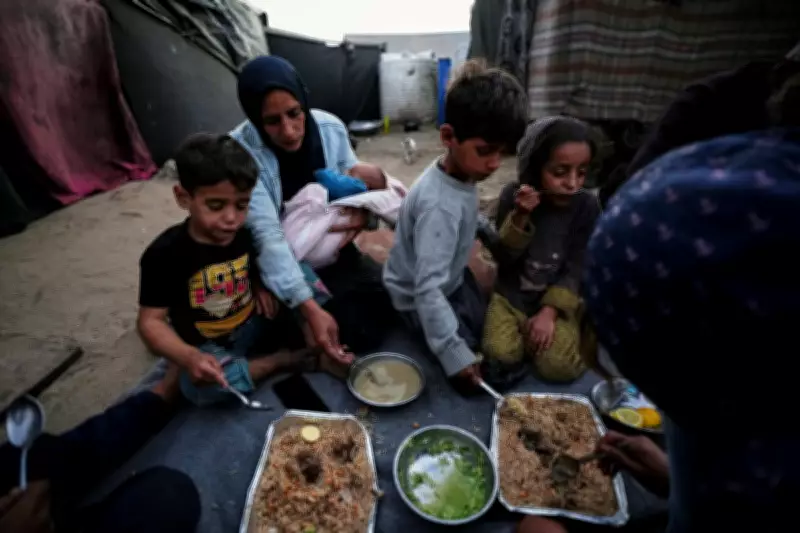
Gaza Family Observes Ramadan Under Fragile Ceasefire Amidst Hardship
Ramadan has commenced in Gaza under a fragile ceasefire agreement, yet for many residents, the typically joyous spirit of the holy month has been profoundly diminished by ongoing hardships and grief. Waleed al Zamli, a father of 11, nostalgically recalled the pre-war traditions of the first day of Ramadan, which included lanterns for children, sweets, and special dishes. "Before the war, we would greet it with happiness," he said from Muwasi, an area densely packed with tents sheltering Palestinians displaced by the Israeli military offensive.
Hardships and Losses Dampen Ramadan's Spirit for Many
Al Zamli expressed deep sorrow over his inability to provide for his family, who now struggle to survive in displacement. After losing his job when the shop where he worked was destroyed, his family heavily relies on charity kitchens. For the first iftar, the fast-breaking meal, his wife collected meals from a charity kitchen and supplemented them with homemade soup. "This year, there’s no happiness," al Zamli lamented, highlighting how financial strain and loss have overshadowed the festive atmosphere.
During Ramadan, observant Muslims fast from dawn to sunset, engaging in increased worship, reflection, and charity. Normally, this period fosters joyful family gatherings, but in Gaza, circumstances are far from normal. Israel’s military offensive has resulted in over 72,000 Palestinian deaths, according to Gaza’s Health Ministry, along with widespread destruction and mass displacement. This offensive was launched in response to a Hamas-led attack on October 7, 2023, which killed approximately 1,200 people, mostly civilians, and took 251 hostages.

Economic Woes Cast a Pall on Ramadan Celebrations
For al Zamli, the primary challenge this Ramadan is securing food for his family. He noted that limited aid and soaring prices for items like meat and poultry, exacerbated by his lack of income, make many essentials unattainable. "The children want to feel happy like other people’s children, to get dressed and to eat something clean and special," he said, emphasizing how financial pressures intensify during a month when markets typically bustle with shoppers stocking up on food and decorations.
Despite these struggles, some Gazans have made efforts to inject a semblance of festivity. For instance, strands of Ramadan decorations have been hung among ruins, and at al Zamli's displacement camp, children played with makeshift lanterns crafted from empty soda cans. The ceasefire deal, brokered by the U.S. on October 10, aimed to halt more than two years of conflict between Israel and Hamas. While heavy fighting has subsided, Israeli forces continue almost daily airstrikes and fire on Palestinians near military-held zones, resulting in over 600 Palestinian deaths, according to Gaza health officials.
Persistent Struggles Under a Shaky Ceasefire
The ceasefire, though providing some respite, has not alleviated many daily hardships. Al Zamli shared that the war has deprived his family of numerous aspects of life, including the loss of a son-in-law shortly after his marriage to al Zamli's now-widowed daughter. This Ramadan, he plans to pray "for the bloodshed to end … and to feel security, safety, and tranquility" and "to be able to provide good food and clothes for our children." The fragile nature of the ceasefire underscores the ongoing volatility, with militants conducting shooting attacks on Israeli troops, leading to Israeli strikes in response and the deaths of four Israeli soldiers.
Gaza’s Health Ministry, part of the Hamas-led government, maintains casualty records generally viewed as reliable by U.N. agencies and independent experts, though it does not distinguish between civilians and militants. Amidst the ruins and displacement, the resilience of families like al Zamli's highlights the profound impact of conflict on cultural and religious observances, as they navigate Ramadan with hope for peace and stability.