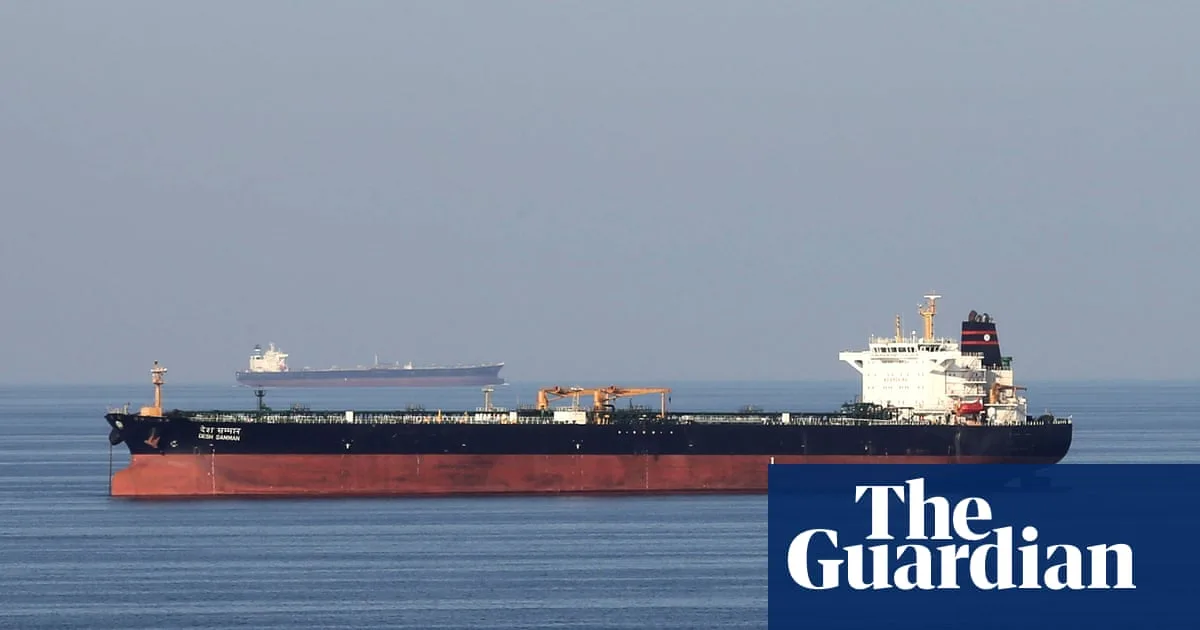
Three merchant ships have been struck in and around the Strait of Hormuz, including a Thai-registered bulk carrier that caught fire after leaving a port in the UAE, forcing crew members to evacuate. The Mayuree Naree was hit by two projectiles of unknown origin on Wednesday while sailing about 11 nautical miles north of Oman, ending a four-day lull in attacks in the strategic waterway. A fire broke out in the engine room, and 20 crew members were evacuated by the Omani navy, while three remained on the damaged vessel awaiting rescue.
The two other vessels struck were only lightly affected. The Japanese container ship ONE Majesty was hit by an unknown projectile 28 miles north-west of Ras Al Khaimah, sustaining minor damage above the waterline. The Marshall Islands-flagged bulk carrier Star Gwyneth was struck about 30 miles north-west of Dubai, damaging its hull in the hold area while at anchor. No serious crew injuries were reported in either case.
The Strait of Hormuz has been effectively closed since the beginning of the month after US and Israeli attacks on Iran prompted Tehran to retaliate across the region. About one-fifth of the world's oil and gas passes through the strait. Iran's Islamic Revolutionary Guard Corps said earlier this week it would not allow even 'one litre of oil' to leave the region if US-Israeli attacks continued.
The US military said it had attacked and destroyed 16 Iranian mine-laying vessels near the strait as part of a broader strategy of knocking out Iran's navy. Admiral Bradley Cooper, commander of US Central Command, said the US had struck 5,500 targets in Iran and more than 60 ships. Iranian civilians were warned to stay away from civilian ports where the military was operating.
There have been initial discussions about the US navy convoying oil tankers through the strait, but no patrol mission has emerged. France has said it wants to participate in a convoy once the worst fighting subsides, while the UK has suggested air protection is more relevant. When asked about ensuring security in the strait, Donald Trump told reporters: 'I think you're going to see great safety, and it's going to be very, very quickly,' but gave no details.