Dubai's Existential Crisis as Conflict Drives Mass Exodus of Foreigners
In the playground of the rich, a stark silence now reigns. For decades, Dubai meticulously crafted itself into a sanctuary of unadulterated consumerism, attracting tourists and investors from across the globe. However, the city in the United Arab Emirates now faces an existential threat, as the war between the US, Israel, and Iran has profoundly shaken the foundations of the "Dubai dream" that countless foreigners had embraced.
The Sudden Flight from a Former Haven
The UAE has borne the brunt of more than two-thirds of Iran's retaliatory strikes, targeted in part, analysts suggest, due to its deep military and intelligence partnerships with Western powers and Dubai's reputation as a favoured hub for global finance and Western holidays. "The shine has definitely been taken off," remarked John Trudinger, a British resident of Dubai for 16 years and a headteacher at an Emirati school. He employs over 100 teachers from the UK, noting that most have been so "deeply traumatised and really struggling to cope" with the sudden arrival of war that they have departed indefinitely.
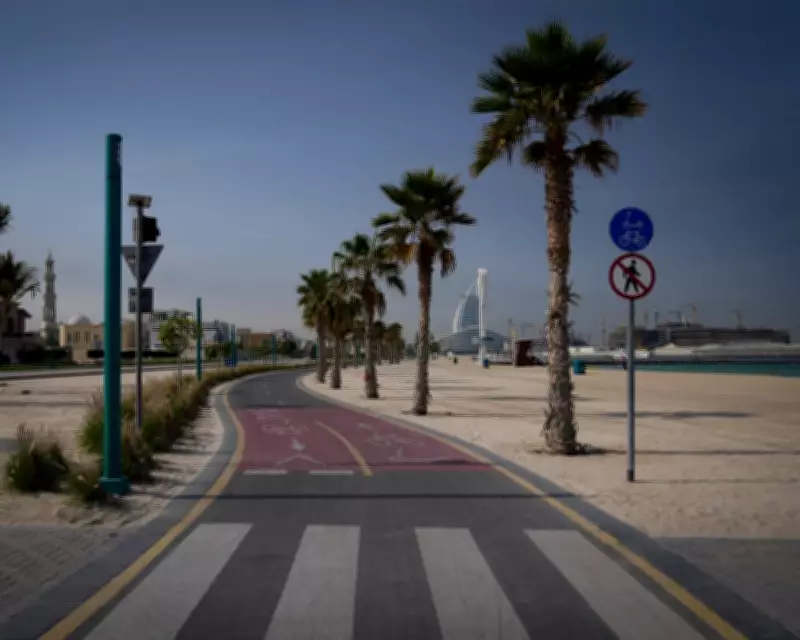
They are among the tens of thousands of residents and tourists who have fled Dubai since the US and Israel launched joint strikes on Iran nearly two weeks ago. While the city's large population of migrant workers largely lacks the option to leave, the exodus has left beach bars, malls, and five-star hotels eerily empty, transforming once-vibrant spaces into ghostly reminders of pre-conflict normalcy.

Daily Threats and Economic Fallout
On a daily basis, alerts ping on mobile phones, warning of "potential missile threats" and advising people to seek safety and avoid windows. Although UAE defence systems have rebuffed more than 90% of the 1,700 Iranian projectiles, some strikes have hit significant targets, including military bases, industrial complexes, and Dubai airport, temporarily shutting down one of the world's busiest aviation hubs. Attacks on two data centres briefly disrupted digital payments for residents.
The economic consequences are likely to be severe, particularly for Dubai, where tourism generates approximately $30 billion annually. Over 90% of its residents are foreigners, including one of the world's highest concentrations of billionaires, drawn by the lack of income, capital gains, and inheritance taxes. Unlike other Gulf emirates, Dubai lacks vast oil resources to cushion the blow. Analysts warn that financial losses will escalate if the war persists, eroding the city's reputation as a haven for tourism and Western confidence in business, banking, and real estate investments.
Human Toll and Migrant Struggles
The human cost is stark. Among the four fatalities in the UAE since the conflict began, three were South Asian workers: a Pakistani taxi driver, a Nepali security guard, and a Bangladeshi water tanker driver. Early Wednesday morning, drone strikes near Dubai airport injured two Ghanaians, an Indian, and a Bangladeshi national. For millions of economic migrants from countries like India, Nepal, and Pakistan, who came for labour, construction, and driving jobs, fleeing is not an option due to exploitative conditions and restricted mobility.
In Muhaisnah 2, a district on Dubai's outskirts housing labour hostels, Ebenezer Ibrahim, a 29-year-old labourer from Nigeria, expressed concern but resolved to stay, citing personal goals. However, the family of Saleh Ahmed, a 55-year-old Bangladeshi driver killed by missile debris, argued that inadequate warnings and information contributed to his death. "If we had known what was really happening, my brother might have tried to get somewhere safer, or come home," said his younger brother Zakir Hussein, highlighting the precarious position of low-status workers.

Controlled Narratives and Lingering Ironies
Dubai's rulers have made a marked effort to control the narrative, launching a chirpy public service campaign reassuring residents that "the big booms in the sky are the sound of us being safe." After panicked social media posts, police threatened to arrest influencers sharing content that "contradicts official announcements or that may cause social panic." Despite this, some tourists, like Christina Hallis from Ukraine, ironically came to escape war, finding relative safety on beaches where influencers still pose and children play.
Collateral damage includes hundreds of abandoned pets, dumped at shelters or on streets as owners fled. Meanwhile, financial institutions like Citibank and Standard Chartered have evacuated employees due to heightened security concerns, underscoring the broader instability. As the conflict drags on, Dubai's future as a global hub hangs in the balance, with its dream of perpetual prosperity now clouded by uncertainty and fear.