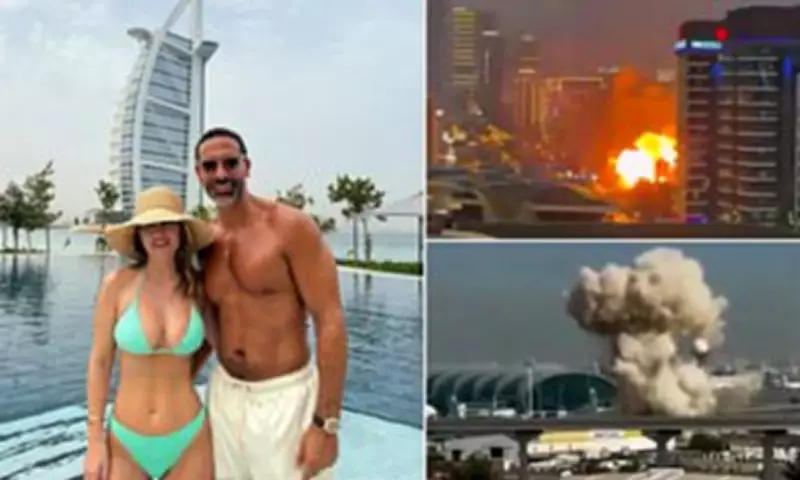
Dubai's Expat Exodus: Missile Attacks Shatter Tax-Free Paradise Image
Once celebrated as a tax-free haven attracting global influencers and thousands of British citizens seeking warm weather and crime-free streets, Dubai now faces a dramatic exodus as residents fear for their lives amidst relentless Iranian missile and drone attacks. The emirate's meticulously crafted image has been shattered, with many long-term expatriates declaring the city "finished" as their businesses collapse and safety concerns escalate.
Constant Attacks and Growing Casualties
Dubai has become the primary target in the United Arab Emirates, absorbing approximately two-thirds of Iran's missile assaults. The situation reached a critical point on Wednesday morning when three massive explosions rocked the city, causing significant damage to Dubai International Airport. During this attack, two drones struck the terminal building, injuring four people and prompting numerous major airlines to cancel all flights to the region for several weeks.
The bombardment has extended beyond transportation hubs to iconic landmarks. The world-famous Fairmont Hotel on Palm Jumeirah suffered direct strikes, while employees at Western banking institutions including Standard Chartered and Citi evacuated their offices following explicit threats from the Islamic Republic identifying them as next targets. To date, four people have been killed in these attacks, with tens of thousands of residents and tourists fleeing since the conflict began.

British Expats Among Those Fleeing
Dubai is home to approximately 240,000 British expatriates, including notable figures such as Rio and Kate Ferdinand, Luisa Zissman, and Petra Ecclestone. Many are now abandoning what was once considered an idyllic lifestyle. John Trudinger, a British resident of 16 years who employs over 100 UK teachers at his Emirati school, told The Guardian that most staff are "deeply traumatized and really struggling to cope" with the warfare, having fled with no intention of returning.
The economic impact has been devastating for local workers. Taxi driver Zain Anwar saw his vehicle destroyed in a missile attack and revealed his family is begging him to return to Pakistan. "I don't want to be in Dubai any more," he said. "There is no business, we are earning nothing since this war, and I don't see the tourism coming back. A lot of taxi drivers like me, we are thinking to go to a different country now. Everybody knows that Dubai is finished."
Government Crackdown on Information
Amid the crisis, authorities have implemented severe restrictions on information sharing. Residents face prosecution for posting videos of missiles overhead, despite receiving constant phone alerts warning them to stay away from windows and seek shelter. The UAE has charged 21 individuals with cyber crimes for circulating footage showing explosions and missile strikes, including one British citizen who filmed projectiles passing overhead before deleting the material when confronted.
Content creators posting "misinformation" now risk jail time, with police announcing on Tuesday that those sharing content contradicting official announcements and "causing public panic" could face two years imprisonment and fines up to £40,000. This has created an atmosphere of self-censorship, particularly among Dubai's influential social media community who require government licenses to operate.
Influencers and Official Narratives
Dubai's influencer community has responded to the attacks with a coordinated public relations campaign, posting suspiciously similar content praising the government. Multiple creators with hundreds of thousands of followers have shared images of Dubai leader Sheikh Mohammed bin Rashid Al Maktoum alongside captions declaring "I know who protects us." These posts typically begin by asking "are you scared?" before displaying images of Al Maktoum waving to crowds.
While skeptical social media users allege these influencers are being paid by the UAE government for propaganda purposes, several creators have denied receiving compensation. The government itself has threatened prison sentences against anyone sharing information that "results in inciting panic among people," effectively drowning out genuine footage of attacks with pro-regime content.

Economic Vulnerability and Continued Attacks
Dubai's economic model makes it particularly vulnerable to this crisis. Unlike other emirates, Dubai lacks vast oil reserves and relies heavily on its expatriate population, which constitutes approximately 90 percent of the city's residents. The government has launched a desperate public relations campaign attempting to reassure citizens, even claiming that "big booms" in the sky represent "the sound of us being safe" as UAE air defense systems engage incoming threats.
Despite these efforts, attacks continue unabated. Iran has launched approximately 1,700 projectiles at the city over two weeks, with air defense systems intercepting around 90 percent. However, significant damage continues to occur, including a drone strike captured on video near the airport on Saturday and a high-rise building pictured with a large hole from a drone attack on Thursday morning. Maritime operations have also been affected, with a ship attacked off the port of Jebel Ali as Iran attempts to close the Strait of Hormuz.
Celebrity Responses and Personal Fears
British influencer Ben Moss expressed concerns that highlight the complex reality facing content creators in Dubai. "I do feel completely safe here because of the UAE air defenses," he said, "but the laws can sometimes concern me so I always keep everything positive. I'm far more scared of being fined or jailed for posting the wrong content than I am of the Iranian missiles and drones."
Meanwhile, celebrity residents have presented mixed responses. Petra Ecclestone praised Dubai's safety measures, expressing gratitude for "how much Dubai puts safety first—and how welcomed and safe it has made us feel." Luisa Zissman mocked tourists who fled, suggesting they were "making out they've come back from the frontlines," despite having herself returned to Britain after initially supporting the UAE government's position.
As missile attacks continue to rain down on what was once considered a Middle Eastern paradise, the exodus of expatriates signals a fundamental shift in Dubai's global standing. With businesses destroyed, tourism evaporated, and residents living in fear, the emirate faces its most severe crisis since becoming an international hub for wealth and luxury.