Dubai's Airport Defies War Chaos as Missiles Strike Nearby
As hundreds of passengers gathered outside Dubai's Terminal 3, the palpable sense of panic was unmistakable. It was just two days after Iranian missiles and drones began raining down on the United Arab Emirates at an alarming frequency. The blistering midday heat only intensified the anxiety among the crowd.
Desperate Scramble for Safety
Among the worried faces were expatriates desperate to escape, transit travelers unexpectedly trapped in a war zone, and tourists whose winter sun holidays had come to an abrupt, terrifying halt. While many would eventually secure flights out that day—and thousands have followed since—none knew their fate as they waited. The remarkable fact that the world's busiest international airport remained operational throughout this crisis seems almost inconceivable under European or American safety standards. Perhaps they've simply been fortunate.
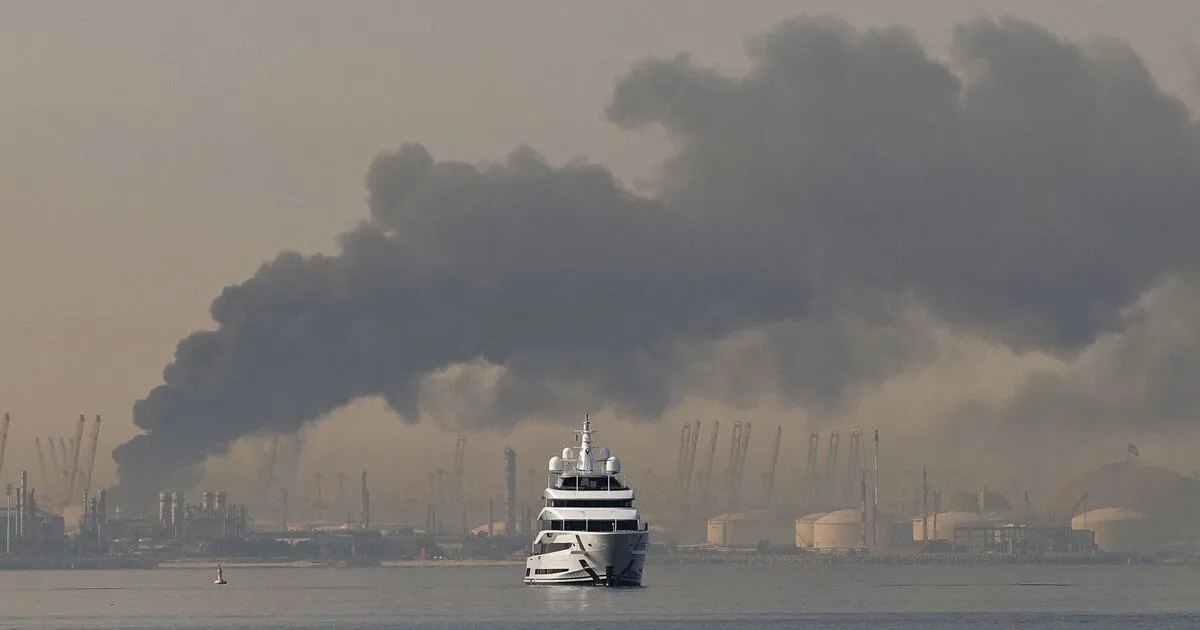
Earlier this week, a kamikaze drone struck a fuel tank less than a mile from the terminal, forcing a six-hour closure. Planes from as far away as Australia were turned around mid-air, and all departures were suspended. Yet astonishingly, as firefighters battled a massive blaze with thick black smoke choking the air, an Emirates jet ascended just beyond the inferno as if it were a routine weekday takeoff from Gatwick.
The Propaganda Machine and Harsh Realities
Over the past two weeks, reporting from Dubai under a pseudonym has reinforced a consistent impression: this city-state defies belief. While approximately 50,000 influencers—many of them British—parrot government-approved "Dubai is Safe" hashtags, deadly munitions continue to fall from the sky. Notably, several of these same influencers, including former Apprentice star Luisa Zissman, quietly departed, claiming their returns to Britain were pre-planned.
This is not to diminish the UAE air defenses' impressive interception efforts. However, the reality remains that even one successful drone strike—and several have penetrated—could devastate a bus or residential building. Dubai's surreal landscape, featuring indoor ski slopes and space-age architecture, contrasts sharply with the drab, overcrowded accommodations housing thousands of low-paid migrant workers.
Crackdown on Information and Migrant Struggles
The government's attitude has hardened significantly against anyone sharing images of missiles, drones, or interceptions online. More than 100 people, including one British tourist, have been arrested and charged with spreading such information, facing up to a year in prison and substantial fines. One family was arrested merely for sending photos of their damaged apartment to relatives back home. This oppressive environment explains why some journalists, including myself and a colleague, chose to report under pseudonyms for the Daily Mail.
Other media outlets faced similar scrutiny, with one TV crew arrested for street filming and photographers forced to delete images or visit the notorious Bur Dubai police station. The opaque Dubai Media Office has worked overtime to assure everyone that "everything is awesome," even when a drone strike near the terminal on March 7 created a massive dust cloud. They insisted there was "no incident" simply because, miraculously, no injuries occurred.
When casualties do happen, the Media Office quickly notes victims' nationalities—"Pakistani," "Bangladeshi," or "Palestinian"—implying their lives are less valuable. This perception is clear to the legions of migrant workers, largely from the Indian subcontinent, who sustain Dubai's economy. Often, their passports are held by employers, and their visas depend entirely on their jobs.
Economic Desperation and Uncertain Futures
During better times, hundreds of thousands were brought in, but now many face uncertain fates. At the airport, hundreds of Indians and Pakistanis were seen heading home, not entirely voluntarily. One hotel worker from Karachi revealed he was forced to use his minimal paid leave now, with no guarantee of returning to his bar job that supported his family. Others remain but endure pay cuts, surviving on subsistence wages with nothing left to send home—the very reason they came to Dubai.
Walking along "The Walk" at Jumeirah Beach Residence, a prime tourist area lined with upscale beach clubs and hotels, Dubai's desperation becomes evident. It's not the panic of people scurrying to bomb shelters—at least not while interceptor missiles hold out—but a slow-burn fear of an uncertain future. Young staff stand forlornly outside empty beach clubs, while salespeople in stifling suits sit in air-conditioned cabins, with no tourists to lure into the "booming" property market.
Exodus and Resilience
Early in the crisis, some endured grueling overland trips to Oman or Saudi Arabia for connecting flights, while a lucky few spent up to £150,000 on private jets, sometimes escaping with their pets. However, when approaching the remote Hatta border post, expected scenes of chaotic exodus were absent—not a single car was coming the other way. One delayed tourist even argued he'd be safer in a five-star hotel on Palm Jumeirah than on the open road, suggesting peevishness more than panic.
The attitude of hardened expats choosing to stay is harder to fathom, likely due to limited options. Thousands have returned to Britain, though whether permanently or temporarily remains unclear. Many Western financial institutions have evacuated staff from the UAE and other Gulf states, especially after Iran's Republican Guard announced targeting banks and tech companies with US connections.
Geopolitical Vulnerabilities and Blind Optimism
With no regime change in Tehran despite optimistic predictions, the crisis highlights the UAE's vulnerability to Iran and the Ayatollahs' grip on the Strait of Hormuz, a critical choke point for global oil tankers. One British expat, who has called Dubai home for 20 years, expressed over a drink in an Irish pub: "Of course we're worried, but we have to believe the UAE will bounce back. I don't want to return to Britain's wet weather and high taxes after living tax-free here."
He hopes Dubai might experience a "readjustment" with falling rents and property prices—but not a plummet. As this crisis continues to flare, such blind optimism may seem as outlandish as the city's own skyline.