Sudanese Doctor's Harrowing Escape from Besieged Darfur City Reveals Atrocities
Three months after paramilitary fighters overran the Sudanese city of el-Fasher, a physician is providing a rare and detailed first-person account of the brutal assault that transformed the regional capital into what United Nations officials describe as a "massive crime scene."
A City Under Siege
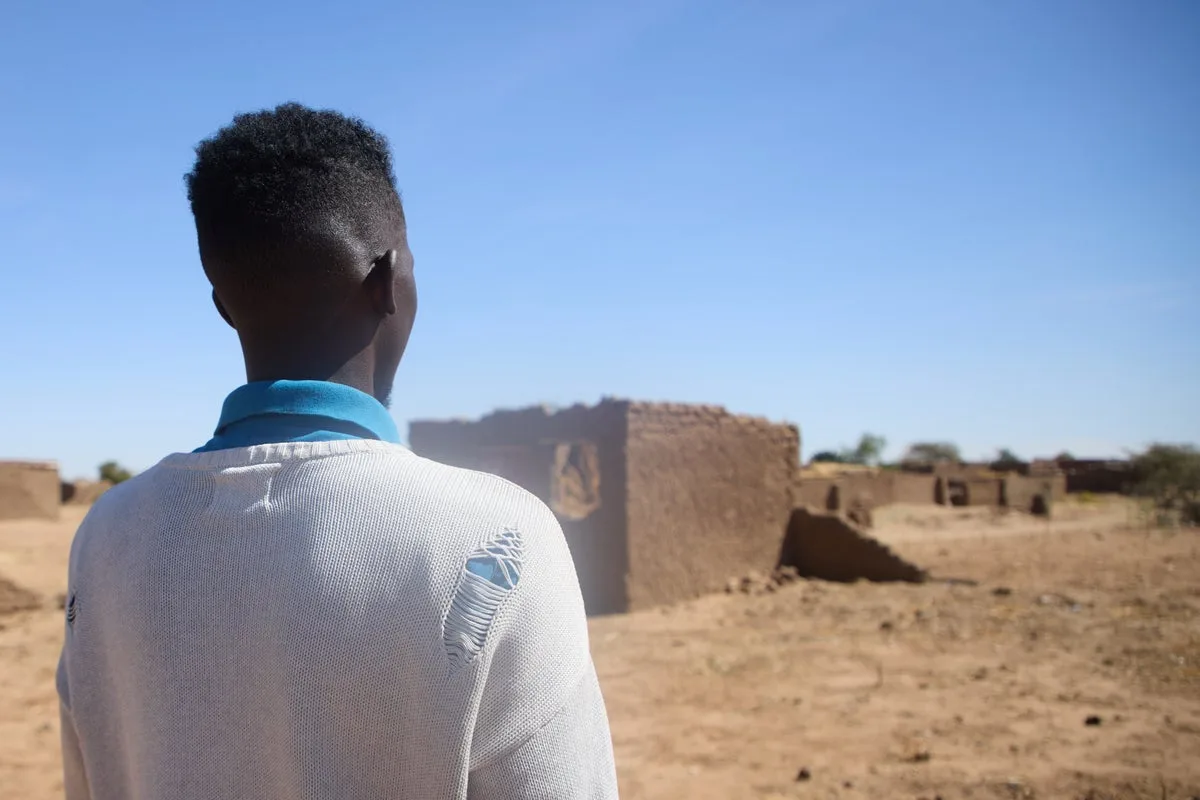
Dr. Mohamed Ibrahim, a 28-year-old physician, recounted to The Associated Press his desperate dash through streets littered with bodies as explosions, shelling, and gunfire thundered from every direction. The capital of Sudan's North Darfur province lay enveloped in smoke and fire after 18 months of battling culminated in paramilitary fighters overrunning el-Fasher, the Sudanese army's last remaining stronghold in the Darfur region.
"All around we saw people running and falling to the ground in front of us," Ibrahim described, detailing the three-day assault that began on October 26. "We moved from house to house, from wall to wall under non-stop bombardment. Bullets were flying from all directions."
Emerging Humanitarian Catastrophe
The brutality inflicted by the militant Rapid Support Forces is only now becoming clear months later. United Nations officials report that thousands of civilians were killed, though no precise death toll exists. They estimate that only 40% of the city's 260,000 residents managed to flee the onslaught alive, with thousands wounded and the fate of the remainder unknown.
When humanitarian teams finally gained access in late December, they found the city largely deserted with few signs of life. A Doctors Without Borders team visiting this month described el-Fasher as a "ghost town" largely emptied of its former inhabitants.
Systematic War Crimes Alleged
Nazhat Shameem Khan, deputy prosecutor of the International Criminal Court, stated that war crimes and crimes against humanity were committed in el-Fasher "as a culmination of the city's siege by the Rapid Support Forces." Speaking to the U.N. Security Council, she described the emerging picture as "appalling" and noted that "organized, widespread mass criminality" had been used to assert control.
The Rapid Support Forces, descended from Sudan's notorious Janjaweed militias, did not respond to detailed questions about the attack or Ibrahim's account. RSF commander Gen. Mohammed Hamdan Dagalo acknowledged abuses by his fighters but disputed the scale of atrocities.
Descent into Chaos
The violence represents the latest chapter in Darfur's tragic history, already infamous for genocide and atrocities in the early 2000s. When Sudan's military toppled the civilian-led government in a 2021 coup, it counted the Rapid Support Forces as an ally, but the two forces quickly became rivals.
By late October, they had fought fiercely for over two years in Darfur, with the strategically-located el-Fasher becoming the army's final stronghold. The RSF, accused by the Biden administration of carrying out genocide in the ongoing war, had the city surrounded, pressing residents into a small area on the city's western side.
Medical Collapse Under Fire
Ibrahim worked at the Saudi Maternity Hospital, el-Fasher's last functioning medical center, as the RSF closed in. Months of shelling and drone strikes had driven away most staff, leaving just 11 doctors. "We worked endless shifts and supplies dwindled to nothing," he recalled.
On October 26, as shelling intensified around 5 a.m., civilians sheltering near the hospital began fleeing toward a nearby military base. "People were running in every direction," Ibrahim said. "It was obvious that the city was falling."
Escape Through Urban Battlefield
Around 7 a.m., Ibrahim and another doctor decided to flee on foot toward the army base approximately 1.5 kilometers away. An hour later, RSF fighters attacked the hospital, killing a nurse and wounding three others. Two days later, militants stormed the facility again, killing at least 460 people and abducting six health workers according to the World Health Organization.
The doctors darted from house to house, passing four corpses and many wounded civilians before reaching university dormitories. Separated from his colleague, Ibrahim sprinted across open areas where "anything could happen to you — a drone strike, a vehicle ramming over you, or RSF chasing you."
Hiding in an empty water tank, he heard screams of people chased by gunmen amid two hours of nonstop shelling. When bombardment slowed, he jumped from roof to roof to avoid detection before finding cover behind a medical school morgue.
Refuge and Exodus
By noon, RSF fighters rampaged across el-Fasher. Ibrahim ran past 25 to 30 more dead before finally reaching the army base around 4 p.m. and reuniting with his coworker. Thousands, mostly women, children, and older people, were taking refuge there, many sheltering in trenches with scores injured and bleeding.
Ibrahim used clothing scraps to dress wounds, stabilizing one man's broken wrist with a sling made from a shirt. Around 8 p.m., he and about 200 others, mostly women and children, left the base for Tawila, a town swelling with tens of thousands fleeing the fighting.
Perilous Journey Through Blockade
Guides led the way under a bright moon, with the group dropping to the ground when they heard trucks or spotted fighters on camels in the distance. They reached a series of trenches the militants had built to tighten the blockade, helping each other scale the 3-meter-high barriers.
At the last trench, those ahead of Ibrahim came under fire as they climbed out. He and his colleague lay flat until shooting subsided. Finally, around 1 a.m., they ventured into darkness with five from the group dead and many others wounded.
Kidnapping and Ransom Demands
Around noon on October 27, RSF fighters on motorcycles and weapon-mounted trucks stopped the survivors. Encircling the group, militants fatally shot two men and took the doctors and others captive. Fighters separated Ibrahim, his colleague, and three others, chaining them to motorcycles and forcing them to sprint behind.
At an RSF-controlled village, fighters chained prisoners to trees and interrogated them. Initially claiming to be ordinary civilians, Ibrahim eventually admitted being a doctor after his friend confessed. "I didn't want to tell them I was a doctor, because they exploited doctors," he explained.
Brutal Negotiations for Freedom
That evening, fighters brought them before Brig. Gen. Al-Fateh Abdulla Idris, identified in videos executing unarmed captives. Returned to the village, fighters demanded ransom for their release. "They said, 'You are doctors. You have money. The organizations give you money, a lot of money,'" Ibrahim recalled.
The gunmen initially demanded $20,000 each. When Ibrahim laughed in stunned disbelief at the amount—"My entire family don't have that"—they beat him with their rifles. After hours of abuse, he offered $500, prompting more beatings and threats of execution.
His colleague eventually agreed to $8,000 each—an enormous sum in a country where the average monthly salary is $30 to $50. "I almost hit him. ... I didn't trust them to let us go," Ibrahim said. With little choice, he called his family, who transferred the money.
Final Escape and Reunion
The fighters separated the doctors, keeping them blindfolded before moving them to vehicles filled with fighters who claimed they were being taken to Tawila. Instead, they were dropped in an RSF-controlled area, prompting fears of recapture. Spotting fighters, the doctors hid in brush before emerging an hour later to follow horse-drawn cart tracks.
Three hours later, they spotted the flag of the Sudan Liberation Army-Abdul Wahid, a rebel group not involved in fighting between the RSF and government troops. The rebels allowed them entry, where they were met by a Sudanese-American Physicians Association team providing care for those fleeing el-Fasher.
When they finally reached Tawila, Ibrahim was reunited with survivors, including another Saudi hospital physician who had seen video of their capture on Facebook and believed them dead. "He embraced me and we both wept," Ibrahim recounted. "He didn't imagine I was still alive. It was a miracle."
Speaking from Tawila, about 70 kilometers from the defeated capital, Ibrahim's account provides crucial testimony about events in the cut-off city. His harrowing escape through urban warfare, kidnapping, and ransom demands underscores the extreme violence and systematic criminality that has transformed el-Fasher from a bustling regional capital into a deserted symbol of Sudan's escalating humanitarian catastrophe.