Sudanese Doctor's Harrowing Escape from Besieged Darfur City Revealed
Doctor's Escape from Besieged Darfur City Revealed

Sudanese Doctor's Harrowing Escape from Besieged Darfur City Revealed

Three months after paramilitary fighters seized control of the Sudanese city of el-Fasher, a physician has provided a rare and detailed first-person account of the brutal assault and his subsequent escape. Dr. Mohamed Ibrahim, who fled the city's last functioning hospital, described scenes of devastation and violence that have only now begun to emerge fully.

A City Under Siege

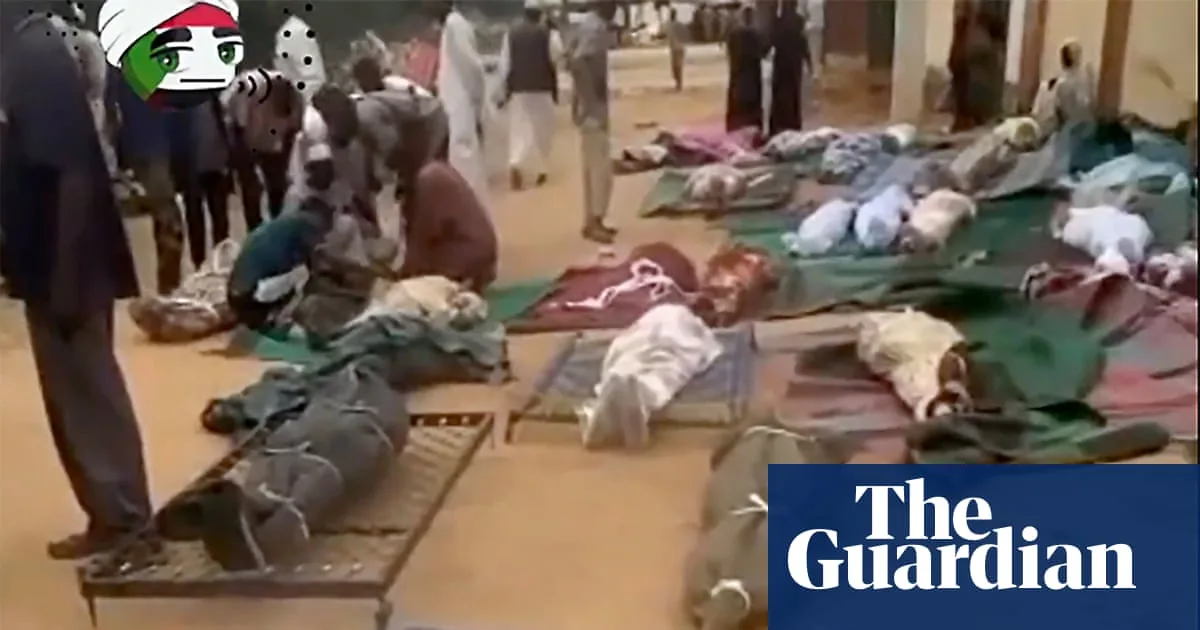
Dr. Mohamed Ibrahim dashed from building to building, desperate for places to hide as he ran through streets littered with bodies. The capital of Sudan's North Darfur province lay enveloped in smoke and fire after 18 months of battling, with paramilitary fighters finally overrunning el-Fasher - the Sudanese army's only remaining stronghold in the Darfur region.

"All around we saw people running and falling to the ground," the 28-year-old physician told The Associated Press, recounting the assault that began on October 26th and lasted three days. Ibrahim, who fled the city's last functioning hospital, said he feared he would not live to see the sun go down.

Emerging Evidence of Atrocities

Three months later, the full brutality inflicted by the militant Rapid Support Forces is only now becoming clear. United Nations officials state that thousands of civilians were killed, though they have no precise death toll. They estimate that only 40% of the city's 260,000 residents managed to flee the onslaught alive, with the fate of the remainder remaining unknown.

The violence, including mass killings, turned el-Fasher into what U.N. officials and independent observers describe as a "massive crime scene." When a humanitarian team finally gained access in late December, they found the city largely deserted with few signs of life remaining.

Historical Context of Conflict

The Rapid Support Forces have a brutal history in the region. When the military toppled Sudan's civilian-led government in a 2021 coup, it counted the Rapid Support Forces - descended from the country's notorious Janjaweed militias - as its ally. However, the army and militants quickly became rivals, fighting fiercely for over two years in Darfur, a region already infamous for genocide and other atrocities in the early 2000s.

The army's last stronghold was strategically-located el-Fasher, but the RSF - accused by the Biden administration of carrying out genocide in the ongoing war - had the city surrounded. Civilians were forced to eat animal fodder as food supplies gave out, according to Ibrahim's account.

The Decision to Flee

Ibrahim was treating patients around 5 a.m. on October 26th when shelling intensified dramatically. "It was obvious that the city was falling," he recalled. His family had fled after their home was shelled in April, but with few health workers remaining, Ibrahim had stayed to work at the Saudi Maternity Hospital as the RSF closed in.

Around 7 a.m., Ibrahim and another doctor decided to flee, setting out on foot for a nearby army base. An hour later, RSF fighters attacked the hospital, killing a nurse and wounding three others. Two days later, the militants stormed the facility again, killing at least 460 people and abducting six health workers according to the World Health Organization.

A Perilous Journey

It took nearly nine hours for Ibrahim to reach the army base, just 1.5 kilometers away, as he darted between buildings and at times jumped from rooftop to rooftop to avoid detection. At one point, hiding inside an empty water tank, he heard the screams of people chased by gunmen amid two hours of nonstop shelling. He passed dozens of bodies along the way.

Around 4 p.m., he finally reached the military base where thousands - mostly women, children or older people - were taking refuge. Scores were injured, and Ibrahim used clothing scraps to dress their wounds.

Ransom Demands and Abuse

Around 8 p.m., Ibrahim left with about 200 others for Tawila, a town 70 kilometers away that had swelled with tens of thousands fleeing the fighting. The group eventually reached 3-meter-high trenches that RSF fighters had dug to tighten their blockade of el-Fasher. Many turned back, unable to scale the steep climb, and their fate remains unknown.

At the last trench, those ahead of Ibrahim came under fire as they climbed out. Ibrahim and his colleague lay flat in the trench until the shooting subsided. When they ventured out, five people lay dead with many others wounded.

The survivors walked for hours toward Tawila until, around noon on October 27th, they were stopped by RSF fighters. The gunmen separated Ibrahim, his colleague and three others, chained them to motorcycles and forced them to sprint behind. At an RSF-controlled village, the militants interrogated the doctors.

"I didn't want to tell them I was a doctor, because they exploited doctors," Ibrahim said. "But my friend admitted he was a doctor, so I had to."

That's when the ransom demands began. "They said, 'You are doctors. You have money,'" he recalled. Initially, the gunmen demanded $20,000 each - a sum so staggering that Ibrahim laughed, prompting the fighters to beat him with rifles.

After hours of abuse, the militants asked Ibrahim how much he could pay. When he offered $500, they "started beating me again," he said. "They said we will be killed." His colleague eventually agreed to $8,000 each - an enormous sum in a country where the average monthly salary is $30 to $50.

Miraculous Survival

With little choice, Ibrahim called his family. After they transferred the money, the doctors were put blindfolded in a truck filled with fighters who told them they were being taken to Tawila. Instead, they were dropped off in an RSF-controlled area, prompting fears they would be recaptured. Eventually, they spotted tracks of horse-drawn carts and began following them.

When they finally reached Tawila, Ibrahim was reunited with survivors including another Saudi hospital physician. The man said he had seen video of the doctors' capture on Facebook and was sure they had been killed.

"He embraced me and we both wept," Ibrahim said. "He didn't imagine I was still alive. It was a miracle."

The Rapid Support Forces did not respond to phone calls and emails from the AP asking detailed questions about the brutal attack and Ibrahim's account. With el-Fasher cut off from the outside world, such first-person testimonies remain crucial for understanding the full extent of the humanitarian crisis unfolding in Darfur.