Davos 2026: A Gathering Amidst Global Upheaval
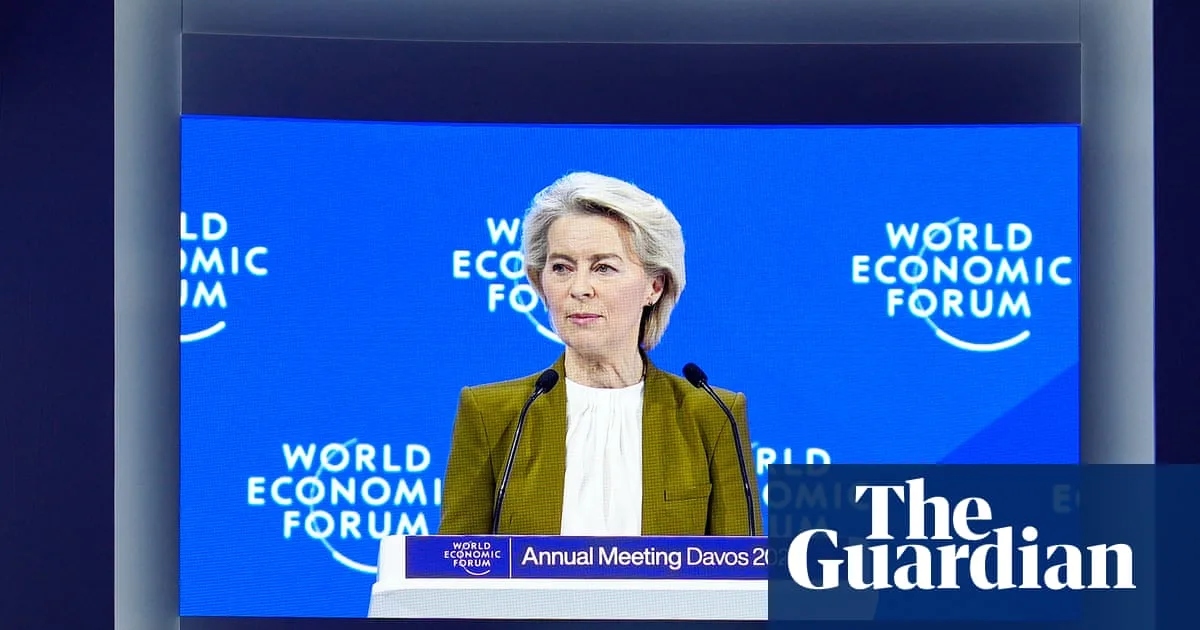
The annual assembly of political and business elites in Davos commenced this week against a stark backdrop of escalating international conflicts, mounting trade disputes, and a rapidly fragmenting global framework. The World Economic Forum, once a bastion of cooperative dialogue, finds itself grappling to align its rhetoric of collaboration with the harsh realities of intensifying great-power rivalries and confrontations.
The Overwhelming Shadow of Trump
More than any specific policy theme or panel discussion, the figure of Donald Trump has dominated the Alpine summit. The former US president appears resolutely determined to utilise the prestigious platform to propagate his distinctive vision for global affairs, effectively turning the event into a stage for his political narrative.
Insights from the Guardian's economics editor, Heather Stewart, who is on the ground in Davos, paint a picture of an event where Trump's influence is pervasive. "It feels very busy. The restaurants feel very busy. The roads are absolutely jammed," Stewart reports, noting the event seems even more crowded than in previous years. She observes that the fundamental world order symbolised by Davos—a stable, rules-based trading system dominated by a select group of powerful nations—has been fundamentally disrupted. "That order, the trading system as it was, with rich and powerful countries controlling the rules, that's kind of gone," she states. "It's been swept away."
A Platform for Populist Rhetoric
Trump's impact was palpable, with the conference schedule being cleared to accommodate an unscheduled, lengthy event where he unveiled a new "board of peace," featuring allies but conspicuously excluding G7 nations. His rhetoric, particularly regarding Greenland and his perceived need to "defend it," escalated throughout the summit. Analysis of his earlier speech described portions as "pure racism," involving a rambling diatribe against Somalia and what was characterised as a racially motivated project to position himself as a saviour figure.
Interestingly, the forum also saw the attendance of figures like Nigel Farage, who has previously derided the WEF as a globalist entity. Farage justified his presence by stating, "My message to Davos is simple. You guys, the globalists, have had it your way for far too long." Stewart notes that while globalisation hasn't vanished, it has been "eroded and undermined for quite a long time," with conversations about tariffs, economic nationalism, and sovereignty now central to the discourse.
Moments of Resistance and a New Reality
Amidst Trump's dominance, there were notable moments of pushback. Following his threats to use tariffs to compel allies over Greenland, a "day of resistance" seemed to emerge. Canada's Prime Minister, Mark Carney, delivered a significant speech arguing that the old rules-based international order was partly a fiction and has now definitively collapsed. He warned that pretending it will re-emerge leaves nations vulnerable, urging so-called middle powers to build new, flexible alliances.
French President Emmanuel Macron echoed this sentiment, speaking of a "shift towards a world without effective collective governance where multilateralism is weakened by powers that obstruct it." The overt use of economic power to coerce other countries has shocked many European leaders, highlighting the new geopolitical playbook.
The Enduring Nature of Davos
Despite the overwhelming focus on geopolitics, Heather Stewart stresses that Davos is not solely about political speeches. A packed programme of panels on artificial intelligence, the future of work, technology, and global growth continues alongside the headline events. It remains a place for exchanging ideas, networking, and deal-making. The environment is uniquely hierarchical and exclusive, where access and badges dictate influence, and global elites briefly converge.
This year, however, the gathering has felt unusually vibrant and unsettled. "Is it the start of a resistance?" Stewart ponders. "Or is it just acceptance that there's a new reality? I don't know." For now, Davos offers a front-row seat to a messier, more unpredictable international future, where old certainties have dissolved and new dynamics are fiercely contested.