Britons Caught in Middle East Conflict Describe 'Constant State of Anxiety'
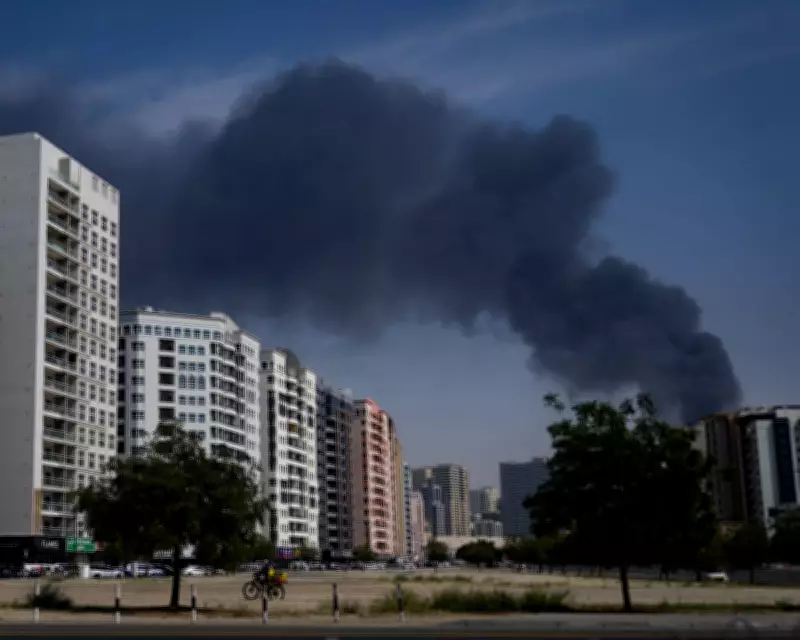
A plume of smoke was seen rising from a warehouse in Sharjah City, United Arab Emirates, on Sunday, as the region grapples with escalating tensions. In the aftermath of the US-Israel attack on Iran, travel has been severely disrupted, with Dubai Airports announcing that 'limited' flights would resume on Monday evening, three days after cancellations began.
British citizens living in or traveling through the Middle East have shared their harrowing experiences with the Guardian, detailing struggles with uncertainty and efforts to return home. The situation remains fluid, with many expressing deep concern over safety and logistics.
Families Seek Shelter Amid Missile Strikes
Frankie, a 37-year-old educator from Leeds now living in Muharraq, Bahrain, with her husband and three young children, has been sheltering in their apartment building's underground car park since Saturday's attack. 'We have been sleeping on the floor and trying to keep our children occupied as we hear sirens and explosions,' she says. Her children, aged five, six, and nine, are nervous, and the family gets little sleep, feeling trapped despite community support.

They registered with the embassy and stocked up on food beforehand, but flights are cancelled, and leaving seems unlikely. 'We don't want to leave Bahrain, but living like this is unsustainable,' Frankie adds, highlighting the emotional toll.
Expats in Dubai Grapple with Panic and Uncertainty
Lucy, a 45-year-old from the Midlands working in education in Dubai, describes scenes reminiscent of the Covid era, with supermarkets cleared of essentials and streets empty. 'We are living in a constant state of anxiety,' she says, noting that her family lives near an airbase intercepting missiles, forcing her youngest son to wear noise-cancelling earphones.
While some expats consider leaving, Lucy feels safer staying put, with a 'grab bag' ready but trusting local authorities. 'This is our home, and we have pets. We don't want to leave unless we absolutely have to,' she emphasizes, reflecting a common sentiment among residents.
Travel Chaos and Rising Costs
Saif, a 40-year-old from Manchester working in Saudi Arabia's museum sector, was in Dubai during the attacks and endured an 18-hour coach journey back to Riyadh. His family remains in Dubai, and he faces increased coach fares to reunite them. 'The coach fares to Riyadh have increased,' he notes, adding that driving back is an option due to his mother's health issues.
He describes Dubai as calm but scary, with vibrations from explosions felt. Saif hopes the world reflects on this moment, drawing parallels to conflicts in Gaza and Ukraine.
Stranded Tourists Desperate to Return Home
Heleyne Hammersley, a 60-year-old supply teacher from Carlisle, was stranded in Dubai en route from a holiday in Malaysia to Edinburgh. 'We just want to get home,' she says, after being bused to a hotel amid chaotic scenes. She has booked a flight to Newcastle for Thursday but remains uncertain due to airspace closures.
Despite hearing explosions and seeing smoke, Hammersley reports no panic among hotel guests, just frustration and resignation. The extended stay adds to the stress for many Britons caught in the crossfire of geopolitical tensions.