Boston Marks 250th Anniversary of British Evacuation with Living History
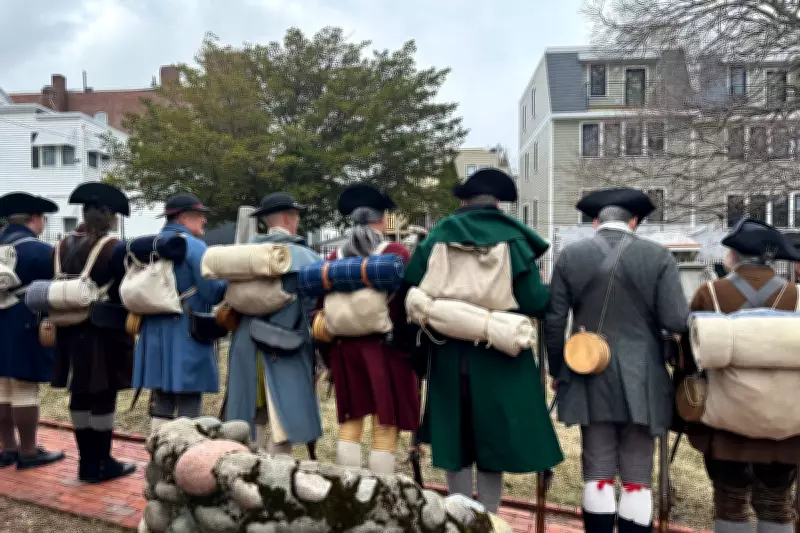
The crisp morning air in South Boston was filled with the distinctive crack of muskets and the rhythmic echo of marching drums on Tuesday, as the city commemorated the 250th anniversary of the British evacuation. Reenactors dressed meticulously in tricorn hats and authentic 18th-century military coats gathered at one of the nation's oldest Catholic churches, creating a vivid tableau of living history.
A Ceremonial Procession Through Historic Streets
The commemorative events began at St. Augustine Chapel and Cemetery, where participants gathered for a special mass before forming an impressive procession. The column of historical interpreters then moved deliberately through the streets of South Boston, tracing a path toward the strategically significant Dorchester Heights. Residents watched from their stoops, some wrapped in blankets against the morning chill, appearing to have been awakened by the stirring sounds of drums and bagpipes that filled the neighborhood.
Men, horses, and even cattle moved through South Boston's hills in the morning wind, recreating the atmosphere of that pivotal moment in American history. The procession represented a tangible connection to the events of March 17, 1776, when British forces finally withdrew from Boston after enduring months of siege by determined colonial troops.

The Strategic Victory That Changed History
Evacuation Day marks one of the Continental Army's earliest and most significant triumphs during the Revolutionary War. The breakthrough occurred when General George Washington masterfully fortified Dorchester Heights with artillery that had been painstakingly hauled from Fort Ticonderoga by Colonel Henry Knox. This strategic positioning gave colonial forces a commanding advantage over Boston Harbor, ultimately forcing the British evacuation and ending an arduous 11-month siege of the city.
This victory not only secured Boston for the American cause but also provided crucial momentum for the revolutionary movement during its formative stages. The evacuation represented the Continental Army's first major military success, demonstrating that colonial forces could indeed stand against the formidable British military machine.
Personal Connections to Historical Legacy
Following the religious service at St. Augustine Chapel, reenactors formed lines in the church's historic graveyard and fired replica muskets in a ceremonial salute. Among them stood Ronald White of Milton, dressed in full colonial attire, who expressed the deep personal significance this anniversary holds for him.
As a member of the New Hampshire Sons of the American Revolution, White traces his lineage directly to an ancestor who fought in the Revolutionary War. His eyes grew misty as he reflected on the courage displayed by the nation's founders 250 years earlier.
"To think that 250 years ago Henry Knox made such a courageous stand, I get choked up thinking about it," White said emotionally. "They really were going up against a force — it was kind of a suicidal idea to stand up against Great Britain. And we did it. Here we are remembering it."
The anniversary events served not merely as historical recreation but as a powerful reminder of the sacrifices and strategic brilliance that shaped the early American republic. Through muskets, marching, and personal reflection, Boston honored a pivotal moment when colonial determination transformed into tangible military success against overwhelming odds.