Beirut's Humanitarian Crisis Deepens as Thousands Remain Homeless Despite War's End
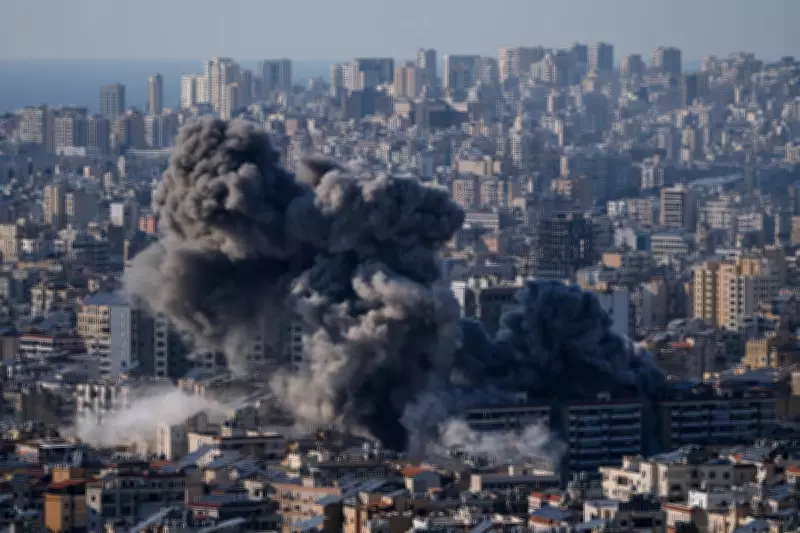
While Washington has sent mixed signals about the duration of its military campaign against Iran, the devastating aftermath continues to unfold in Beirut. For thousands of Lebanese families, the conflict is far from over as they face homelessness and despair in the wake of relentless Israeli bombardment.
Families Forced to Flee with Only the Clothes on Their Backs
Eighty-two-year-old Fatima represents the human toll of this conflict. Sobbing uncontrollably, she frantically searched for shelter in a sports stadium turned displacement camp after fleeing her home in Dahiyeh, Beirut's predominantly Shia neighborhood. "It was just me and my husband on our own. They told us to get out so we ran," she repeated in terror as Israeli drones circled overhead.
Fatima's story mirrors that of countless others who received final evacuation warnings from Israeli forces before air strikes decimated entire neighborhoods. The predominantly Shia district of Dahiyeh, home to approximately half a million residents, has become a primary target since Israel opened a second front against Iran-backed militant group Hezbollah.

A Mounting Humanitarian Catastrophe
The United Nations reports that Israeli attacks have killed at least 570 people in Lebanon and displaced approximately 700,000 individuals. Shockingly, 100,000 people have been forced from their homes in just the last twenty-four hours alone. With limited options for shelter, many families have resorted to sleeping in makeshift camps, vehicles, or along Beirut's iconic seafront.
Mariam, a thirty-six-year-old mother of three who fled Dahiyeh, now lives in a tent in Martyrs' Square after being turned away from multiple overcrowded schools serving as temporary shelters. "During the last war with Israel in 2024, my family building was completely destroyed and we have had no money to rebuild," she explained nervously, watching warplanes roar overhead.
International Response and Regional Complications
Lebanon's Minister of Social Affairs Haneen Sayed revealed on Tuesday that the state is preparing for even greater displacement than during previous conflicts. "There are far fewer resources this year given the global situation and the regional war that's happening," she noted, explaining that Gulf nations that previously provided aid are now grappling with their own crises after coming under Iranian fire.
Dr. Hanan Balkhy, regional director of the World Health Organization, described the current crisis as "unprecedented" due to its multilayered, multi-country nature. She warned that without immediate cessation, the situation could "spin out of control" completely.
Stadiums Transformed into Emergency Shelters
As the humanitarian emergency escalates, Lebanese authorities have converted schools and sports facilities into temporary displacement camps. Najji Hammoud, former General Manager of Sports Facilities at one such stadium, now oversees a major humanitarian operation. "This is about trying to bring people off the streets and into a place where they have a toilet, electricity and some food," he explained while UN agencies and the Lebanese Red Cross stockpiled supplies behind him.
Hammoud emphasized the severity of the current situation: "This is the worst. Even in the 2024 bombing the Syria border was open, and not all of Dahiyeh was in the red zone. Now Israel has evacuated everyone."
Disabled Father's Desperate Struggle for Survival
Among those seeking refuge is sixty-five-year-old Ali, a disabled single father of two who arrived at the stadium in a wheelchair after sleeping in his car for five consecutive days. "A strike landed right next to us so we escaped with nothing but what we were wearing," he recounted from inside his temporary tent shelter.
Ali's desperation reflects the broader uncertainty gripping displaced families: "We have no idea when this will end. We are normal people, we do not get to decide. We are waiting for the war to end. All we can do is pray."

Political Stalemate and Military Escalation
While Lebanese President Joseph Aoun signaled openness to direct negotiations with Israel on Monday, Israel's ambassador to France, Joshua Zarka, dismissed diplomatic overtures. "At this stage, I'm not aware of any decision to enter negotiations," Zarka told Reuters. "What would end it is the disarmament of Hezbollah and that is a choice for the Lebanese government."
This political impasse occurs against a backdrop of regional escalation that has seen Iran choke global shipping routes and bomb countries including Qatar and the UAE, forcing international airport closures. The United Kingdom has even deployed Royal Navy warship HMS Dragon to the eastern Mediterranean following a drone attack on an RAF base in Cyprus.
For now, displaced families in Beirut face an uncertain future, fearing that even if the United States ends its campaign against Iran, Israel's offensive in Lebanon will continue unabated. The humanitarian catastrophe deepens daily as more people join the ranks of the homeless, their lives upended by a conflict that shows no signs of resolution.