Bay of Pigs Veterans Open New Museum on 65th Anniversary in Miami
Veterans of the Bay of Pigs Invasion are commemorating the 65th anniversary this month with the grand reopening of a museum in Miami, dedicated to preserving the legacy of their failed 1961 attempt to overthrow Fidel Castro's Communist government in Cuba.
A Teenager's Journey to the Invasion
Manuel Portuondo was just a teenager in 1960 when his family fled Cuba for Miami, following the Cuban Revolution. Soon after, while still in school, he learned of a U.S.-backed military force of Cuban refugees being organized. He and several classmates decided to enlist.
"As an 18-year-old with a lot of ideals and a big heart, I wanted to be back in my country and be free and be able to do what I wanted," Portuondo said. "I enrolled in the invasion and shipped to Guatemala for training."

Remembering the Invasion and Its Aftermath
On April 17, 1961, about 1,500 Cuban exiles, with CIA backing, attempted to invade at the Bay of Pigs to overthrow Castro's fledgling government. More than 100 fighters drowned or were killed in action. Another 1,200, known as Brigade 2506, were taken prisoner after running out of ammunition and spent about 20 months in captivity before their release was negotiated.
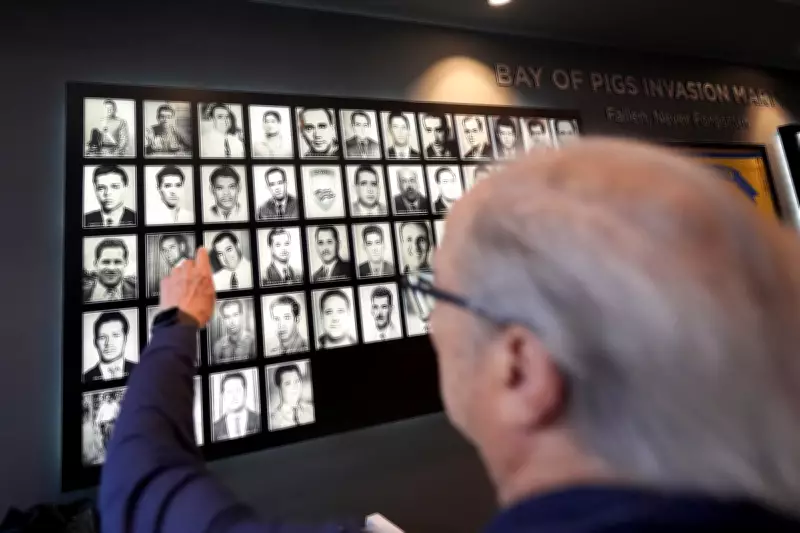
Today, only about 200 veterans remain, the youngest in their 80s. They are hosting the reopening of the Bay of Pigs Brigade 2506 Museum and Library in Miami's Little Havana neighborhood this month to coincide with the anniversary.
"The museum's purpose is not only to cement the legacy of what thousands of men did on that day, but also, from a historic perspective, to tell the new generations that freedom has a price," Portuondo said.
Historical Context and Political Stances
Rafael Montalvo, president of the Brigade 2506 Veterans Association, emphasized the museum's role in educating visitors about the harm caused by decades of Communist dictatorship.
"The Bay of Pigs is a historical moment that defined the future of Cuba, of the United States, of Miami, and of many Latin American countries, because the failure of that intervention made communism stay in Cuba forever and change the country completely," Montalvo said.
The Cuban Revolution began in 1953 as an armed revolt led by Castro against U.S.-backed dictator Fulgencio Batista. After Batista fled in 1959, Castro established a socialist state, nationalized foreign assets, and allied with the Soviet Union. By the 1962 Cuban missile crisis, nearly a quarter million Cubans had fled to the U.S.
Historically conservative, the Brigade broke with a half-century tradition by endorsing U.S. President Donald Trump's campaigns in 2016 and 2020. Montalvo cited Trump's promises to add sanctions and reverse Obama-era policies loosening restrictions on travel and commerce.
Now, they hope Trump can remove the Cuban government, possibly with U.S. military action, though Montalvo opposes a full invasion.
"I don't want to see American boots on the ground in Cuba," he said. "I would hate to see an American soldier die because of Cuba's freedom. We have to die ourselves before that happens."
Internal Debates and Museum Details
Carlos Leon, a Brigade member, expressed skepticism about military intervention, questioning the morality and effectiveness of such actions.
"How many Cubans are you going to kill? How many more enemies in Cuba are you going to create by killing all those Cubans?" Leon said.
The original museum opened in 1988 in a Little Havana home. The new two-story, 11,000-square-foot facility was built on the same spot with funding from Miami-Dade County, Florida, and private donors. It opens with a ceremony for Brigade members and families before reopening to the public.
Legacy and Hopes for the Future
Ernesto Freyre called joining Brigade 2506 the most important action of his life.
"It was the biggest purpose and commitment that I took upon myself," Freyre said.
He has dreamed of a liberated Cuba since Castro took over but is unsure if it will happen in his lifetime, with or without U.S. help.
"But at least I'm hoping that my descendants do see it," Freyre said.