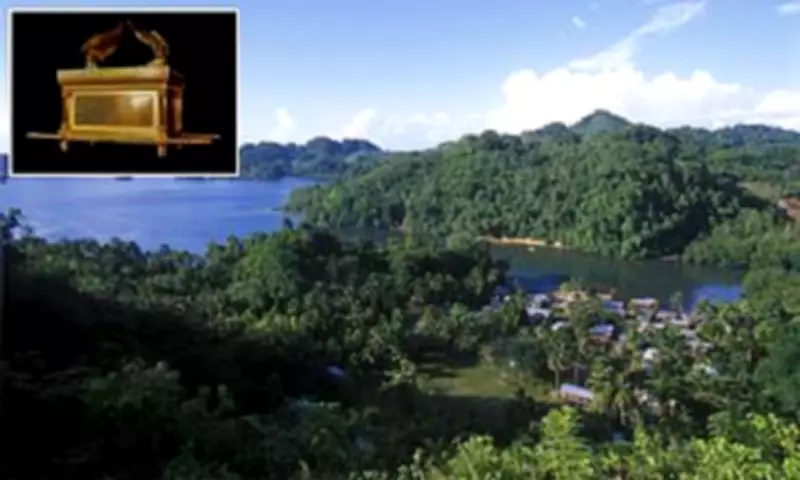
The Ark of the Covenant: A Solomon Islands Enigma
For centuries, the Ark of the Covenant has stood as one of religious history's most profound mysteries. This sacred gold-plated chest, believed to contain the original Ten Commandments, vanished from historical records over 2,500 years ago. Traditional theories have placed it in Ethiopia, Zimbabwe, or even Ireland, but a remarkable hypothesis now points to a far more remote location: the Solomon Islands in the South Pacific.
Ancient Voyages and Lost Connections
According to local traditions on Malaita Island in the Solomon Islands, ancient travelers from Israel may have undertaken an epic 8,000-mile canoe journey approximately two millennia ago, potentially carrying the sacred relic with them. Some religious groups believe these voyagers constructed a temple modeled after King Solomon's Temple in Jerusalem somewhere in the island's mountainous interior, where the Ark was subsequently hidden.
Cultural clues have fueled this extraordinary speculation. In parts of the Solomon Islands, residents have been documented singing Hebrew prayers, using fragments of the Hebrew language, and wearing Stars of David. Among To'abaita speakers in North Malaita, the idea that their ancestors might descend from the Ten Lost Tribes of Israel has gained significant traction.

Local Beliefs and Religious Movements
Within North Malaita, small Christian movements maintain that the Ark could still be buried there today. Local rumors describe a temple hidden in dense rainforest where ancient inhabitants practiced rituals resembling Jewish worship. Some residents even claim knowledge of the approximate location where temple remains might be found.
The All Peoples Prayer Assembly (APPA), originally known as the Deep Sea Canoe Movement when founded in the 1980s, represents one of the most prominent groups embracing these ideas. Researcher Jaap Timmer estimates the movement has hundreds of active followers and thousands of sympathizers, primarily in North Malaita but also among Malaitans in the capital Honiara on Guadalcanal Island.
For many To'abaita people, the connection with Israel reflects spiritual identification rather than literal blood descent. They frequently cite Acts 1:8—"you will be my witnesses... to the ends of the earth"—interpreting "ends of the earth" as including remote Pacific locations like the Solomon Islands.
Historical Context and Scholarly Perspectives
The Ark of the Covenant served as the Israelites' most sacred religious object, described in the Bible as a gold-covered chest containing the stone tablets of the Ten Commandments. After being carried through the desert and housed in King Solomon's Temple, it disappeared following the temple's destruction, creating one of biblical archaeology's most enduring mysteries.
The late Terry Brown, former Anglican Bishop of Malaita, observed that these beliefs represent broader attempts by local churches to connect Malaitan traditions with Old Testament narratives. "There's a kind of general phenomenon among a lot of the churches in Malaita," Brown noted, "to somehow try to put together the traditional Malaita genealogy and culture with the culture of the Old Testament."
According to Brown, believers describe ancient travelers venturing into Malaita's rugged interior to build a Solomon's Temple replica, where the Ark was hidden and worshipped by early Malaitans adopting Israelite religious practices. These beliefs blend Jewish traditions with Christianity, with some followers conducting rainforest searches for the Ark's resting place.
Physical Evidence and Ongoing Fascination
Interest intensified after filmmaker Frank Daifa produced The Lost Temple Discovery, a documentary exploring stone remains in North Malaita's rainforest. Daifa reflected on the site's spiritual significance: "If we look at this Temple here, we see nothing else than stones. But the power and glory are in your hearts... that is why the Temple is here."

Despite dramatic claims, most historians and archaeologists remain skeptical about the Ark crossing the Pacific in ancient times. No physical evidence currently links Malaita to ancient Israelite civilization. However, Timmer suggests these traditions reflect deeper community questions about identity, faith, and history—"about Malaita's lost relationship with God and with the nation of Israel."
For believers, the possibility that the Ark lies hidden in their mountains represents more than historical mystery. It connects their remote Pacific homeland to one of the Bible's most powerful legends and a sacred relic missing for millennia, weaving local spiritual identity into global religious narrative.