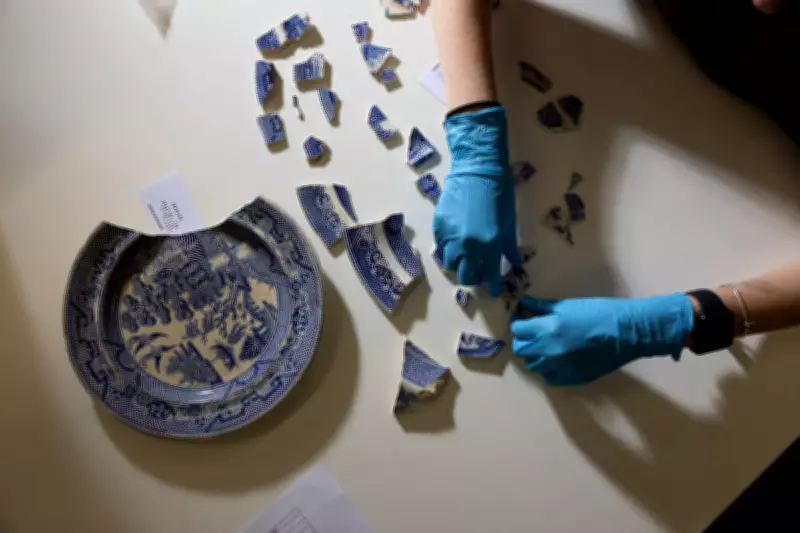
Archaeologists Uncover Early Brisbane Fragments in Major Salvage Operation
In a significant archaeological discovery, experts have successfully salvaged numerous fragments from early Brisbane, shedding new light on the city's colonial past and urban evolution. The operation, conducted at a key historical site, has yielded artefacts that provide a tangible connection to Brisbane's formative years during the 19th century.
Details of the Salvage Operation
The salvage effort was meticulously planned and executed by a team of professional archaeologists, who worked under tight deadlines to recover materials before modern development encroached on the area. Using advanced techniques, they carefully excavated and documented each find, ensuring that even the smallest fragments were preserved for future study. This process involved sieving through layers of soil and debris to uncover items that had been buried for over a century.
The artefacts recovered include pieces of pottery, glass, metal tools, and building materials, all dating back to the early colonial period of Brisbane. These items offer a glimpse into the daily lives of the settlers and Indigenous communities who inhabited the region. For instance, the pottery fragments suggest trade networks and domestic activities, while the metal tools hint at early industrial efforts and craftsmanship in the burgeoning city.

Historical Significance of the Finds
These fragments are not merely relics; they are crucial pieces of Brisbane's historical puzzle. By analysing them, archaeologists can reconstruct aspects of the city's early infrastructure, economy, and social dynamics. This discovery helps fill gaps in the historical record, providing evidence of how Brisbane transitioned from a penal colony to a thriving urban centre. The salvage operation has thus become a vital part of preserving the city's heritage, especially as urban expansion threatens to erase such traces of the past.
Moreover, the findings contribute to a broader understanding of Australia's colonial history, highlighting the interactions between European settlers and Indigenous peoples. The artefacts may reveal patterns of settlement, adaptation, and conflict, offering insights that go beyond written documents alone. This makes the salvage effort not only a local achievement but also a contribution to national historical research.
Challenges and Future Implications
The operation faced several challenges, including logistical constraints and the need to balance preservation with development pressures. Archaeologists had to work efficiently to recover as much material as possible while adhering to strict conservation standards. Despite these hurdles, the team managed to salvage a substantial collection of fragments, which will now undergo detailed analysis in laboratories.
Looking ahead, the recovered artefacts will be studied further to extract more information about early Brisbane. This could lead to new exhibitions in museums, educational programs, and even influence urban planning decisions to protect historical sites. The salvage operation underscores the importance of integrating archaeology into modern development projects, ensuring that history is not lost in the rush for progress.
In conclusion, the salvage of early Brisbane fragments marks a pivotal moment in archaeological research, offering fresh perspectives on the city's origins. As these artefacts are examined and interpreted, they will enrich our understanding of Brisbane's past and inspire future generations to appreciate their heritage.