Archaeologists Probe 3,000-Year-Old Massacre Enigma in Serbian Mass Grave
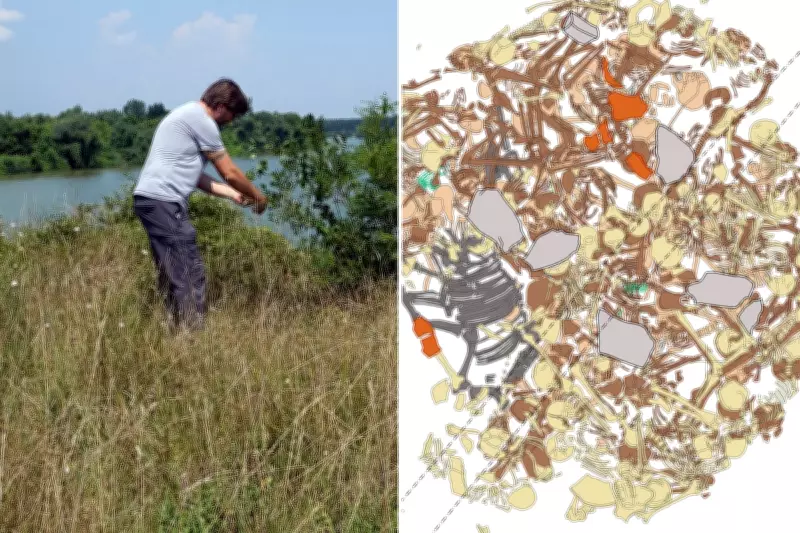
An international team of archaeologists is attempting to unravel a macabre prehistoric mystery involving a massacre of women and children that occurred nearly 3,000 years ago in what is now modern-day Serbia. The investigation centers on a mass grave containing 77 individuals, primarily women and children, who were brutally slaughtered and then buried in a cramped space less than three meters in diameter.
Violent Deaths and Distant Origins
Scientific analysis conducted by a University of Edinburgh osteologist, Dr. Linda Fibiger, has revealed that many victims were bludgeoned to death with clubs, while others perished from wounds inflicted by bladed weapons such as knives or swords. Isotopic analysis performed at Leiden and Kiel universities in the Netherlands and Germany indicates that numerous victims originated from settlements at least 30 miles away from the massacre site.
The corpses were crammed into a shallow mass grave with bodies positioned on their sides to conserve space, suggesting a distinct lack of respect for the deceased. DNA analysis further shows that hardly any victims were related to each other, indicating they likely came from various villages and communities across the region.

Ritualistic Burial Practices
Despite the disrespectful treatment, the interment was conducted in a highly ritualized manner. The human remains were placed atop and around a sacrificed young cow, accompanied by more than a dozen joints of meat from deer, sheep, cattle, and pigs. Isotopic analysis of these animal bones revealed they had been fed on food grown in multiple different environments and localities.
Archaeologists discovered additional ritual evidence including a pile of thoroughly burnt millet and barley seeds turned to charcoal. Ancient eastern European traditions held that smoke from burnt seeds could prevent the dead or their spirits from rising from graves to haunt the living. At least ten heavy quern stones were symbolically placed over the corpses, a practice known in ancient eastern Europe for containing cadavers considered potentially hostile or dangerous.
Settlement Abandonment and Possible Explanations
Archaeological investigations demonstrate that around the time of the ritual interment or shortly thereafter, the entire settlement was abandoned without evidence of attack or burning. The site remained uninhabited for several centuries following the event.
Led by University College Dublin archaeologist Dr. Barry Molloy, researchers propose one possible explanation: the massacre and mass grave might represent a deliberate decommissioning ceremony to ritually mark the closure of what may have been the killers' settlement. Such ritual decommissioning ceremonies were features of the prehistoric and ancient world.
The 9th century BC in northern Serbia was a period of rapid change with increasing competition for land. The victims likely came from tribes or clans considered rivals and enemies by the perpetrators. Modern studies of military and paramilitary violence suggest targeting women and children serves to dishonor, demoralize, and emasculate enemy communities while enhancing bonding between perpetrators.
Ongoing Investigations and Significance
The site, known as Gomolava, is located beside the Sava River in southeast Europe and was inhabited for several thousand years before its abandonment around 850 BC. Archaeologists and scientists from University College Dublin, Serbian institutions, and universities in Edinburgh, Copenhagen, Leiden, and Kiel collaborated on this investigation.
"Our new research has transformed our understanding of what must have been a traumatic crisis for the community living in the landscapes around this very significant archaeological site," said Dr. Molloy. "Telling the story of the mass grave deepens our understanding of a recurring, ugly side to human behavior which still scars our world today."
The research findings have been published in the academic journal Nature Human Behaviour, though further archaeological work is needed to fully crack this gruesome European archaeological mystery.