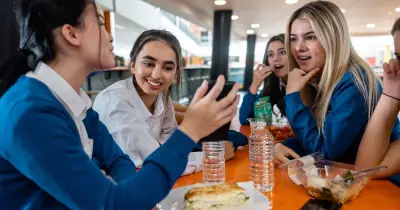
The UK government is set to announce a social media ban for under-16s tomorrow, with Prime Minister Sir Keir Starmer expected to outline plans on Monday to bar children from certain platforms. The move goes further than Australia by including restrictions on romantic or sexual AI chatbots and imposing a curfew for older teenagers to curb late-night scrolling, according to reports.
Details of the Proposed Ban
According to The Sunday Times, the UK will follow Australia's example in raising the minimum age to 16 for platforms such as TikTok, Instagram, Threads, Facebook, X, YouTube, Snapchat, and Reddit. Restrictions will also target AI chatbots, and daily social media use will be limited for under-18s.
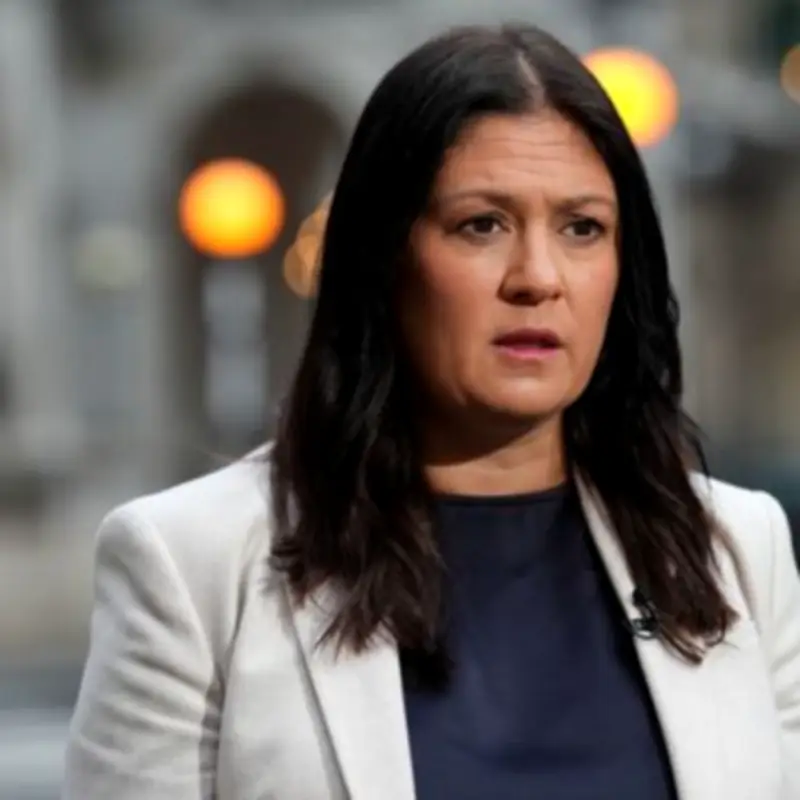
Culture Secretary Lisa Nandy, the MP for Wigan, appeared on television this morning and emphasized that a ban alone is not a 'silver bullet solution' but should be part of a 'basket of measures' to protect children online. She declined to pre-empt the Prime Minister's announcement but stated that the government's consultation was launched with a focus on how to better protect young people online, not whether to do so.

Ms Nandy told the BBC's Sunday With Laura Kuenssberg programme: 'The responses to the consultation were overwhelmingly clear. Not everybody wanted to see a social media ban for under-16s, but the vast majority of people who responded did. That came through not just from parents and from campaigners, it did also come through from many young people themselves who are feeling that they're being pulled into something quite toxic at a very young age.'
Consultation and Enforcement
The government's consultation received approximately 116,000 responses, making it the second-largest government consultation in history after the 2012 consultation on equal marriage. Ms Nandy noted that Australia's experience showed that while a ban would not prevent all young people from accessing social media, it could help shift the culture by changing the expectation that children as young as eight, nine, ten, and eleven should be online simply because their friends are.
She signalled that the UK could introduce more stringent age checks than Australia, where concerns have been raised that some under-16s bypassed the ban imposed in December using virtual private networks (VPNs) or fake dates of birth. Polling in April found three in five Australian children aged 12 to 15 still have access to restricted accounts. Ms Nandy said: 'The experience in Australia showed part of the reason why it has been difficult for them to enforce it is because there weren't very tough age verification measures. That's one of the things that we're looking at and the Prime Minister will say more about tomorrow.'
Public Opinion and Expert Views
A survey by the Institute for Public Policy Research (IPPR) found that only one in seven adults trust government ministers to decide which social media platforms are appropriate for children, with more confidence placed in parents (51%), an independent regulator (49%), schools (22%), and technology companies (16%). The YouGov polling of over 2,000 adults also revealed that 44% support banning under-16s from social media, while 39% prefer tighter regulation. Just over one in ten participants said social media should not be banned or more strictly regulated.
The IPPR is calling for a blanket ban on social media for under-16s, not just to protect children from harmful content. Avnee Morjaria, associate director at the IPPR and a former teacher, said: 'More and more of children's lives are now lived through screens. Previous generations had the freedom to make mistakes, experiment and move on. Today's children are growing up under constant scrutiny, where every insecurity can be amplified and every mistake permanently recorded. A blanket social media ban for under-16s is the only effective option. Not because technology is inherently bad, but because we are allowing childhood itself to be shaped for the worse by algorithms. Childhood should be defined by real-world experiences, friendships and opportunities to grow, not by an endless competition for attention and approval. The greatest loss of the smartphone age is not privacy; it's childhood itself.'

The National Education Union (NEU) has also called for a ban. General Secretary Daniel Kebede said: 'The public backs action, parents have spoken, and the evidence is overwhelming. Anything less than a full ban would mean caving in to Big Tech.'
Opposition to a Ban
However, some groups argue that a ban may not be the appropriate tool to tackle the wide range of social media harms. The Molly Rose Foundation, established in memory of 14-year-old Molly Russell who took her own life in 2017 after viewing harmful content online, warned that an Australia-style ban might offer only 'the perception of security.' The Children's Coalition for Online Safety, led by the 5Rights Foundation and including groups such as the NSPCC and Girlguiding, has demanded a broader overhaul of technology companies' business models and product design choices that risk keeping young users hooked.