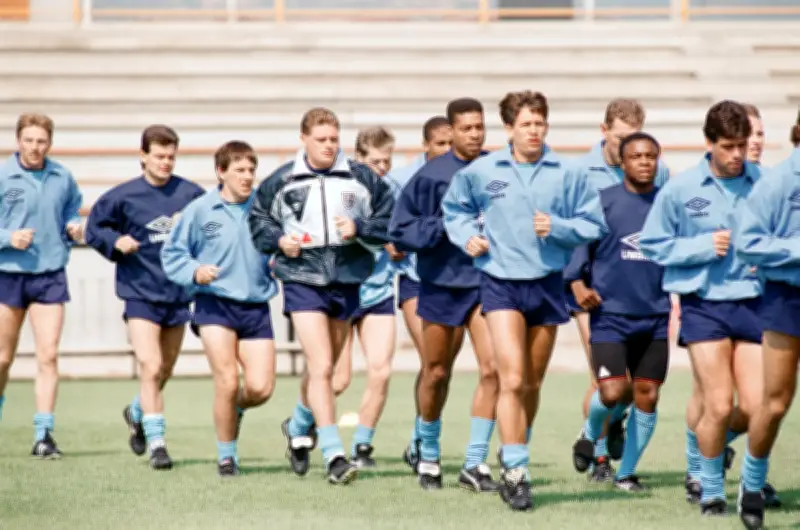
Professor John Brewer, the Football Association's first head of human performance, played a pivotal role in preparing England for the 1990 World Cup in Italy. Using a BBC microcomputer, a dot-matrix printer, and basic Polar heart-rate monitors, he assessed players' fitness and acclimatised them to the Italian heat. Despite initial suspicion from some in the England setup, Brewer's methods proved effective, helping the team adapt to conditions and maintain their high-tempo game.
Pioneering Sports Science in Football
Brewer's work at Italia 90 now seems primitive compared to today's advanced wearables and hyperbaric chambers, but it marked a turning point for English football. He convinced manager Bobby Robson that players needed more carbohydrates before games, though he faced resistance from the medical team. Before the opener against Ireland, the chef served swordfish steaks, which Brewer and Robson rejected, insisting on proper nutrition.
Alcohol and Discipline
Robson banned alcohol two weeks before the tournament but allowed occasional drinks. However, some players broke curfew and drank excessively, though Brewer refuses to name them. Players who had played abroad, like Chris Waddle and Trevor Steven, were more receptive to dietary advice. Surprisingly, Paul Gascoigne, who achieved around 10% body fat, was a temporary convert to the fitness regime.
Training Innovations
Brewer introduced warm-ups without the ball to raise body temperature and flexibility, a departure from the traditional approach of just kicking the ball around. He also had substitutes stretch and warm up regularly, and squad players train harder between matches. These methods benefited players like David Platt, who replaced the injured Bryan Robson.
Bobby Robson's Vision
Brewer admires Robson for his willingness to embrace sports science despite pressure from FA director Charles Hughes, who advocated a direct long-ball style based on statistical analysis. Robson listened to Brewer's advice on preparation and fitness but made his own decisions on tactics, leading to a more enlightened approach.
Now retired, Brewer notes that modern players are fitter and have more support, but the basics he pioneered remain relevant. He recalls using a BBC microcomputer and Polar monitors, which were cutting-edge at the time, highlighting how far sports science has come.