Humans have a natural tendency to walk anticlockwise, according to new research, but the reason for this bias remains unclear. The discovery emerged from experiments conducted during the pandemic aimed at understanding social distancing in crowded spaces.
Serendipitous Discovery
Dr Inaki Echeverria Huarte at the University of Navarra in Spain and his team initially set out to study how many people could share a space while maintaining a safe distance. Reviewing video footage, they noticed that crowds overwhelmingly walked in an anticlockwise direction. This observation sparked an entire research project.
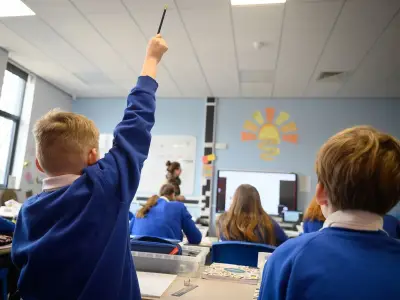
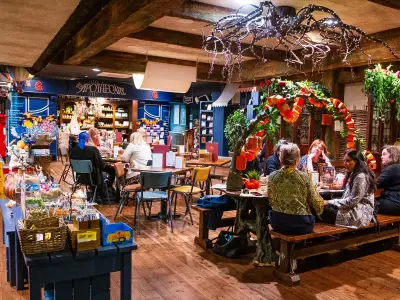
When individuals are ambling about, they have a natural tendency to turn left and walk anticlockwise, the scientists found. 'If you simply ask someone to start walking, whether they are wandering around a museum, a supermarket, or even an empty room, it is surprisingly likely that they will drift counterclockwise,' said Echeverria Huarte.
Cross-Cultural Consistency
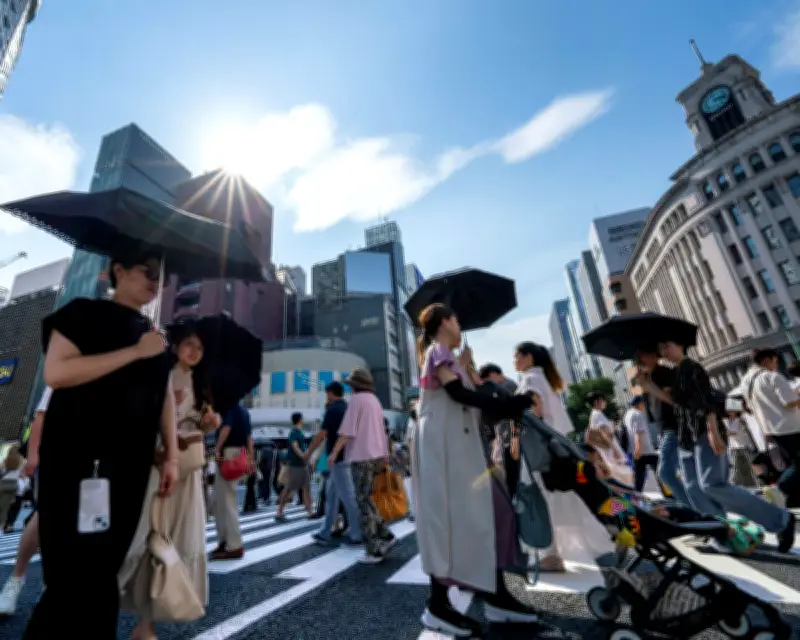
To rule out cultural norms, the team collaborated with Dr Claudio Feliciani at the University of Tokyo, who replicated the findings in Japan. The bias persisted even after accounting for right-handedness, right-footedness, and right-eye dominance, and was observed in both males and females. Children showed a more pronounced bias.
'Each of us carries a small personal bias to turn slightly to one side, and when many people share a space, those tiny biases add up into a net counterclockwise rotation,' Echeverria Huarte explained.
Potential Explanations
The scientists are uncertain about the origin of the bias. They conducted further experiments in virtual reality and with participants pretending one leg was broken, but the cause remains elusive. Some team members joked about opposite trends in Australia or the Coriolis effect, but these were not serious.
'We don't know why it happens, but we think that by understanding the reasons, we could better understand how we perceive the world,' Feliciani said. 'It can help us make other discoveries which may be more important than this one.'
Similar biases exist in other species, such as rock ants, which also show a left-turn bias when exploring unknown nests.
Biomechanics and Social Factors
Suspicion has fallen on biomechanics. 'None of us is perfectly symmetrical, and the way each person's brain gathers sensory information and coordinates it with the muscles seems to tip them gently to one side,' said Echeverria Huarte. However, he admitted that the exact mechanism remains an open question.
Understanding this bias could improve crowd and evacuation simulations and help design everyday spaces like museums, supermarkets, and train stations.
Interestingly, the first modern Olympics in 1896 had athletes running clockwise, but this was changed in 1913 because most athletes found it unnatural. Anticlockwise running is now standard in athletics, likely due to right-leg dominance in the population.
'Running around the bend in an anticlockwise direction puts more internal force on the right side of the body,' said Prof Gareth Irwin of Cardiff Metropolitan University. He added that right-sided dominance extends beyond sports, influencing supermarket layouts and directing customer flow.