If you have ever suspected that your dog loves your partner more than you, you may be right. A canine behavior expert has confirmed that Spare Human Syndrome (SHS) is a real phenomenon, but it is also fixable.
What Is Spare Human Syndrome?
Spare Human Syndrome refers to the feeling of being second best in your dog's affections. According to research by fresh dog food subscription service Butternut Box, 56 percent of dog owners believe they rank second in their pet's heart, even when they are the primary caregiver. This dynamic can even cause domestic arguments, with one in five owners admitting to disputes with their partner over who the dog truly favors.
Canine expert Caroline Clark explains that SHS is not about pets being ungrateful but is a learned behavior that can be changed through behavioral science. "Whether a dog has a favorite human is not imagined. It is learned, reinforced, and, in many cases, entirely fixable," she says. "The problem is that most sufferers are going about recovery the wrong way."
Who Suffers Most?
The syndrome appears to affect men more than women, with 60 percent of men feeling like the spare human compared to 56 percent of women. Men are also more likely to resort to bribery, with nearly a quarter spending up to £100 and one in ten spending up to £200 to win their dog's affection.
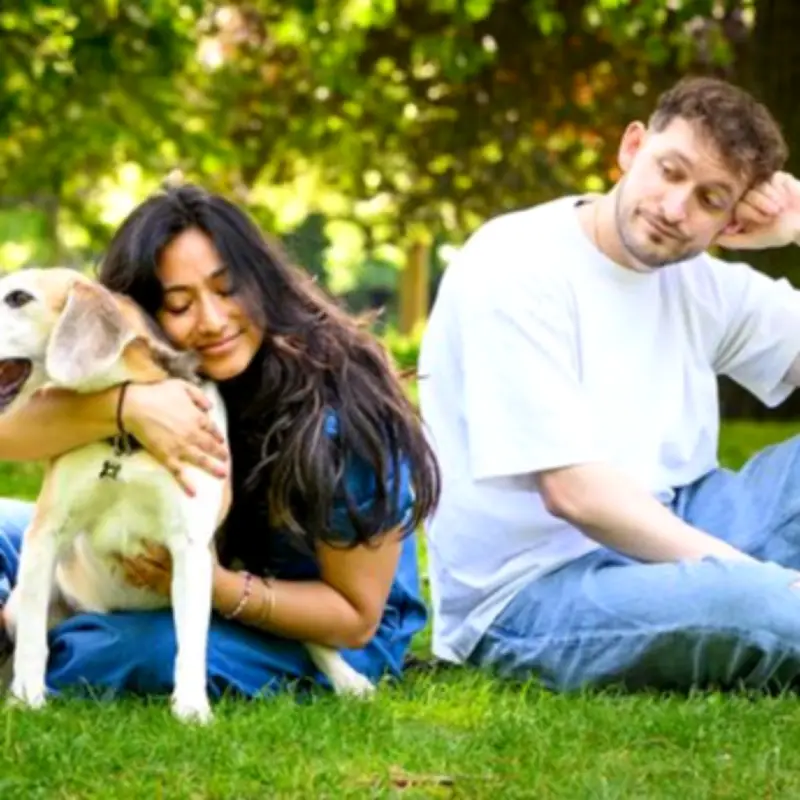
Bipsha Pradha, 28, from South West London, enjoys being the favorite human of her beagle, Rolls. "My dog, Rolls, chose me from day one, and ten years on, I'm still very much the favorite human," she says. "The favorite and spare hierarchy in our house is pretty well established, and I'm not mad about it."
On the other hand, Sean Weber, 37, from East London, is a self-confessed spare human who has tried everything with his poodle, Bo. "No matter what I do, our dog will not choose me over my partner. I've tried feeding him, playing with him more, and spending more time with him. And yet, when we come home, Bo runs straight past me every time."
Why Bribery Does Not Work
Caroline worked with Butternut Box to investigate what drives a dog's preference for one person over another. The results suggest that owners often misread their pet's signals. Instead of recognizing the behavioral cues that build genuine canine attachment, SHS sufferers try to spoil their dogs with gifts without addressing the underlying reasons.
According to Caroline, the solution is simple: meeting the dog's needs in a way they associate with pleasure. The most basic need is food. "Canine behavior is not too dissimilar to that of humans, and their relationship to food is just like ours. Eating is an emotive experience, and our psychology attaches feelings to the sensory stimulant," she explains. "For dogs, food naturally stimulates the release of oxytocin, commonly known as the love hormone, helping the body relax and process nutrients. Dogs will associate the individual with the good feeling food brings."
Fresh food, in particular, can be key to building a strong bond. "If the food you are serving every day is ultra-processed and unremarkable, that moment of joy simply isn't there," Caroline adds. "Improve the experience of mealtimes, and you improve the association your dog has with the person providing them."
How Fresh Food Can Help
Leeneshwari Makhijani, Managing Director at Butternut Box, says that ensuring fresh food is available offers a way to solve SHS. "Nobody wants to feel second best in their own home, especially when it comes to their dog," she says. "The data shows that feeding is not enough on its own. Just like a human, if a dog is being served the same ultra-processed food every single day, it's unlikely to be a joyous moment for them. A dog that genuinely looks forward to mealtimes is a dog that associates that excitement with the person holding the bowl. Fresh food that smells incredible and tastes even better might just be the thing that gets you to the top spot."
Signs You Are a Spare Human
Here are the telltale signs that you are a victim of Spare Human Syndrome:
- You have spent a small fortune on toys and presents, and none of it has worked. When owners feel their dog does not favor them, the instinct is to reach for toys or novelty to try to shift that dynamic. When one thing does not work, they try the next. It is understandable, but it addresses the symptom rather than the cause, and dogs are very good at noticing the difference.
- You set your alarm earlier just to get some one-on-one time. Setting an earlier alarm to secure time with the dog before a partner wakes is more common than people admit. The intention is right, building time and association, but without understanding what actually reinforces attachment in dogs, the early start rarely produces the result they are hoping for.
- You have quietly given up your spot on the sofa. Giving up a favorite seat tends to happen so incrementally that owners do not realize it has occurred until the new arrangement is already established. The dog has registered it, even if the owner has not.
- You feel genuinely left out when the three of you are in the same room. When a dog consistently gravitates towards one person, the other will often feel it more than they expect to. That response is entirely normal, and it is usually the clearest sign that the attachment dynamic needs attention.
- You keep trying to make eye contact with the dog, and they just... do not. Dogs use sustained eye contact to express trust and connection, but unless they take the lead, it can be a threatening gesture. So, if you are watching your partner receive that and you cannot seem to get it yourself, that is the dog communicating a preference, however tough that may be to learn.