Federal investigators in the United States are reportedly examining whether a woman fatally shot by an Immigration and Customs Enforcement (ICE) agent had connections to activist groups opposing former President Donald Trump's immigration policies. This line of inquiry is becoming a central part of the investigation into the shooting itself.
Focus Shifts from Civil Rights to Activist 'Instigators'
The FBI, which has taken over the probe from local police, states it is conducting a thorough inquiry into the fatal shooting last Wednesday. This includes analysing the actions of ICE agent Jonathan Ross and physical evidence like the handgun used.
However, sources indicate the Department of Justice's civil rights division, which normally investigates police-involved shootings, has not opened a case into whether Ross violated the victim's federal rights and is not expected to do so soon.

Instead, according to reports, the Justice Department plans to scrutinise a broad network of activists involved in 'ICE watch' activities in Minneapolis, viewing them as potential 'instigators' of the incident.
The Fatal Confrontation and Conflicting Narratives
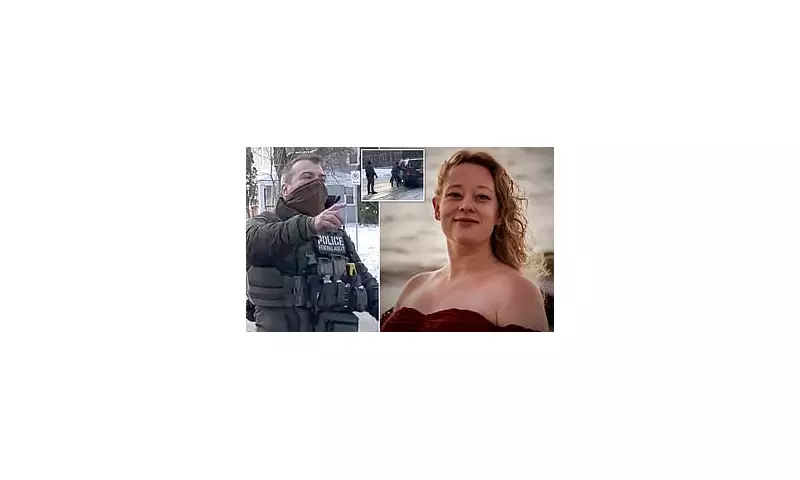
The victim, 37-year-old mother-of-three Renee Nicole Good, was shot by agent Ross during a protest against ICE actions. It is unclear if she was involved in activism beyond participating in that day's protest, though friends suggest she was connected through her son's school and a local 'ICE Watch group'.
Witnesses claim Good and her wife, Rebecca, were acting as legal observers and filming. In emotional footage, Rebecca stated she encouraged Good to confront agents, saying, 'I made her come down here, it's my fault.'
Newly released surveillance footage shows Good apparently blocking a road with her Honda Pilot SUV for four minutes before the shooting. About twenty seconds after she stopped, a passenger, believed to be Rebecca, exited and began filming.
The video shows an officer approaching the SUV, grabbing the door handle, and allegedly demanding she open it. The vehicle then moved forward, and Ross fired three shots, jumping back as it moved toward him. It is not clear if the vehicle made contact with him. The SUV subsequently crashed into parked cars.
Political Fallout and a Redefined 'Terrorism'
The Trump administration swiftly defended Ross. Homeland Security Secretary Kristi Noem labelled Good's actions 'an act of domestic terrorism', while President Trump called Good a 'professional agitator' and claimed the shooting was in 'self-defence'.
Experts criticise this rapid classification. Thomas E. Brzozowski, former counsel for domestic terrorism at the DOJ, told The New York Times that a deliberate process once determined such labels, and without it, the term becomes 'a political cudgel'.
This shift follows a recent memo from Attorney General Pam Bondi that greatly expanded the federal definition of domestic terrorism. It now includes impeding law enforcement and actions advancing political agendas like opposition to immigration enforcement, which critics say targets progressive activism.
'When you have a memo like this, it complicates things because it builds in a set of assumptions about what domestic terrorism is and what is not,' Brzozowski said, adding that field investigators 'have to deal with it.'
Legal and Political Repercussions
Meanwhile, Minnesota state officials are challenging the federal crackdown. They have filed a lawsuit seeking to block ICE operations, arguing a recent surge of agents in the state is unconstitutional and arbitrary, as other states do not face similar enforcement.
The lawsuit also seeks to ban officers from threatening force against those not subject to immigration arrest and to prevent arrests without probable cause of a crime. It alleges the federal government is targeting Minnesota for political reasons, a potential First Amendment violation.
As the FBI pursues its investigation into activist networks, and the DOJ's civil rights division remains on the sidelines, the case continues to raise profound questions about protest, enforcement, and the politicisation of legal definitions in a deeply divided nation.