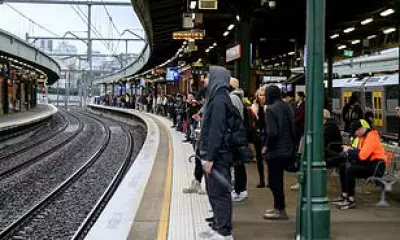
A former senior counter-terrorism officer has issued a chilling warning about the catastrophic vulnerabilities in Britain's transport network that could leave millions of commuters exposed during a terrorist attack.
Kevin Hurley, who served as a Detective Chief Inspector with the Metropolitan Police and City of London Police counter-terrorism squad, reveals that despite two decades of heightened security awareness, fundamental flaws in our emergency response planning remain dangerously unaddressed.
The Commuter Catastrophe Scenario
Imagine a terrorist incident occurring during peak morning rush hour at a major London transport hub. The scenario Hurley paints isn't just frightening—it's alarmingly plausible.

'Picture the chaos,' Hurley states. 'Tens of thousands of panicked people, inadequate evacuation routes, and emergency services struggling to reach the scene through gridlocked streets.'
The reality is that our transport infrastructure, designed for efficiency rather than security, creates perfect conditions for mass casualty events.
Where the System Fails
Hurley identifies several critical weaknesses in current security arrangements:
- Crowd control measures that are insufficient for genuine emergency situations
- Inadequate evacuation protocols for stations handling hundreds of thousands daily
- Emergency service access hampered by urban congestion and security barriers
- Communication systems that could fail when most needed
A Wake-Up Call for Authorities
The former counter-terrorism chief isn't just highlighting problems—he's demanding immediate action. His concerns come not from theoretical risk assessments but from decades of hands-on experience in preventing and responding to terrorist threats.
'We've been fortunate so far,' Hurley acknowledges, 'but luck isn't a security strategy.'
His warning serves as a crucial reminder that in an era of evolving terrorist tactics, our protective measures must evolve even faster. The millions who use Britain's transport network every day deserve more than crossed fingers and hopeful thinking.
The Path to Better Protection
While specific security recommendations remain confidential for obvious reasons, Hurley emphasizes that solutions exist—they simply require political will, investment, and coordinated planning between transport operators, emergency services, and security agencies.
The question isn't whether we can afford to make these improvements, but whether we can afford not to.