An alleged terrorist accused of carrying out Australia's deadliest terror attack could spend the remainder of his life in solitary confinement under the strictest possible security, according to a former senior prison official.
A Life of Extreme Isolation in Supermax
Naveed Akram, 24, faces 59 charges, including terrorism and 15 counts of murder, following the horrific shooting at Bondi Beach on Sunday evening. He and his father, Sajid Akram, 50, are alleged to have opened fire on a crowd celebrating Hanukkah. Sajid Akram was shot dead by police at the scene.
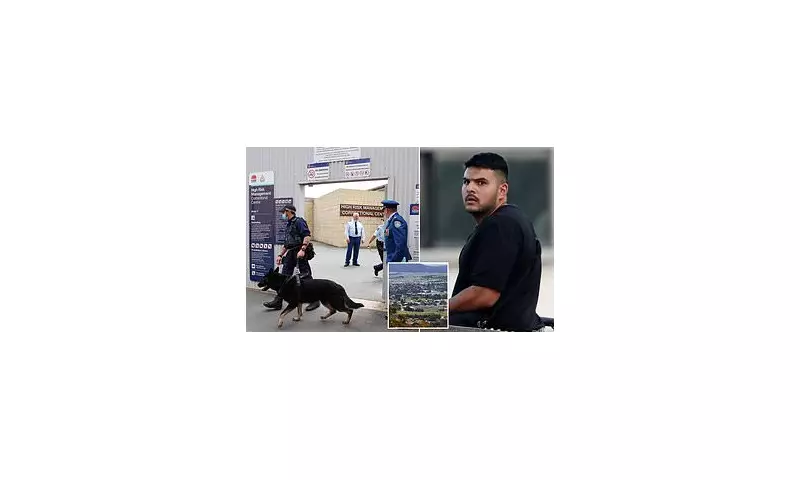
Domenic Pezzano, a former superintendent with 35 years of service in New South Wales Corrective Services, stated that if found guilty, Akram would almost certainly be designated an 'extreme high-risk inmate'. This classification would see him imprisoned at the High Risk Management Correctional Centre in Goulburn, infamously known as 'Supermax'.

"He would be transferred down to the High Risk Management Correctional Centre at Goulburn," Mr Pezzano confirmed. "They call it the Supermax, but its proper name is the High Risk Management Correctional Centre."
The Highest Security Classification: AA and National Security Interest
Mr Pezzano explained that Akram would likely receive an AA security rating, the highest prisoner classification in New South Wales, reserved for those posing a grave threat to public and national safety. "Those with an AA security rating can only be housed in the High Risk Management Unit at Goulburn," he said.
Furthermore, given the nature of the alleged crimes, Akram could be given the 'ultimate classification' of National Security Interest. This would result in him being held alone in a single cell with virtually no interaction with other inmates for years, potentially for the rest of his life.
"He would be on his own. He wouldn't have any contact with anyone, and even if that changes down the track, it would take years," Pezzano said. "Even then, it would be extremely controlled, probably just one-on-one association."
Movement Under Maximum Restraint and Surveillance
If classified as an Extreme High-Risk Restricted (EHRR) inmate, Akram's every movement would be managed by specialist teams. "Those designated as EHRR are only escorted by the Court Escort Security Unit (CESU), which has a specialist 'High Security Escort' unit," Pezzano detailed.
The security protocols are exhaustive:
- Inmates are restrained with a security belt around the waist.
- The belt is secured to handcuffs and ankle cuffs.
- Any external movement for medical or court appointments would involve the highest level of security.
"I wouldn't be surprised if they had an escort with a helicopter," Mr Pezzano added. "The main priority is preventing escape, but there's also the risk of retribution from outside."
Inside the recently upgraded facility, which can now house 75 inmates, Akram would have access to basic services like meals, medical care, and legal visits—all under intense supervision. If deemed a suicide risk, he would be placed in an observation cell, possibly in a suicide gown without belts or laces.
Mr Pezzano's conclusion was stark: if convicted, Naveed Akram would likely never leave the Goulburn Supermax facility. "He would probably be there for the rest of his life," he stated. "He won't see outside of that facility."