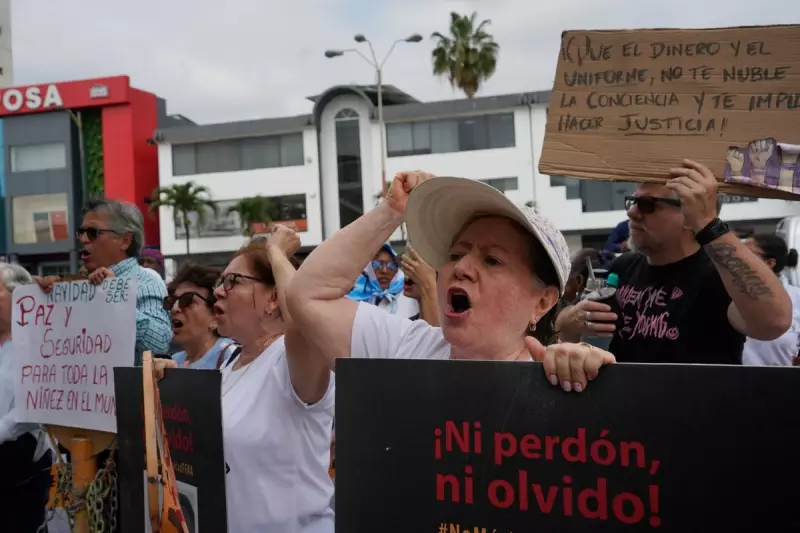
A court in Ecuador has delivered a landmark ruling, sentencing eleven soldiers to the maximum prison term of 34 years for the abduction and torture of four children, a case that has profoundly shaken public trust and sparked intense debate over President Daniel Noboa's security policies.
The Gruesome Crime and Landmark Sentencing
On Monday 22 December 2025, Judge José Suárez handed down the sentences for the forced disappearance of the four minors, aged between 11 and 15. The court also ordered each defendant to pay a $10,000 fine to the victims' families and to issue a public apology. The soldiers now face a separate murder trial for the children's deaths, scheduled for next year.
The case centres on the events of December 2024. Brothers Ismael and Josué Arroyo, along with their friends Saúl Arboleda and Steven Medina, vanished after failing to return home from a football game in the port city of Guayaquil. Security footage, later uncovered by local journalists, showed a military patrol detaining the boys and forcing them into a pickup truck.

A Chilling Account of State Abuse
Judge Suárez's ruling provided harrowing details, determining that the children were executed in a cruel fashion. After being detained, they were taken to a wooded area near a military base, forced to move a fallen tree, beaten with rifles, ordered to strip, and then killed. Their charred remains were discovered near the base outskirts weeks later.
The military initially claimed the children had been in their custody following robbery reports but were later murdered by drug gangs after release. The judge rejected this, finding the soldiers failed to report the detention and were directly responsible. Forensic evidence from the remains, along with testimony from around 100 witnesses, proved crucial in securing the convictions.
Broader Implications for Ecuador's 'Internal Armed Conflict'
This case strikes at the heart of President Daniel Noboa's controversial strategy to combat drug-related violence. Since January 2024, following a decree declaring an internal armed conflict, the military has patrolled streets in cities like Guayaquil. While the government argues this is necessary amid a tripled homicide rate, human rights groups have repeatedly accused security forces of abuses, including extrajudicial killings and arbitrary detentions.
In a significant move, the court also ordered the Ecuadorian military to hold a ceremony recognising the state's responsibility and to install a plaque honouring the children at the convicted soldiers' base. A separate group of five soldiers who collaborated with investigators received reduced sentences of two and a half years.
Ecuador's Defence Ministry stated it would comply with the ruling, affirming, "Justice has been delivered today. We ratify our respect for the law and the sentence that has been handed." The verdict is seen as a critical test of accountability within the nation's intensified security framework.