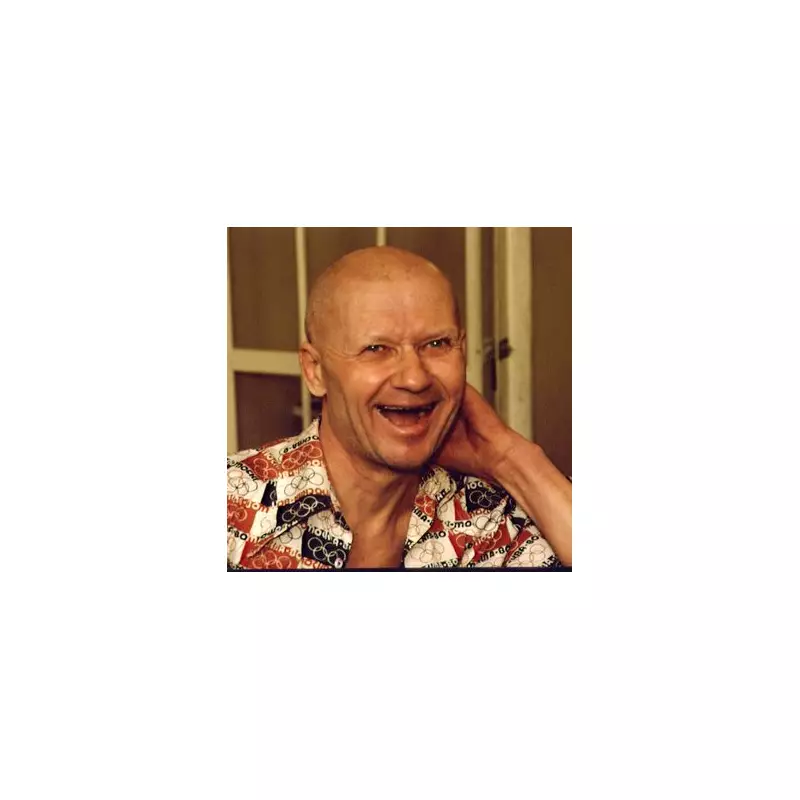
The annals of true crime contain few figures as monstrous as Andrei Chikatilo, a Soviet schoolteacher whose 12-year reign of terror saw him convicted of 52 brutal murders. Known as 'the Butcher of Rostov', his crimes were so heinous that authorities deemed him too dangerous to face his trial without being encased in a steel cage for protection.
A Childhood Forged in Trauma and Deprivation
Chikatilo's descent into infamy began in the bleakest of circumstances. He was born in 1936 to forced labourers during Stalin's USSR, amidst the Holodomor famine in Ukraine which claimed over three million lives. From a young age, he was haunted by a gruesome family story: his older brother, Stepan, was said to have been kidnapped, killed, and cannibalised by starving neighbours.
His formative years were marked by extreme poverty and psychological scarring. Psychologists later concluded that witnessing his mother being assaulted by a German soldier during the Nazi invasion left him chronically impotent from puberty. This trauma, combined with sharing a bed with his mother who beat him for chronic bedwetting, fostered deep-seated rage and suicidal tendencies.

From Teacher to Predator: The Murder Spree Begins
Despite his inner turmoil, Chikatilo outwardly led a conventional life, marrying and working as a schoolteacher. However, his career was marred by repeated reprimands for sexually and physically assaulting students, though he was never charged. The dam finally broke in 1978, when he was 42 years old.
His first victim was nine-year-old Yelena Zakotnova, whom he lured to a dilapidated hut. This murder unlocked a horrific obsession with sexual fantasies involving stabbing women and children. For the next six years, he evaded capture, killing an estimated 29 more people, some as young as nine, leaving their bodies viciously stabbed.
Soviet police, baffled by the extreme violence, initially suspected a Satanic cult or organ harvesters. The idea that a respectable working professional could be responsible seemed inconceivable under the communist regime, which publicly denied the possibility of a serial killer operating within its society.
A Flawed Arrest and a Final Capture
Chikatilo's first arrest came in 1984, when undercover officers found him acting suspiciously around young women in Rostov. A search revealed a knife, rope, and Vaseline in his bag. Although he matched witness descriptions, early DNA evidence mistakenly exonerated him. Released after three months, he resumed killing eight months later.
The breakthrough finally came in 1990. An observant police officer noted a muddied, bloodied man washing at a well near a train station. The man gave his name as Andrei Chikatilo. When a body was discovered nearby shortly after, police connected the dots, revisiting his history of lewd offences at schools.
On 14 November 1990, under surveillance, Chikatilo was seen repeatedly approaching young women and children. Officers arrested him in a local park as he prowled for another victim. In his belongings, they again found a knife and rope.
Confession, Cage, and Execution
Initially denying everything, Chikatilo cracked when detectives read him a psychological profile from 1985. It described a reclusive, middle-aged man with an isolated, painful childhood suffering from extreme impotence. Hearing this, Chikatilo broke down in tears and confessed.
His confession was grotesquely detailed. He admitted to 56 murders, describing how he drank his victims' blood and sometimes ate body parts. Police formally charged him with 36 counts, which later expanded.
His trial in April 1992 was a spectacle. He was wheeled into court in a custom steel cage to protect him from victims' furious families, often screaming or singing during proceedings. In October 1992, he was sentenced to death. The judge declared it "the only sentence that he deserves." On Valentine's Day 1994, after less than two years on death row, Andrei Chikatilo was executed by a single gunshot behind the ear. He lies in an unmarked grave, his legacy one of unparalleled horror.