Ben Roberts-Smith Alleges Deliberate NSW Arrest Strategy in War Crimes Case
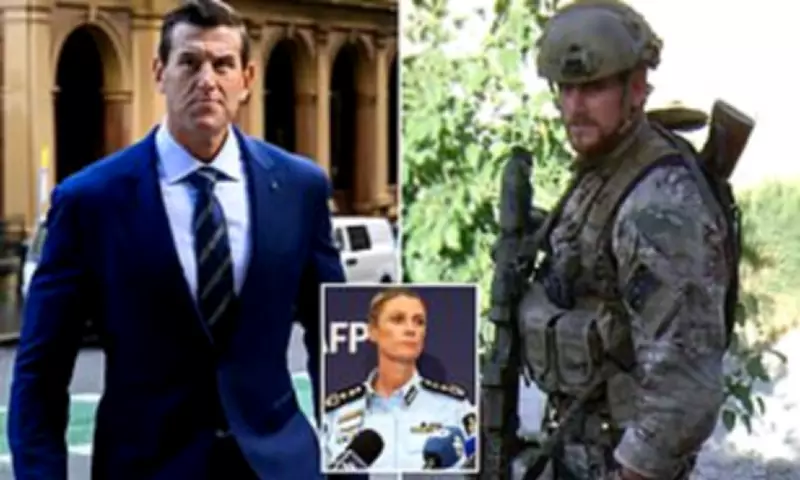
Decorated Australian soldier Ben Roberts-Smith has claimed federal authorities deliberately chose to arrest and prosecute him in New South Wales rather than his home state of Queensland, believing his war crimes case would be more likely to succeed in the NSW legal system. The 47-year-old Victoria Cross recipient, who faces five counts of war crime murder, asserts this decision was a calculated ploy to give prosecutors a significant "forum advantage" in their case against him.
The Committal Hearing Disparity Between States
The central issue revolves around fundamental differences between the two states' legal procedures. New South Wales has abolished committal hearings, where a judge evaluates prosecution evidence to determine if there's sufficient basis for a trial. Queensland, however, still maintains this crucial pre-trial safeguard that allows defence lawyers to test prosecution evidence through witness cross-examination.
Roberts-Smith's legal team believes that if their client faced a Queensland committal hearing, the evidence against him might be considered too weak to proceed to trial. A source close to the former Special Air Service soldier stated: "The pathway to trial in NSW is markedly more favourable to the prosecution. Committal hearings have largely been abolished, replaced by fast-tracked case conferencing and early disclosure."

The source elaborated on the Queensland process: "By contrast, Queensland retains a committal process that allows the defence to test the prosecution case - including cross-examining witnesses - meaning weak cases can be exposed and, in some instances, discontinued before trial."
The Arrest and Charges
Roberts-Smith was arrested on April 7 as he arrived on a Qantas flight at Sydney Airport from Brisbane. The arrest occurred in front of his twin 15-year-old daughters and partner Sarah Matulin, with footage capturing him being led from the aircraft to a waiting police vehicle. He faces allegations of shooting dead, or ordering subordinate soldiers to execute, five unarmed detainees while serving with the SAS in Afghanistan between 2009 and 2012.
Each charge carries a maximum penalty of life imprisonment, though Roberts-Smith has consistently denied involvement in any unlawful killings. The case will be prosecuted by the Commonwealth Director of Public Prosecutions, with Roberts-Smith's defence funded by the Afghanistan Inquiry Legal Assistance Scheme.
Prosecution Policy and Investigation Complexities
The CDPP's policy explicitly states that jurisdiction decisions cannot consider "any real or perceived forensic advantages of the procedure, the laws of evidence or the disclosure regime of a particular jurisdiction." This raises questions about whether the NSW arrest location violates this principle.
Ross Barnett, director of investigations for the Office of the Special Investigator, acknowledged the extraordinary challenges of prosecuting war crimes allegedly committed by Australian Defence Force personnel in Afghanistan. He described examining "literally dozens of murders alleged to have been committed in the middle of a warzone, in a country 9,000km from Australia that we can no longer access."
Barnett highlighted the investigation limitations: "We don't have access to the crime scene... We don't have photographs, site plans, measurements, the recovery of projectiles, blood-spatter analysis, all of those things we'd normally get at a crime scene. We don't have access to the deceased - there's no post-mortem, therefore there's no official cause of death."
Evidence Reliance and Alternative Theories
Consequently, the prosecution case against Roberts-Smith will depend almost entirely on testimony from former SAS members, with reports suggesting about two dozen witnesses will be subpoenaed. Four of Roberts-Smith's former comrades - identified only as Person 4, Person 11, Person 66 and Person 68 - have been implicated in the five alleged murders. Notably, two of the five Afghan men Roberts-Smith is accused of murdering have never been formally identified by war crimes investigators.

Journalist Nick McKenzie, who first accused Roberts-Smith of war crimes in 2018 reports, offered an alternative theory for the NSW arrest location. He suggested investigators might have wanted "access to a wider and more diverse jury pool," while Roberts-Smith "might have preferred a jury in a more conservative state, either his original home of Western Australia or his adopted hometown of Brisbane."
The source close to Roberts-Smith rejected this proposition, stating: "Suggestions by Nick McKenzie over the weekend that this was about accessing a broader jury pool miss the point. The more immediate forensic reality is that this is a case dependent on witness evidence alone."
Legal Context and Broader Investigation
The case emerges from former NSW Supreme Court judge Paul Brereton's four-year inquiry for the Inspector-General of the Australian Defence Force, which in November 2020 published a damning report finding "credible information" that 25 Australian special forces personnel had been responsible for 39 unlawful killings in Afghanistan. Since then, the AFP and OSI have commenced 53 investigations, with 10 ongoing.
The source close to Roberts-Smith noted Justice Brereton's continued role as a NSW Supreme Court judge during and after his Afghanistan inquiry, raising questions about perceived impartiality. "While judges are independent, they are also human beings," the source stated. "The optics of Ben being tried for war crimes by a colleague of Paul Brereton leaves a lot to be desired. Justice needs to be seen to be done - it is not enough to just say it will be done."
When questioned about the jurisdiction choice, an AFP spokesperson stated: "This was a joint investigation by OSI and the AFP. Investigators made the arrest at the most appropriate time and location for operational needs. No further comment will be made." The CDPP did not respond to specific questions about whether NSW was chosen to give prosecutors an advantage.
Roberts-Smith, who has lived in Queensland since leaving the SAS in 2012 and whose key prosecution witnesses are not based in NSW, will apply for bail at Downing Centre Local Court. The federal government has reportedly allocated $318 million over the past decade to investigate war crimes allegedly committed by Australian soldiers in Afghanistan.