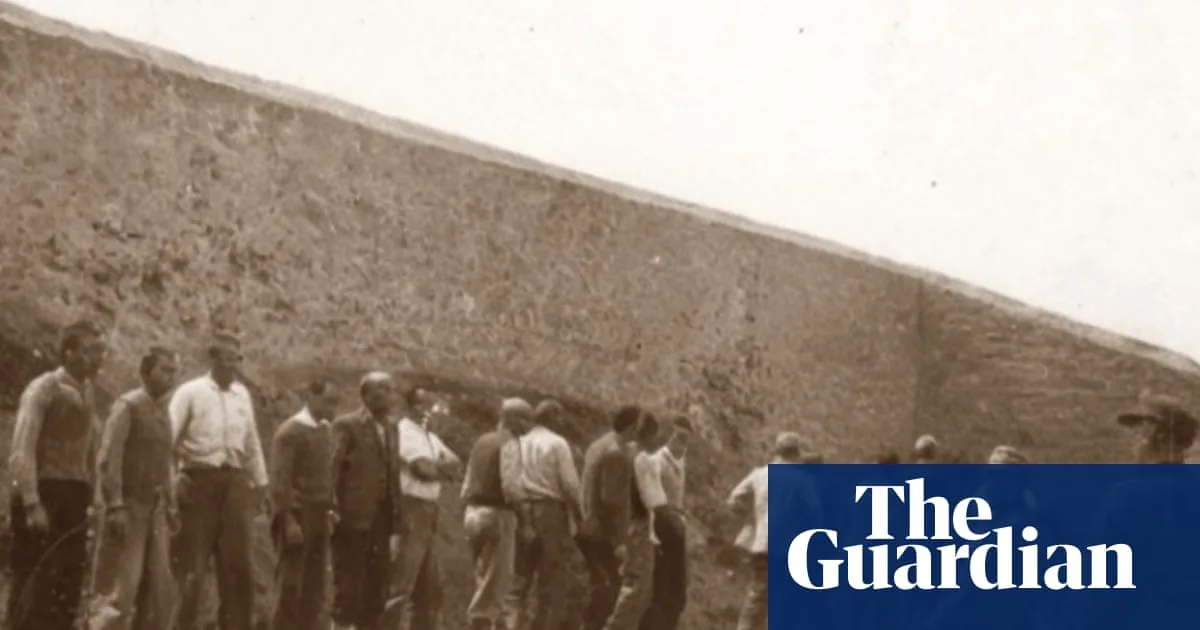
A previously unseen and profoundly haunting series of photographs, capturing the final moments of Greek prisoners before they were murdered by Nazi forces, has emerged after eight decades. The twelve pictures provide a chilling visual record of the last seconds before 200 Greek communists were executed on May 1, 1944, in the Kaisariani suburb of Athens.
A Retaliatory Massacre Documented
The executions were carried out in retaliation for the killing of a Nazi general and his staff by Communist guerrilla fighters just days earlier. The images, which had remained hidden from public view until now, show groups of men being shepherded by their Nazi occupiers to a shooting range. One photograph depicts the prisoners lining up against a wall, while another shows them being marched into the range after discarding their overcoats outside.
The Photographer and Provenance
Historical analysis suggests that Guenther Heysing, a journalist attached to Nazi propaganda minister Joseph Goebbels's unit, is highly likely to have taken these pictures. The images were listed for auction on eBay by a collector of Third Reich memorabilia and are reported to have originally come from the personal album of German Lieutenant Hermann Heuer. The Greek Ministry of Culture has stated it is highly likely that these are authentic photographs.
Historical Significance and Testimony
Although the executions at Kaisariani were well-known events, there had been no known photographic documentation until this discovery. Historian Menelaos Haralambidis told state TV ERT: "This is the first time we have an image from inside the shooting range at the moment of the execution... a major moment of the Greek resistance movement." He added that the photographs confirm testimonies that the men faced their deaths with incredible courage and heads held high.
Until now, the only records of the victims' final moments were handwritten notes they threw from the trucks transporting them to execution. The Greek Communist KKE party, which called the collection priceless, has tentatively identified at least two of the men in the photographs. Thrasyvoulos Marakis, grandson of one identified victim, expressed gratitude that his grandfather's story could now be known to all.
Context of Nazi Occupation
Greece was occupied by Nazi Germany between 1941 and 1944, a period marked by numerous atrocities against civilians and the decimation of the Jewish community. More than 40,000 people are believed to have starved to death in Athens alone during this time. The Communist-led Greek People's Liberation Army (ELAS) was among the most active resistance organisations in occupied Europe, and many communists had previously faced persecution under the anti-Communist raids of Greek dictator Ioannis Metaxas's police.
Official Response and Future Actions
The Greek culture ministry has reiterated its assessment that the photographs were likely taken by Guenther Heysing. It stated: "If the authenticity and lawful provenance of the collection are documented, the Ministry of Culture will immediately finalise measures for its acquisition." This ensures that, should verification succeed, these historically vital documents will be preserved for the Greek people and future generations.