Cold Case Breakthrough: Law Named After Murdered Student Helps Convict Killer After 23 Years
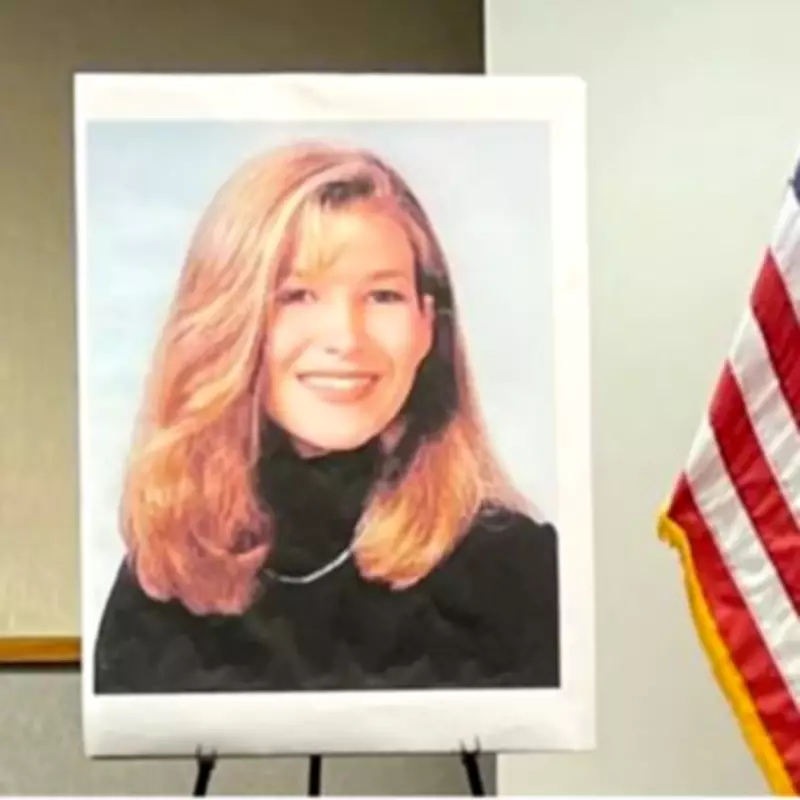
In a remarkable twist of fate, a law partially named after a murdered law student has played a pivotal role in solving her own cold case after more than two decades. Tara Louise Baker, a promising 23-year-old student at the University of Georgia, was found dead in her Athens apartment on January 19, 2001, the eve of her 24th birthday.
A Life Cut Short
Tara Baker was a compassionate and driven individual, already holding two bachelor's degrees in political science and paralegal studies. As a first-year law student, she was gaining practical experience at a local firm and was known for her caring nature. On the night of January 18, 2001, after studying late at the law library, she called a friend to ensure they had arrived home safely before walking back to her off-campus apartment alone, as her roommates were away.
That was the last time anyone heard from her. The following morning, neighbours reported smoke coming from her apartment, leading to the discovery of her body by emergency responders after a fire was extinguished.

A Brutal Crime Scene
The investigation revealed a horrifying attack. Tara had suffered a knife wound to the neck, blunt force trauma to the head, and had been strangled with a printer cord. An autopsy confirmed she had also been sexually assaulted. The killer had set a blanket alight on her bed in an apparent attempt to destroy evidence, wiped surfaces, and even scrubbed the bathtub, removing the drain. No usable fingerprints were found, and the only item taken was her laptop.
Despite extensive efforts, the case went cold. DNA evidence found on Tara's body did not match any suspects at the time, and the extensive fire and water damage complicated the investigation. For over 20 years, her murder remained unsolved, haunting the local community and university.
The Coleman-Baker Act: A Beacon of Hope
In 2023, a new law in Georgia, the Coleman-Baker Act, was passed. Named in part after Tara Baker and Rhonda Sue Coleman—an 18-year-old murdered in 1990—the act established a formal process for families of cold case victims to request reopening investigations. It created a dedicated Georgia Bureau of Investigation unit with a $5.4 million budget to re-examine evidence using advanced DNA technology and forensic testing.
This legislation proved instrumental in Tara's case. The DNA evidence was re-analyzed with modern forensic science and run through the FBI's CODIS database, resulting in a match.
Justice Served at Last
In May 2024, Edrick Lamont Faust, 48, was arrested and charged with murder, rape, aggravated sodomy, and arson. Faust, who had a criminal history including aggravated assault and drug offenses, had lived approximately 600 feet from Tara's apartment at the time of her death but had never been a suspect in the original investigation.
After a two-week trial in February of this year, Faust was found guilty on all charges. During sentencing, emotional statements were read, including one from Tara's mother, Virginia Baker, who described the horror of her daughter's death. The judge handed down two life sentences plus a consecutive 45 years in prison, stating that rehabilitation was not appropriate given the evidence.
A Lasting Legacy
Tara Baker's legacy continues through the law that bears her name, which not only helped solve her own case but offers hope to other families awaiting justice. Rhonda Coleman's loved ones and countless others now look to the Coleman-Baker Act as a tool for closure in long-unsolved crimes.