Defense Claims False Confession in Kabul Airport Bombing Trial
A federal trial is currently underway in Virginia for an alleged Islamic State militant charged in connection with a deadly suicide bombing at Kabul airport during the chaotic American military withdrawal from Afghanistan in 2021. The defense attorney for Mohammad Sharifullah has asserted that U.S. authorities "got the wrong man" and that his client provided a false confession under duress.
Charges and Allegations
Mohammad Sharifullah, also known as Jafar, faces one count of providing material support to a designated foreign terrorist organization resulting in death. Prosecutors allege he scouted the bomber's route to the airport before the August 26, 2021 attack that killed nearly 200 people, including 13 U.S. service members, at the conclusion of America's longest war.
Justice Department prosecutor John Gibbs presented evidence suggesting Sharifullah spoke to a journalist about killing American "crusaders" who invaded Afghanistan after the September 11 terrorist attacks. According to Gibbs, Sharifullah told the journalist, "The feeling was just to catch the crusaders and kill them."

Defense Arguments and Counterclaims
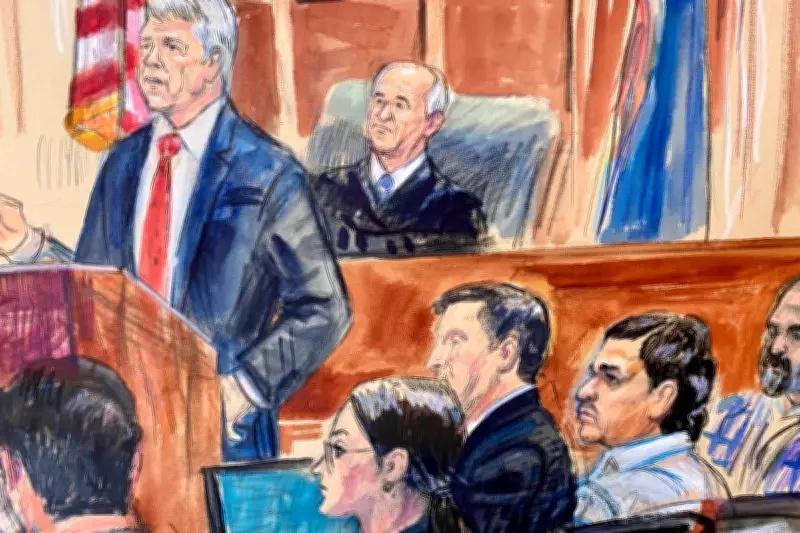
Defense attorney Geremy Kamens told jurors during opening statements that Sharifullah had no role in the bombing plot and suggested the confession was coerced while he was in Pakistani custody. "The Pakistanis wanted him to confess, and their intelligence service tortures people," Kamens stated, arguing the bombing was likely an "inside job" aided by sympathetic Taliban extremists who were providing airport security that day.
Kamens emphasized, "The U.S. government got the wrong man. That is why we are proud to represent Mohammad Sharifullah in this trial."
Broader Context and Additional Allegations
According to FBI interviews, Sharifullah admitted joining an Islamic State regional branch known as ISIS-K around 2016. While denying involvement in planning the Kabul airport bombing, he reportedly told agents he had done "a lot of other things" on behalf of ISIS-K.
The prosecution has linked Sharifullah to other attacks, including allegations that he provided firearms instructions before ISIS-K members carried out a March 2024 attack at a Moscow concert hall that killed approximately 140 people.
Trial Details and Historical Background
Twelve jurors and three alternates were selected Monday in Alexandria, Virginia, for what is expected to be a week-long trial. Sharifullah faces a maximum sentence of life imprisonment if convicted.
President Donald Trump announced Sharifullah's capture during his March 2025 State of the Union address, with the defendant arriving in the U.S. the following day to face prosecution.
The Abbey Gate bombing occurred as U.S. troops conducted evacuation operations at Kabul airport. A review by U.S. Central Command identified the bomber as Abdul Rahman al-Logari, an Islamic State militant previously released from an Afghan prison by the Taliban. According to an FBI affidavit, Sharifullah recognized the alleged bomber as someone he knew while incarcerated.
Political Implications and Controversies
The carnage at Abbey Gate sparked significant criticism of how President Joe Biden's administration managed the U.S. withdrawal from Afghanistan after two decades of conflict. During his campaign for a second term, Trump repeatedly condemned Biden's role in the chaotic withdrawal and blamed him for the airport attack.
The case has been marked by political tensions, with one prosecutor assigned to the Abbey Gate investigation being fired by the Justice Department last year after right-wing commentary criticized his work during the Biden administration. This dismissal was part of a broader purge of Justice Department veterans perceived as insufficiently loyal to Trump.
A former Marine testified to Congress that he and others had observed two suspicious individuals on the morning of the bombing but lacked authorization to intervene. However, the Central Command review concluded these snipers had not seen the actual bomber and determined the attack was not preventable.