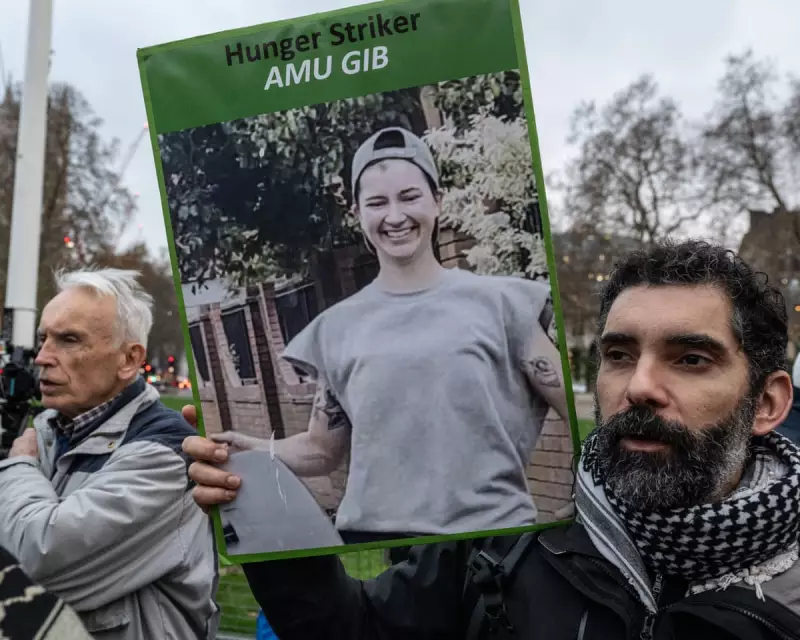
An activist imprisoned in a British jail has entered a critical phase of a hunger strike, now in its 46th day, demanding an end to the UK's role in supplying arms to Israel and the de-proscription of a pro-Palestinian protest group.
The Demands from Behind Bars
Amu Gib, an activist held at HMP Bronzefield awaiting trial for alleged offences linked to Palestine Action, began refusing food on 2 November 2025. This date was chosen deliberately as the anniversary of the Balfour Declaration, which Gib describes as the moment Britain "planted the seeds of the genocide that we are witnessing today."
In a statement compiled from interviews on the 18th and 33rd days of the strike, Gib outlined five core demands. These are: an immediate halt to weapons production in UK factories supplying Israel; the removal of Palestine Action from the government's list of terrorist organisations; an end to the mistreatment of prisoners in custody; the granting of immediate bail to those awaiting trial; and a guarantee of a fair trial, including the full disclosure of correspondence between British, Israeli officials and arms dealers.

Life, Resistance, and Deteriorating Health in Custody
The physical toll of the protest is severe. Gib reports having lost 11kg, moving in slow motion with dangerously low blood sugar and high ketone levels—a sign the body is consuming its own tissue. Two fellow hunger strikers have already been hospitalised.
Despite this, Gib describes a powerful wave of solidarity from other inmates at the women's prison, who offer hot water, company, and warm clothes. This support persists even though, according to Gib, prison officers ("screws") have threatened other prisoners with negative behaviour points for assisting the strikers.
Gib alleges a pattern of punitive measures from the authorities, including being barred from a crafts group after embroidering "Free Palestine" on a cushion—an action deemed a security threat on the very day the UK formally recognised Palestinian statehood.
A Focus Beyond the Prison Walls
For Gib and fellow strikers, the protest transforms the experience of incarceration. "The hunger strike also makes the prison fade into irrelevance," they state. "We're focused on the world beyond these walls, and it seems much more real."
The action is framed as a continuation of their commitment to Palestinian liberation, a responsibility that "landed us here." Gib asserts that the strike is a declaration that "the state can't stop you even when it has you in prison" and a refusal to relinquish focus on the crisis in Gaza, where Palestinians face "another winter without any of the things that anyone needs to survive."
Charges against Gib relate to an alleged break-in at RAF Brize Norton earlier this year, a base activists have targeted over its suspected links to arms shipments.
In response to enquiries, a spokesperson for HMP Bronzefield said: "We cannot provide information about specific individuals; however, we can confirm that all prisoners are managed in line with the policies and procedures governing the entire UK prison estate." The statement added that there are specialist processes to assess risk and encouraged any prisoner with complaints to use official channels.
As the strike continues, the activists' empty stomachs have become their ultimate protest, fuelled by what Gib calls "the habit of resistance" and the unwavering belief that challenging UK complicity is a moral imperative.