Victim's Identification Doubts Were Dismissed by Police as 'Trial Nerves'
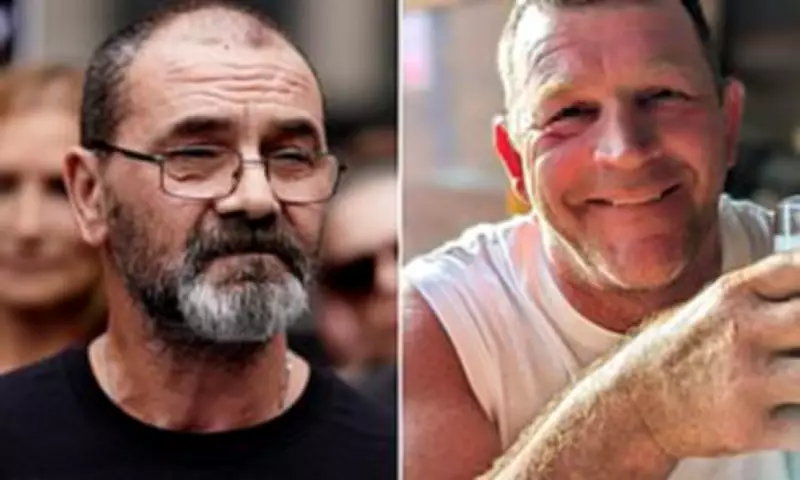
A rape victim who picked out a man at an identity parade later told a court she had expressed doubts to police, only to be told it was merely 'trial nerves.' Andrew Malkinson, now 60, spent nearly two decades behind bars after being identified by the woman, who was brutally attacked and raped in Little Hulton, Salford, in July 2003.
A Prolonged and Violent Assault
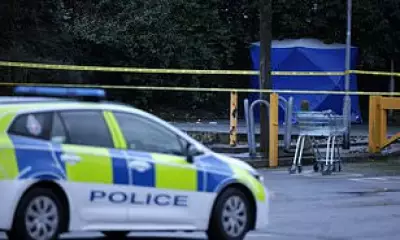
The woman, who was in her 30s at the time and a mother of young children, was walking home in the early hours during the height of summer when she was attacked from behind. She was strangled unconscious, beaten, and subjected to a 'prolonged assault' that included being raped twice down a motorway embankment.
Days after the attack on July 19, 2003, the victim identified Mr Malkinson at a 'VIPER' digital identity parade. However, during the trial the following year, doubts began to creep in. She testified that she informed police of her uncertainty, but was reassured not to worry, as such second thoughts were normal due to 'trial nerves.'
Miscarriage of Justice and Exoneration
Mr Malkinson, who worked as a security guard, became what Manchester Crown Court described as 'the victim of a most terrible miscarriage of justice, one of the worst there has been.' He served 17 years in prison before his conviction was overturned in July 2023, following fresh DNA evidence that linked another local man, Paul Quinn, 51, to the attack. Quinn denies the allegations.
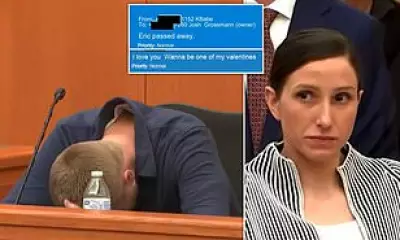
The rape victim is now giving trial evidence for a second time, as Quinn faces charges. During cross-examination, Lisa Wilding KC, representing Quinn, pointed out that the woman never formally retracted her identification to police after 2004. The witness responded, 'I did. I remember one of the trials telling one of them, I was not too sure it was the right man and they said, "Don't worry, it's just trial nerves."'
She added, 'I was very naive, I was scared coming into the court. I was reassured it was fine, it was the right man. I said "I was not sure it was the right man" and he said it was trial nerves and a lot of people think this and it will be okay.' When asked if a policeman had said this, she confirmed, 'Yes.'
DNA Evidence and Legal Battles
Mr Malkinson first appealed his conviction in 2006, but it was dismissed. He made two further attempts in 2009 and 2018 to have the Criminal Cases Review Commission refer his case to the Court of Appeal, both of which were rejected. His final attempt in 2021 succeeded, leading to his exoneration.
Quinn, who was 29 at the time of the attack and lived locally before moving to Exeter, Devon, was only linked to the crime years later through scientific advances. DNA analysis estimates it would be at least one billion times more likely if Quinn contributed to the sample found at the crime scene than if he did not.
Jurors heard that after news broke in July 2022 of a DNA breakthrough linking an unknown suspect, police analysis of Quinn's internet usage showed he had searched for 'Why do I keep sweating all the time?' and 'How long is DNA kept in database?'
Prosecution Case and Defence Claims
John Price KC, opening the prosecution case, stated that DNA evidence 'proves... that it was Paul Quinn and not Andrew Malkinson' who attacked and raped the woman in 2003. He noted that the identification of Mr Malkinson by the victim and two witnesses was 'honestly and genuinely made but, we submit, mistaken.'
During the attack, the victim's left nipple was 'partially severed' by what a pathologist concluded was a bite. This became a crucial element of the case, as DNA matching Quinn was recovered from saliva traces on the left-hand side of her vest top.
Mr Price described it as a 'sad' and 'remarkable' aspect that this finding emerged from Mr Malkinson's efforts to clear his name. He argued that 'alarm bells' should have rung as early as 2007 when tests identified male DNA that was not Mr Malkinson's, but it was only in November 2022 that the profile was traced to Quinn.
Quinn's Defence and Denials
Quinn has pleaded not guilty to two counts of rape, grievous bodily harm, and attempting to choke or strangle the victim to render her unconscious. In police interviews, he claimed to have been 'highly promiscuous' between ages 18 and his mid-30s, having 'slept with literally hundreds of women' without using condoms.
He later asserted he had two sexual partners every weekend, implying he could have had consensual sex with as many as 1,800 women over that period. This claim of 'rampant, sexual profligacy' suggests his account is that the 2003 victim might have been one of those partners, though he denies raping her and says he cannot recall if they ever had sex.
The trial continues, with the case highlighting significant issues in police handling of witness doubts and the role of DNA in overturning wrongful convictions.