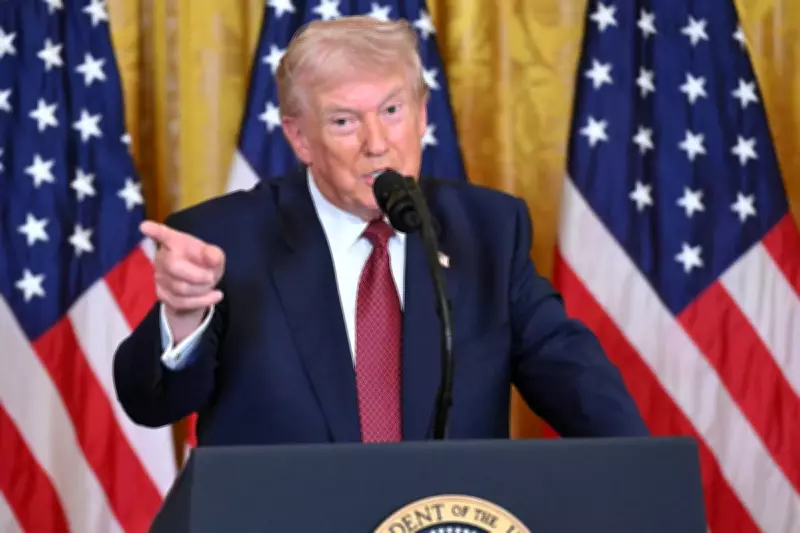
Trump's $10 Billion BBC Defamation Lawsuit: A Legal and Strategic Analysis
The legal battle between former US President Donald Trump and the British Broadcasting Corporation has escalated dramatically, with a trial date now set in Florida for Trump's staggering $10 billion lawsuit. The case centers on a controversial Panorama episode from October 2024 that featured a misleadingly edited clip of Trump's January 6, 2021 speech.
The Core Allegations and Immediate Fallout
Trump has accused the BBC of "using AI to put words in my mouth" and alleges both defamation and violations of trade practices. The Panorama episode in question spliced together two segments of Trump's speech that were originally fifty minutes apart, creating what the BBC has acknowledged was a misleading representation. This editorial decision led to the resignation of two BBC executives and prompted Trump's initial threat of a $1 billion lawsuit if the episode wasn't retracted.
The BBC represents just the latest media organization targeted by Trump's aggressive legal strategy, following similar actions against major American outlets including the New York Times, Wall Street Journal, CBS, and ABC. The current lawsuit has been filed in Florida, despite the BBC's assertion that the Panorama episode was never distributed on its US channels and remains accessible only to UK audiences through iPlayer.

Legal Hurdles in Both Jurisdictions
English defamation law, while generally considered claimant-friendly compared to American standards, presents an immediate obstacle for Trump's case. UK law requires defamation claims to be brought within one year of publication, and since the Panorama episode aired in October 2024, this deadline has already passed. Trump previously attempted to circumvent this limitation by invoking data protection laws with their six-year window, but this approach proved unsuccessful.
In the United States, Trump faces even more formidable legal barriers. The landmark 1964 Supreme Court case New York Times v. Sullivan established that public figures must prove "actual malice" to succeed in defamation claims against media organizations. This requires demonstrating that the defendant knew statements were false or acted with reckless disregard for the truth—an exceptionally high standard that has protected journalistic free speech for decades.
Reputational Damage: A Difficult Case to Prove
Trump's legal team would struggle to establish that the Panorama episode caused meaningful reputational harm. The former president's existing reputation includes court findings of fraudulent conduct, allegations of sexual assault (currently subject to ongoing litigation), and impeachment for inciting insurrection (though he was later acquitted). Furthermore, Trump won the 2024 US presidential election just two weeks after the episode's broadcast, undermining any claim of significant reputational damage.
Both US and UK jurisdictions also recognize truth defenses in defamation cases. Even if minor inaccuracies exist in reporting, defendants are protected if the essential substance of their allegations—in this case, that Trump's speech contributed to the storming of the Capitol—remains substantially true.
The Strategic Reality: SLAPP Suits and Media Pressure
Beyond the legal technicalities, Trump's lawsuit represents what legal scholars term a Strategic Lawsuit Against Public Participation (SLAPP). These legal actions are designed not necessarily to succeed in court, but to intimidate critics, generate favorable publicity for the claimant, and drain resources from the defendant.
As leading US academic RonNell Andersen Jones has documented, such legal threats serve dual purposes: they provide positive PR for politicians while undermining public confidence in journalists who hold power to account. The strategy leverages the enormous costs of litigation, often pressuring defendants to settle even when they have strong legal defenses.

Trump has employed this playbook successfully before, with CBS and ABC both paying millions to settle previous cases despite questionable legal merits. The BBC now faces a similar dilemma: while possessing a strong legal position on paper, the corporation must contend with diminishing public funding and sustained political pressure that might make settlement appear the more pragmatic option.
The Broader Implications for Media Freedom
This case highlights the growing tension between robust free speech protections and the strategic use of litigation to silence critical reporting. Even when media organizations have solid legal defenses, the financial and operational burdens of defending against billion-dollar lawsuits can have chilling effects on investigative journalism.
The BBC's response will be closely watched by media organizations worldwide, as it navigates the complex intersection of legal principle, financial reality, and political pressure. Whether the corporation chooses to fight the case or settle will set important precedents for how media organizations respond to similar strategic litigation in the future.
Ultimately, while Trump's lawsuit faces substantial legal obstacles in both American and British courts, its true significance may lie in its effectiveness as a tool of political communication and media intimidation rather than its prospects for legal victory.