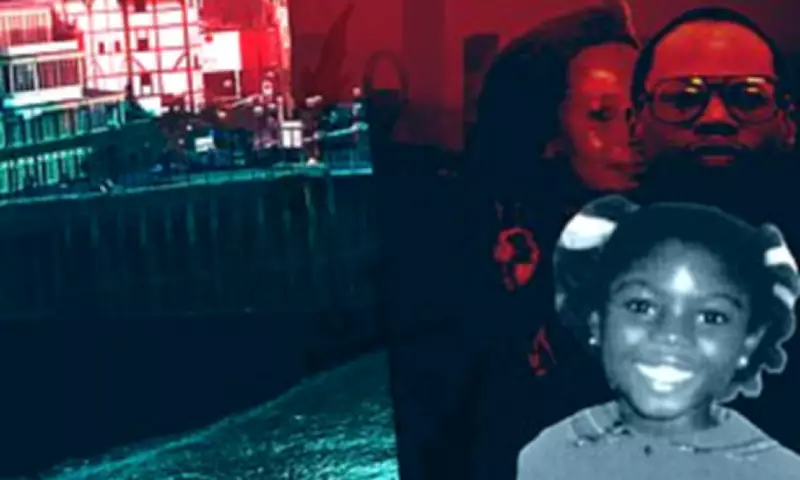
Twenty-Five Years After Victoria Climbie: Ritual Abuse Epidemic Grows in Britain
A quarter century has passed since eight-year-old Victoria Climbie's horrific death exposed shocking voodoo-style murder and abuse occurring within the capital of a modern, affluent democracy. Victoria met a brutal end - tortured, beaten with implements including coat hangers and a bicycle chain, deliberately scalded, and forced to sleep in a bin liner within a freezing bathroom. She ultimately died from multiple organ failure at just eight years old, her tiny body weighing merely 3st 10lb and bearing 128 separate injuries.
The Persistent Shadow of 'Kindoki' Beliefs
Her supposed crime? Relatives claimed the girl had been possessed by 'kindoki', or evil spirits, requiring exorcism by a pastor and justifying a campaign of sadistic violence. The 2000 killing and subsequent public inquiry should have been seismic events - clear warnings to both public and politicians that belief in witchcraft, however improbable, was emerging as a disturbing reality in contemporary Britain.
Yet today, despite the horror of Victoria's death and numerous subsequent cases, compelling evidence indicates that ritual violence - involving beliefs and practices overwhelmingly imported from abroad - continues spreading unchecked across the nation. The latest official statistics reveal a dramatic escalation in children identified as potential victims of abuse 'linked to faith or belief', a category encompassing allegations of witchcraft and spirit possession.

Alarming Statistical Increases
Analysis released late last year by the Local Government Association, representing councils and social services departments throughout England, documented 2,180 cases of possible faith-linked abuse during 2024. This represents a deeply concerning 49 percent increase over the seven-year period since 2017. Moreover, experts warn the true scale likely proves significantly worse, with ritual abuse routinely under-reported as social workers and other professionals fear being labelled racist.
Among the most notorious cases remains eight-year-old Victoria Climbie, tortured to death in 2000 by relatives convinced of her spiritual possession. Motives range from ignorance and fear to the demented belief that human sacrifice confers supernatural protection and even wealth. The majority of cases reaching public attention maintain connections to sub-Saharan Africa, presenting harrowing narratives of suffering.
Documented Cases of Horror
A recent documentary film, Kindoki Witch Boy, recounts the experience of Mardoche Yembi, sent from the Democratic Republic of Congo to live with his aunt and uncle in North London. At twelve years old, relatives branded Mardoche a witch, accused him of bringing misfortune, and subjected him to two months of traumatic exorcisms.
An even more disturbing incident occurred on Christmas Day 2010, when fifteen-year-old Kristy Bamu was beaten and drowned by his sister and her boyfriend within London's Newham borough after being accused of 'kindoki', mirroring Victoria Climbie's allegations. Kristy endured four days of torture involving knives, sticks, metal bars, a hammer, and pliers before drowning during forced ritual cleansing in a bath. His siblings survived only after 'confessing' to witchcraft accusations.
Magalie Bamu, then twenty-nine, and her partner Eric Bikubi, twenty-eight - both Congolese nationals - received life imprisonment sentences in 2012. During sentencing, the judge declared: 'The belief in witchcraft, however genuine, cannot excuse an assault to another person, let alone the killing of another human being.'
Cross-Cultural Manifestations
Accusations of possession manifest across multiple cultures, with abuse cases reported within Christian, Hindu, and Muslim families where some still maintain belief in evil spirits known as 'djinns'. Just days before Kristy Bamu's murder, Shayma Ali strangled then disembowelled her four-year-old daughter using a kitchen knife during a frenzied exorcism attempt. Ali, who had gouged out her daughter's doll eyes to prevent them 'seeing evil', was committed to a mental hospital.

In 2005, two women received imprisonment at the Old Bailey after conviction for child cruelty involving torture and death threats against an orphaned Angolan refugee child they claimed was a witch. The court heard how the girl, identified only as Child B, was starved, cut with a knife, beaten with belts and shoes, and had chilli peppers rubbed into her eyes to 'drive the devil out'. At one point, the eight-year-old was bundled into a zip-up laundry bag and threatened with disposal in a river before being rescued barefoot and shivering outside a Hackney council house.
The Thames Torso Mystery
The cleansing power of water, whether in bathtubs or rivers, represents a common element within African witchcraft rituals. In 2001, a young boy - later named Adam by police - was retrieved from the Thames after a passer-by spotted his mutilated torso floating near Tower Bridge. His head, arms, and legs had been removed in what detectives believe constituted a ritual killing, potentially as a sacrifice or 'muti' ceremony where body parts are harvested for supposedly potent magical remedies.
The boy, aged between four and seven and found wearing only orange shorts, had recently arrived from Nigeria. Britain's leading rituals expert, Dr Richard Hoskins, consulted on the case and concluded Adam was a victim of human sacrifice. His 2012 book The Boy in the River, serialised in The Mail on Sunday and scheduled for film adaptation, detailed how the child had likely been trafficked to London and butchered while drugged but conscious by a 'babalawo' witchdoctor employing Yoruba rituals from southwest Nigeria.
Systemic Failures and Professional Hesitation
Victoria Climbie had been sent to England by parents hoping she would receive superior education compared to her native Ivory Coast, finding only misery and death instead. Her great-aunt Marie Therese Kouao and partner Carl Manning received life sentences in 2001 for murder and child cruelty. The case prompted a major public inquiry under Lord Laming that ultimately led to child protection overhauls including the landmark 2004 Children Act.
Yet ritual violence continues receiving inadequate attention, according to Lancaster University's Professor Charlotte Baker, co-director of the International Network Against Accusations of Witchcraft and Ritual Attacks. 'If you spoke to many people about this issue, they'd think it was something from about 1,400 years ago,' she told The Daily Mail recently. 'Many schoolteachers might feel they shouldn't 'go there' if they suspect something because they're uncomfortable handling such issues.'
Political Responses and Current Challenges
Former Conservative MP Tim Loughton, children's minister in David Cameron's coalition government and later Home Affairs Select Committee chairman, recalls his own experiences combating ritual abuse. 'The particular problem was among migrant communities from places like the Congo - very closed communities, mostly in London, with evangelical Christian church settings involving strange voodoo practices abusing children to drive out devils,' he remembers. Despite launching a task force on faith-based child abuse during his tenure, he fears official attention has since diminished.
Rohma Ullah, director of the National FGM Centre which also addresses witchcraft and spirit possession abuse, believes frontline staff remain hesitant to raise alarms. 'Witchcraft and spirit possession are among the most poorly understood areas in child protection,' she states. 'That's really concerning. We know data isn't good enough and professionals don't know how to act. They fear being accused of racism, so questions don't get asked and opportunities get missed.'
Ullah suggests teachers and social workers should recognize abuse indicators like children appearing exhausted from all-night exorcism prayers or losing weight from withheld food. She describes the current situation as fragmented, with professionals lacking specialist knowledge about this particular issue. Current statistics, disturbing as they appear, 'probably don't reflect the true prevalence of something that's very hidden.'
International Context and Ongoing Concerns
Warnings have persisted for years. Over a decade ago, the United Nations reported that 'hundreds of children have been abducted from their families in Africa and trafficked to the UK, especially London. Many are raped and sexually abused.' Dr Hoskins commented in The Mail on Sunday that 'London has become the hub, the epicentre for a global trafficking enterprise involving thousands of children for exploitation, sexual abuse and even ritual voodoo killing.'
Today's evidence suggests this terrible picture might have grown darker still, with ritual abuse cases increasing dramatically despite Victoria Climbie's tragic legacy and subsequent child protection reforms. The nation continues grappling with imported belief systems that justify horrific violence against children, while professionals struggle to address these culturally sensitive crimes without fear of accusations regarding racism or religious intolerance.