Inside Rio's Deadliest Police Raid: Operation Containment's Racial Fallout
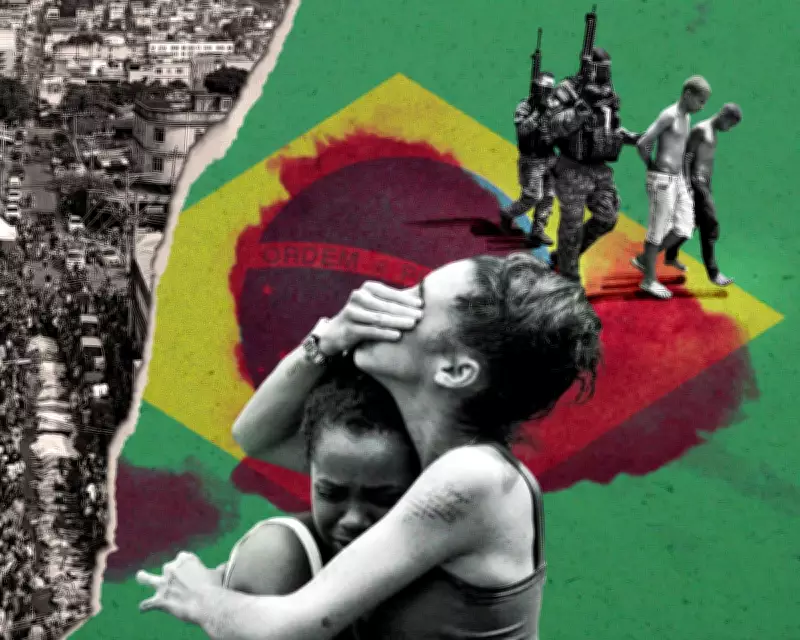
A spiralling debacle unfolded in Rio de Janeiro's favelas when police launched "Operation Containment," the most fatal police operation in Brazil's history. The Guardian's in-depth investigation reveals a tragic massacre that left communities reeling with more questions than answers, exposing Brazil's deep race and class fissures.
The Bloodiest Day in Rio's History
Operation Containment commenced just before dawn on October 28th and lasted seventeen brutal hours. The police action targeting organised crime in the Penha and Alemão favela complexes resulted in 122 fatalities. South America correspondent Tiago Rogero, who was reporting from Argentina when news of the massacre broke, described feeling "pretty anxious and worried" as the body count rose.
"I knew a lot of people from the two favelas," Rogero explained, "and so was gripped with a lot of bad feelings." His colleague Tom Phillips, the Guardian's Latin America correspondent, was in Rio closely monitoring events as they unfolded.

Disproportionate Impact on Black Communities
Police authorities refused to disclose the race of those killed during the operation, but multiple sources confirmed the vast majority of casualties were Black. This reinforces existing research showing police violence disproportionately affects Afro-Brazilians. In Brazil, more than fifty percent of the population identifies as Black or mixed race, with Black people constituting almost eighty percent of favela residents.
"It doesn't shock that it's Black people getting killed," Rogero noted, highlighting the devastating normalisation of racialised violence. The operation's racial dimensions reveal how Black favela residents are often not seen as "100% citizens" within Brazilian society.
An Operation That Spiralled Out of Control
The account of Operation Containment reveals a chaotic and tragic debacle. Police forces entered the massive neighbourhood of favelas within Penha and Alemão, including the challenging terrain of the "Hill of Mercy" - an area of irregular terrain and dense vegetation previously avoided during raids due to potential high casualties.
This time, a special unit battalion positioned itself at the top of the Hill of Mercy, and when officers pursued criminals into the woods, shootings intensified dramatically. Five law enforcement members were killed and twenty injured - unusually high numbers that transformed the operation into a rescue mission for stranded and injured officers.
Shroud of Mystery and Investigative Failures
More than three months after the operation, crucial questions remain unanswered. "We still don't know how the killings happened," Rogero emphasised. "We don't know what happened inside in the woods."
Investigative failures compounded the tragedy:
- All crime scenes were dismantled without forensic examination
- Police left most bodies where they fell for families to retrieve
- Fewer than half of required body cameras were worn during the operation
- Only a handful of those cameras remained operational
This created significant challenges for public prosecutors attempting to determine what actually occurred during those seventeen hours.
Ambiguous Targeting and Questionable Outcomes
The operation's planning and execution raise serious concerns about police methodology and accountability. Despite months of preparation and one hundred arrest warrants secured from the judiciary for drug trafficking offences:
- Only seventeen of the targeted individuals were actually arrested
- Scores of others were arrested for on-the-spot infractions
- None of the 117 people killed in the favelas were subject to arrest warrants
- Police conceded that seventeen of those killed had no criminal record
Among the fatalities were a bricklayer hiding from crossfire and a fourteen-year-old boy, highlighting the collateral damage of this aggressive approach.

Systemic Problems and Societal Apathy
Rogero attributes these outcomes to a poorly trained police force and security policies that target densely populated areas. "The police claim that about 1,000 members of the Red Command live in the two complexes, but we have 110,000 people living there," he explained. "A very small portion of the population is involved in drug trafficking."
Perhaps most devastating is the societal response. While activists and intellectuals expressed terror about the operation's scale, initial public reaction showed support for the police. This apathy stems from years of narratives suggesting that incarcerated individuals serve short sentences and reoffend, creating tolerance for extrajudicial killings.
The special police units involved "are not known for their ability to solve crimes through due process, forensics, etc," Rogero noted. "The result is the frequent killings of Black people." Even with an "absurd number of lives" claimed - unprecedented in Brazilian history - the population and media have become accustomed to such violence when it disproportionately affects Black communities.
Revealing Brazil's Deep Divisions
Operation Containment exposes fundamental race and class prejudices within Brazilian society. Those killed in the favelas "are not usually seen, understood or heard as a real part of Brazilian society," Rogero observed. The value placed on Black lives in favelas differs significantly from that accorded to white citizens, revealing systemic inequalities that continue to shape law enforcement approaches and public perceptions.
As investigations continue and communities mourn their losses, Operation Containment stands as a stark reminder of the human cost when security operations disregard due process and reflect broader societal prejudices.