Chief Prosecutor Warns Palestine Action Court Protests Threaten Justice System
The Director of Public Prosecutions has issued a stark warning that demonstrations held outside a recent high-profile trial constitute "a threat to the administration of justice." Stephen Parkinson, the country's chief prosecutor, expressed grave concerns about the conduct of Palestine Action supporters during the trial of six activists at Woolwich Crown Court.
"Highly Regrettable" Demonstrations
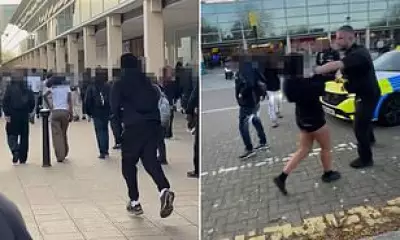
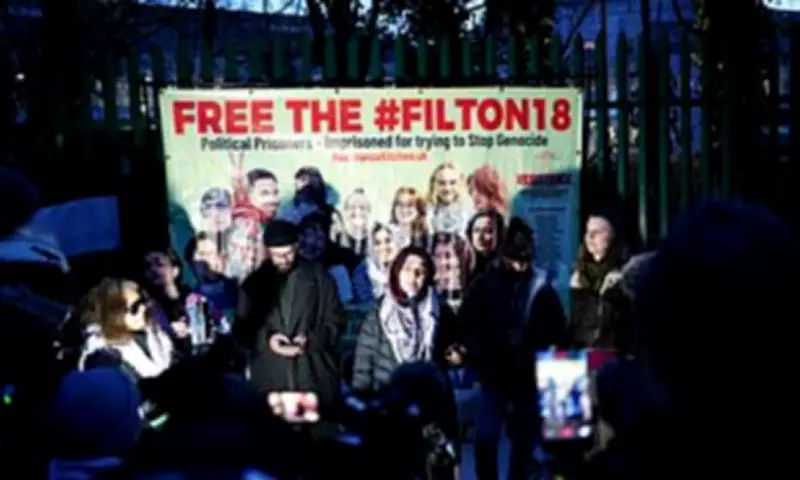
Mr Parkinson described the protests as "highly regrettable" and suggested they were designed to influence the jury's deliberations. Large crowds gathered daily outside the court, displaying provocative posters along routes between the building and nearby train stations. Additional materials appeared on bus stops and lampposts bearing messages including "The jury decide not the judge" and explanations of jury equity principles.
"I think conduct of that kind, which is clearly intended to have an impact on the jury, is hugely regrettable," Parkinson told reporters. "I'm not going to opine as to whether or not an offence is committed, but it's obviously a concern if that is the motivation, which I'm sure it was, that amounts to some form of contempt."

Trial Outcomes and Police Response
The protests occurred during the trial of six Palestine Action activists—Charlotte Head, Samuel Corner, Leona Kamio, Fatema Rajwani, Zoe Rogers, and Jordan Devlin—who were accused of breaking into the Bristol site of Israel-based defense company Elbit Systems. The incident resulted in approximately £1 million in damages and left a police officer with a shattered spine.
Last week, the jury cleared all defendants of aggravated burglary after deliberating for 36 hours and 34 minutes. Jurors also found Rajwani, Rogers, and Devlin not guilty of violent disorder. However, they failed to reach verdicts on:
- Criminal damage charges against all six defendants
- The allegation that Samuel Corner inflicted grievous bodily harm on Police Sergeant Kate Evans
- Violent disorder charges against Charlotte Head, Samuel Corner, and Leona Kamio
All defendants except Corner were released on bail ahead of a potential retrial, with the Crown Prosecution Service expected to confirm which charges it will pursue at a hearing on February 18.
Wider Implications and Official Responses
Mr Parkinson revealed that police and courts have been "forewarned" to crack down on similar protest behavior should a retrial occur. This warning comes as Shadow Home Secretary Chris Philp has urged the CPS to pursue a retrial, claiming there is "sufficient evidence" for a realistic prospect of conviction.
Meanwhile, Chief Constable Gavin Stephens, chair of the National Police Chiefs' Council, expressed concern that the trial outcome could put officers at risk in future operations. The case has highlighted tensions between protest rights and judicial integrity, with authorities now preparing for potential future confrontations.
Prosecution Service Reforms
Separately, Mr Parkinson announced significant operational changes within the Crown Prosecution Service designed to accelerate charging decisions. Frustrated by systemic delays in the judicial process, he has ordered staff to prioritize telephone conversations over lengthy email exchanges with police.
"Those of us who are older, we're used to picking up the phone, it is a generational thing, and others aren't," Parkinson acknowledged, describing what he called a "generational" attitude toward communication methods.
The new protocol limits staff to sending only two "action plan" responses via email before requiring direct telephone contact. Previously, such exchanges could result in delays of approximately 50 days without substantive progress. Parkinson has implemented what he terms "real-time case conversations" through a new charging model that provides step-by-step prosecution guidance.

"The ideal is that if you're in that situation, you haven't got enough, we've got a new charging model... And the first thing you ask to do is to make contact with the police and say: Can we have a call?" Parkinson explained, noting he has been pleased with initial results despite an "inevitable delay" in implementation.
The dual announcements—condemning protest interference while streamlining prosecution procedures—reflect broader concerns about judicial efficiency and integrity within the justice system. As authorities prepare for potential retrial proceedings, the balance between protest rights and courtroom decorum remains a contentious issue with implications for future high-profile cases.