Police AI Chief Acknowledges Bias in Crime-Fighting Technology
A police chief has openly admitted that artificial intelligence deployed to enhance crime-fighting efforts will inevitably contain bias, but has committed to actively combating these risks. Alex Murray, the director of threat leadership at the National Crime Agency and the national lead for AI, made this declaration in an exclusive interview, highlighting the challenges and promises of integrating AI into policing across England and Wales.
Labour's Push for AI Expansion in Policing
Labour is advocating for a significant expansion of AI usage within police forces in England and Wales. Police chiefs support this move, believing that AI can help law enforcement stay ahead of evolving criminal threats. Murray emphasised that a new national police AI centre, with a budget of £115 million, will be crucial in recognising and minimising the risks of bias inherent in these technologies.
Bias in AI policing often stems from algorithms trained on historical data that reflect past human prejudices. This can lead to unfair outcomes, such as the overtargeting of minority communities or misidentifications based on race, gender, or socioeconomic status. Murray stated, "Once you've recognised and minimised [bias], how do you train officers to deal with outputs to ensure that it is further minimised?"

Examples of Bias in Facial Recognition Systems
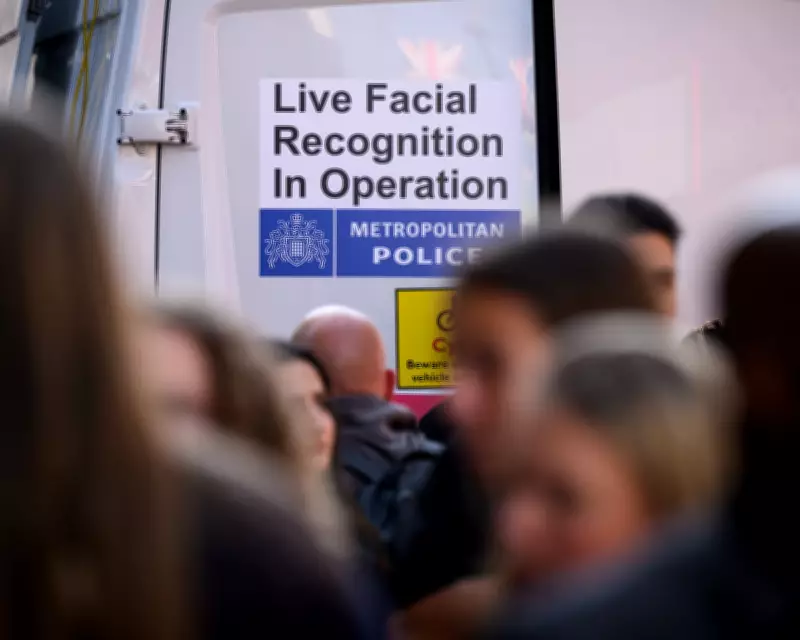
Instances of bias have already emerged in police applications of retrospective facial recognition, which uses AI to compare suspects with image databases after crimes occur. Live facial recognition, though more controversial and less frequently used, also contains bias. A report from December revealed that a retrospective facial recognition system employed by police lacked adequate safeguards.
The Association of Police and Crime Commissioners (APCC), which oversees local forces, commented, "System failures have been known for some time, yet these were not shared with those communities affected, nor with leading sector stakeholders." Darryl Preston, the APCC forensic science lead and police and crime commissioner for Cambridgeshire, added, "The discovery of an in-built bias in the police national database's retrospective facial recognition system, even if only in limited circumstances, demonstrates the need for independent oversight of these powerful tools."
The Role of the New National AI Centre
The new £115 million national AI centre aims to reduce bias and evaluate products from private suppliers. Currently, each police force in the UK makes independent decisions on AI adoption, a process viewed as slow and inefficient. Murray described police as being in an "arms race" with criminals who are also leveraging AI technology, noting, "Anyone with imagination can use AI."
In one notable case, a paedophile attempted to claim that images depicting child abuse were deepfakes, forcing police to disprove this to secure a conviction. Murray stressed that the benefits of AI extend far beyond "cliche around Minority Report and predictive policing," offering transformative potential across various crime-fighting scenarios.
Practical Applications and Benefits of AI in Policing
AI can assist in numerous areas, from manhunts to analysing CCTV footage and searching digital devices. Murray explained, "What took days, weeks, sometimes months can potentially take hours." For example, in a recent case involving four suspects from Luton accused of attacks on cashpoints, AI helped process data from their phones in Romanian, translating and identifying evidence that led to guilty pleas within weeks.
Trevor Rodenhurst, chief constable of the Bedfordshire force, remarked, "This allowed us to draw evidence from lots of devices with a vast quantity of data, which we would otherwise not have been able to do." He added that frontline officers are increasingly embracing AI, shifting from suspicion to enthusiasm: "They are no longer suspicious, they are asking when they can have it. That capability is transformative."
Despite these advancements, Murray emphasised that human police officers will always make the final decisions based on AI outputs, ensuring accountability and ethical oversight in law enforcement operations.