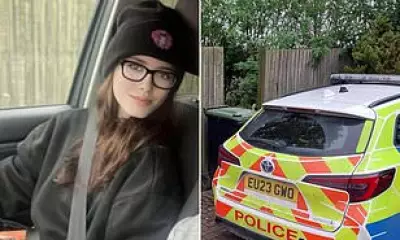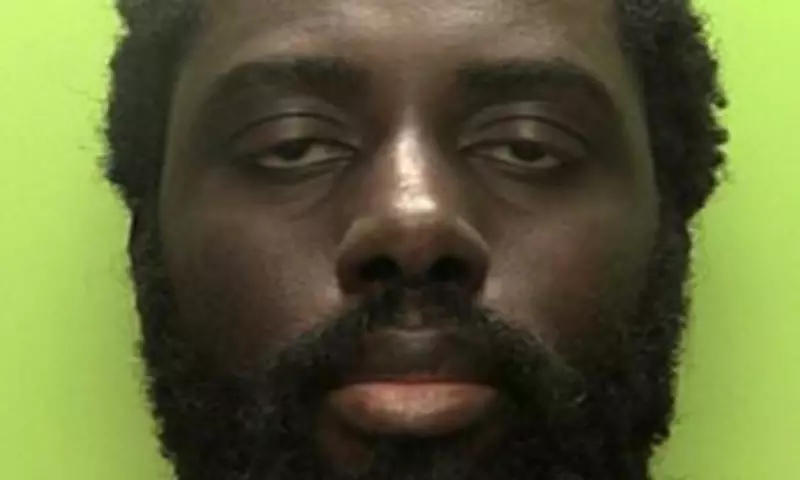
A nursing student who leapt from a window to flee the Nottingham triple killer years before he carried out his deadly attacks was told he could not be imprisoned because he was diagnosed with schizophrenia, a public inquiry has heard. The young woman, an Italian national identified only as Feven, revealed that police officers informed her she 'could have been killed' had she not jumped down twelve feet to escape the mentally ill Valdo Calocane as he violently broke down her flat door.
Police Failures to Link Critical Incidents
Law enforcement authorities also failed to connect a strikingly similar incident that occurred less than twenty-four hours earlier at the same block of flats. This oversight was partly due to an investigating officer who did not wish to review the police log because of misplaced 'data protection' concerns, the inquiry was told. Feven sustained a fractured back from the fall and continues to experience constant pain nearly six years later, highlighting the lasting physical and emotional trauma.
Anger Over Lack of Charges
Feven expressed profound anger that Calocane was never charged over the harrowing incident, despite officers documenting that he was 'seeing demons and devils' at the time. The attack took place merely one hour after Calocane had been released by police for attempting to break into another student's flat under the delusion that his mother was inside being assaulted. Nottinghamshire Police investigating the second incident had no knowledge that Calocane had been arrested earlier that same day, and crucial body-worn footage from the events was also lost.

Examination of Systemic Failings
The ongoing inquiry is meticulously examining how the mentally ill Calocane remained free to murder students Barney Webber and Grace O'Malley-Kumar, both aged nineteen, and sixty-five-year-old caretaker Ian Coates in June 2023. This occurred despite Calocane being sectioned multiple times for a series of prior violent incidents. Providing evidence through an interpreter, Feven described being 'very scared' when she heard what she believed was 'a group of thieves or someone wanting to hurt me' aggressively banging on her front door on May 24, 2020.
'I couldn't think that it could be one person being so aggressive,' she stated, telling the inquiry she leapt out of the window wearing only her night clothes. After spending a week in hospital, she was discharged to a friend's house to continue her recovery. Police officer Richard Marsden later visited her and explained that Calocane would not face charges.
Psychiatric Assessment and Victim's Outrage
'They said they tried doing anything they could, but because of his mental health problems, they mentioned he was schizophrenic, this person could not be jailed and he was therefore taken to a mental health institution, a psychiatric hospital,' Feven recounted to the inquiry. A subsequent psychiatric assessment determined that Calocane did not possess the mental 'capacity' to be held responsible for his actions at that time.
'I was very angry, I was very upset because the damage he had caused is going to be forever and I was so young,' said Feven, who was twenty-two at the time. 'I thought this was not enough, the psychiatric hospital was not enough. But because there were no other possibilities, I accepted it.' The same officer described her as 'brave,' she added, noting that police told her, 'If I had not jumped out of the window many things could have happened to me, they said he could have killed me or he could have been violent.'
Officer Admissions and Lost Evidence
Mr Marsden denied making this specific comment but admitted he did not inform the victim that she could challenge the decision not to progress the investigation. Under questioning from inquiry chairman Deborah Taylor, Mr Marsden, who initially described the victim's injuries merely as 'back pain,' agreed that the incidents 'could' and 'should' have been linked. His colleague, Police Constable Gail Collins, who interviewed Calocane for the first incident, stated she did not examine the police log about the suspect due to data protection reasons.

Internal Concerns and Apologies
Inspector Katie Eustace, who was called to the initial break-in, testified that she was 'concerned' by the police log, which gave the impression of a 'slight reluctance' by officers to pursue the original incident thoroughly. She also noted there was no confirmation that Calocane had already been arrested. Inspector Eustace apologised that her body-worn footage appeared to have been lost and said she had not received an explanation from superiors regarding its whereabouts.
When asked by lawyer Sophie Cartwright KC if she felt the case 'was given the attention it deserved,' Inspector Eustace replied, 'No, I don't think it was.' The inquiry is scrutinising how these systemic failings allowed Calocane to embark on his bloody rampage, which also left three members of the public with serious injuries after he struck them with Mr Coates' van.
Valdo Calocane, now thirty-four, is serving an indefinite hospital order after admitting manslaughter on the grounds of diminished responsibility. The inquiry continues to uncover critical details about the events leading up to the tragic Nottingham attacks.